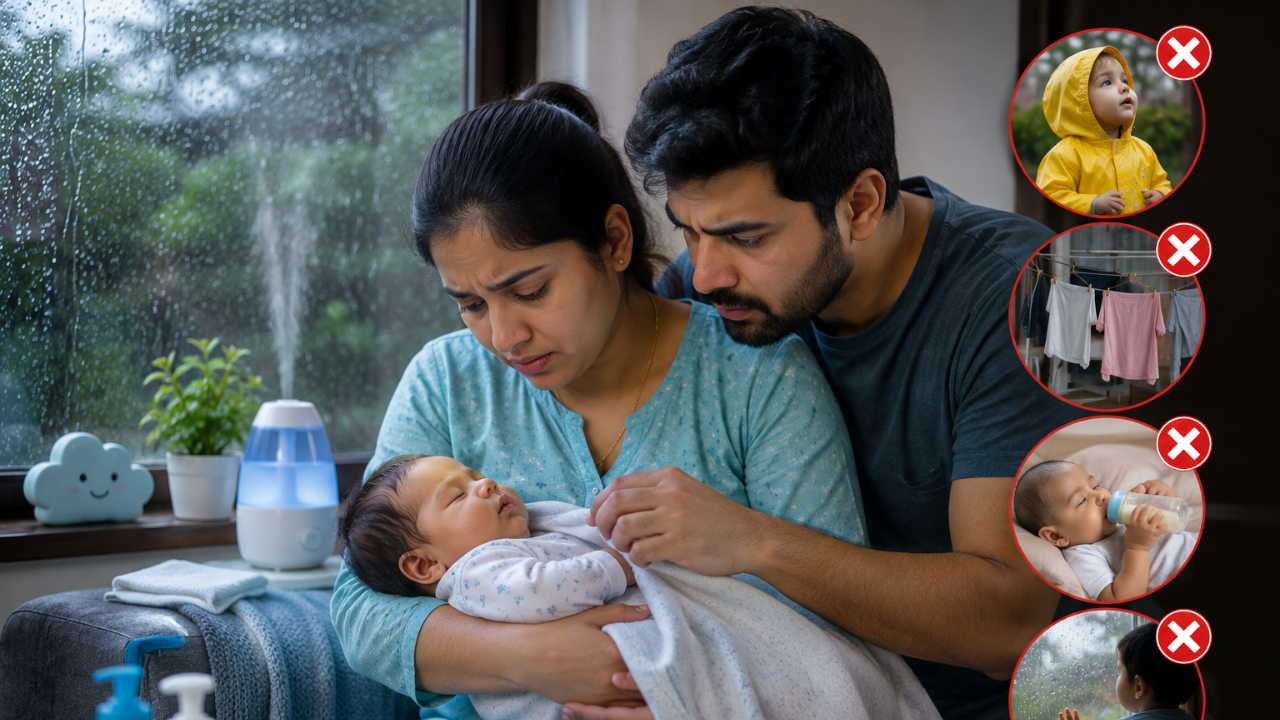
The monsoon brings welcome relief from the heat, but it also creates the perfect environment for viruses, bacteria, fungi, and mosquitoes to thrive. As a result, babies become more vulnerable to infections such as coughs and colds, diarrhoea, skin rashes, fungal infections, and mosquito-borne illnesses like dengue and malaria.Since an infant’s immune system is still developing, they require extra care during the rainy season. Fortunately, many monsoon-related illnesses can be prevented by avoiding a few common mistakes.Not Changing Damp Clothes PromptlyLeaving babies in damp clothes for long periods can cause discomfort, heat rash, skin irritation, and fungal infections, especially in skin folds. Whether clothes become wet from rain, sweat, or spills, they should be changed immediately. Dress your baby in soft, clean, breathable cotton clothing.Neglecting Hand HygieneHand hygiene is one of the simplest and most effective ways to prevent infections. Parents and caregivers should wash their hands with soap and water before touching or feeding the baby and after returning home. Anyone with symptoms such as cough, cold, fever, vomiting, or diarrhoea should avoid close contact with infants.Also read: Breastfeeding Can Help Reduce Mothers' Risk of Type 2 Diabetes, Breast Cancer and MoreGiving Stale or Improperly Stored FoodIf your baby has started complementary feeding, always offer freshly prepared home-cooked meals. During humid weather, bacteria multiply rapidly in improperly stored food, increasing the risk of stomach infections. Avoid feeding leftovers that have been kept at room temperature for long periods.Ignoring Mosquito ProtectionThe rainy season is associated with a rise in mosquito-borne diseases such as dengue and malaria. Use mosquito nets, eliminate stagnant water around your home, and dress your baby in light, full-sleeved clothing. Avoid applying mosquito repellents directly to infants younger than two months unless specifically recommended by your paediatrician.Also read: Study Links Excessive Screen Time To Poorer Body Image in Teens With Skin ConditionsKeeping the Home Damp and Poorly VentilatedDamp surroundings encourage mould and fungal growth, which can trigger allergies and respiratory problems. Keep your home well-ventilated, dry wet areas promptly, and ensure that your baby’s bedding, blankets, mattresses, and soft toys are completely clean and dry before use.Overdressing Your BabyMany parents assume babies need extra layers during the monsoon. In reality, overdressing can lead to overheating, excessive sweating, and skin rashes. Dress your baby according to the indoor room temperature rather than the weather outside. To assess whether your baby is comfortable, feel the neck or chest instead of the hands or feet, which are naturally cooler.Also read: Should Children Take Protein Powders? A Dietitian’s PerspectiveTrying Home Remedies Without Medical AdviceAvoid steam inhalation, balms, herbal oils, over-the-counter cold medicines, or traditional remedies unless advised by your paediatrician. Honey should never be given to babies under one year of age because of the risk of infant botulism. Always seek medical advice before giving any medication or home remedy.Taking Young Babies to Crowded Places Unnecessarily Crowded indoor spaces such as shopping malls, family gatherings, and social events increase the risk of viral infections. Limiting unnecessary exposure, especially during the first few months of life, can significantly reduce the chances of your baby falling ill.A baby’s first monsoon can be a worrying time for new parents, but a few simple precautions can go a long way in keeping your little one healthy and comfortable. Good hygiene, fresh food, mosquito protection, a clean and dry environment, and timely medical advice are the keys to preventing most monsoon-related illnesses.If your baby develops persistent fever, breathing difficulty, poor feeding, repeated vomiting, diarrhoea, decreased activity, or signs of dehydration, seek medical attention without delay.