
- Health Conditions A-Z
- Health & Wellness
- Nutrition
- Fitness
- Health News
- Ayurveda
- Videos
- Medicine A-Z
- Parenting
92% Children Say Being Creative Helps Increase Confidence, New Study Reveals

Creativity and Confidence for Kids (Credit-Canva)
Creativity, the spark that ignites original ideas, is a valuable asset that extends far beyond artistic expression. It is a cornerstone of innovation, problem-solving, and personal growth. Recent research has unveiled a profound connection between creativity and self-confidence. Children who engage in creative activities often exhibit higher levels of self-esteem and resilience.
By exploring their imagination and expressing themselves freely, young minds develop a sense of agency and the belief in their ability to overcome challenges. When children feel empowered to think creatively, they are more likely to approach problems with a positive mindset and seek innovative solutions.
According to a study on Statista, creative thinking and analytical skills are going to be in a lot of demand for companies in the future! More than 70% of companies surveyed that these skills are expected to rise to importance in year 2023 and 2027. Creativity may be the cornerstone for your kid's success.
Importance of Creativity
Crayola's latest research highlights the significant role of creativity in a child's development. Creative activities not only bring joy but also boost confidence and problem-solving skills. Creative activities help children recognize their unique abilities and feel proud of their accomplishments. Children often turn to their own creative ideas to solve problems, demonstrating their ability to think critically and innovatively.
Engaging in creative activities can make children feel happy, excited, and fulfilled. Shared creative experiences strengthen family bonds and create positive memories. By encouraging creativity, parents can help their children develop the skills and confidence they need to succeed in life.
Nurturing Creative Minds
To foster creativity and confidence in children, it's essential to provide non-judgmental creative spaces. This means creating environments where children feel safe to experiment, make mistakes, and learn from their experiences.
Encourage Exploration
Offer a variety of creative materials and activities, such as art supplies, building blocks, musical instruments, and nature exploration. By providing diverse opportunities, children can discover their unique talents and interests.
Embrace Mistakes
Emphasize the learning process over perfection. Mistakes are opportunities for growth and innovation. When children are not afraid to fail, they are more likely to take risks and explore new ideas.
Active Listening
Show genuine interest in your child's creative endeavors. Ask open-ended questions and offer positive reinforcement. By actively listening and providing encouragement, you can help children develop a sense of pride in their work.
Model Creativity
Demonstrate your own creative pursuits, whether it's cooking, gardening, writing, or painting. By modeling creative behavior, you can inspire children to embrace their own creativity.
Creativity Beyond the Arts
Creativity is not limited to artistic pursuits. It permeates various aspects of life, including problem-solving, innovation, and critical thinking. By encouraging creativity in all its forms, we can empower children to become confident, resilient, and successful individuals.
When children are encouraged to think creatively, they develop the ability to think outside the box, generate new ideas, and find innovative solutions to problems. This skill is invaluable in both academic and professional settings. Moreover, creativity can enhance social skills, emotional intelligence, and overall well-being.
Ahmedabad Toddler Swallows Hulk Toy, Showed X-Ray, Doctors Remove It Via Endoscopy

Credits: X
Ahmedabad toddler, one-and-a-half-year-old boy swallowed a 'Hulk' toy, which is based on a popular comic superhero. The toy was stuck in his stomach when his parents took him to the Civil Hospital. According to reports by News18, the child is identified as Vansh who showed the signs of discomfort and began vomiting. This is what alarmed the parents.
As per the News18 report, his mother Bhavika was suspicious when she noticed that one of his toys was missing. The child was rushed to the hospital and an X-ray revealed that he had swallowed the entire plastic toy. The toy was not broken.
Hindustan Times reported that Dr Rakesh Joshi, Head of the Department of Pediatric Surgery removed the toy through upper GI endoscopy. "Had it been a little late, the toy could have moved further from the stomach and got stuck in the intestines. In that case, there would have been a risk of intestinal blockage and even rupture," the senior doctor said.
"There is a natural valve between the esophagus and the stomach. The biggest challenge was to take out a whole toy through this valve. When we tried to grab it with the endoscope, the toy kept slipping because of the air in the stomach. Pulling the toy by its hand or foot raised the possibility of it getting stuck in the valve and causing it permanent damage," he said.
The doctor noted that if the toy had further slipped down, it would have increased the risk of intestine rupturing.
Ahmedabad Toddler Swallows Hulk Toy: What Parents Must Keep In Their Mind
Under the Toys (Quality Control) Order, 2020 issued by the Department for Promotion of Industry and Internal Trade under the Ministry of Commerce and Industry, toy safety in India was brought under mandatory BIS certification from September 1, 2020. The move aims to ensure safer toys for children while also supporting the government’s policy of curbing non-essential imports.
Industry sources estimate that more than 85 percent of toys sold in India are imported. Officials say the Toys Quality Control Order is a key step in preventing the entry of cheap and substandard toys into the domestic market, many of which fail to meet basic safety requirements.
Ahmedabad Toddler Swallows Hulk Toy: Standards for Electric and Non-Electric Toys
The quality control order clearly defines safety standards based on the type of toy. Non-electric toys such as dolls, rattles, puzzles, and board games must comply with IS 9873 (Part 1):2019. These toys do not rely on electricity for any of their functions.
Electric toys, which include at least one function powered by electricity, are required to meet the standards outlined under IS 15644:2006. Compliance with these standards is mandatory before such toys can be sold in the Indian market.
Ahmedabad Toddler Swallows Hulk Toy: Risks Linked to Untested Toys
Toys that are not tested by NABL-accredited toy testing laboratories can pose serious health risks to children. Sharp edges and poorly finished parts can cause cuts and injuries. PVC toys may contain phthalates, which are considered harmful chemicals.
Many low-quality toys have also been found to contain lead, a substance known to be particularly damaging to brain development in children. Soft toys with fur or hair can trigger allergies or become choking hazards. In some cases, small body parts can get stuck in gaps or holes, increasing the risk of injury.
Testing by NABL-accredited laboratories ensures that toys are safe, durable, and suitable for specific age groups. Parents are advised to check for IS marks on toys before purchasing, as this indicates compliance with Indian safety standards.
Ahmedabad Toddler Swallows Hulk Toy: What Parents Should Check Before Buying Toys
Experts recommend avoiding toys with small detachable parts for toddlers and young children, as they are more likely to put objects in their mouths. Toys should always match the child’s age, skill level, and interests.
Parents are also urged to look for IS marks, which confirm that the toy has been tested and certified. Loud toys should be avoided, as prolonged exposure to sounds above 85 decibels can harm a child’s hearing.
Electric toys with heating elements should be used with caution or avoided altogether due to burn risks. Finally, toys with sharp edges or shooting components should be carefully examined to prevent cuts and injuries.
Tech And Devices Have 'Horrific' Impact On Kids, Says Study
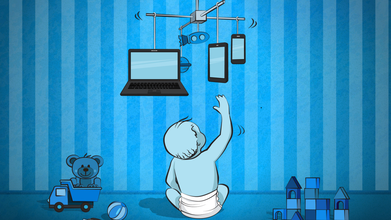
Credits: iStock
Doctors across the UK are raising the alarm over what they describe as mounting evidence of serious health harms linked to excessive screen time and unrestricted access to digital content among children and young people.
The Academy of Medical Royal Colleges (AoMRC), which represents 23 medical royal colleges and faculties, says frontline clinicians are witnessing deeply concerning patterns across the NHS. According to the academy, doctors working in primary care, hospitals and community settings have shared firsthand accounts of what they describe as “horrific cases” affecting both physical and mental health.
Evidence From the Frontline
The academy has now launched a formal evidence-gathering exercise to better understand the harms clinicians are repeatedly encountering and whether these can be attributed to technology use and digital devices.
Its aim is twofold. First, to shine a light on risks that often go unnoticed, including prolonged screen time and exposure to harmful online content. Second, to develop guidance for healthcare professionals on how to identify, address and manage these issues in clinical practice.
In a statement, the AoMRC said it already has evidence pointing to significant impacts on children’s wellbeing, ranging from physical concerns to mental health challenges linked to both excessive device use and harmful online material. The work is expected to be completed within three months.
A Public Health Emergency?
Dr Jeanette Dickson, chair of the academy, said the scale of the problem is becoming impossible to ignore. Speaking to The Sunday Times, she warned that clinicians may be witnessing the early stages of a public health emergency.
“Everywhere we look, we see children and adults glued to their screens,” she said. “I really worry for children, some of whom are self-evidently imprisoned in a digital bubble.”
Copies of the academy’s letter outlining these concerns have been sent to Health Secretary Wes Streeting and Science and Technology Secretary Liz Kendall, as well as Lucy Chappell, chief executive of the National Institute for Health Research, and the government’s chief medical adviser, Sir Chris Whitty.
Government Action and Global Trends
The warnings come as the UK government prepares to consult on possible restrictions on social media use for under-16s. Options under consideration range from a complete ban to more targeted measures such as time limits and tighter controls on algorithms.
Recent government research has already linked screen time to poorer speech development in children under five. Internationally, the debate is gaining pace. Australia introduced a ban on under-16s holding social media accounts in December, while countries including France, Denmark, Norway and Malaysia are weighing similar steps.
Why Some Groups Oppose a Blanket Ban
Not everyone agrees that an outright ban is the answer. A joint statement signed by 43 child protection charities and online safety groups, including the NSPCC and the Molly Rose Foundation, warns that blanket bans could backfire.
Andy Burrows, chief executive of the Molly Rose Foundation, said parents and policymakers are being offered a false choice. “It’s being framed as either a total ban or the current appalling status quo,” he said. “Those aren’t the only options.”
Chris Sherwood, chief executive of the NSPCC, echoed the concern, pointing out that for many children, the internet provides vital support. “A blanket ban would take those spaces away overnight,” he said, “and risks pushing teenagers into darker, unregulated corners of the internet.”
Both organizations argue that the focus should shift to holding tech companies accountable for harmful design choices, unsafe algorithms and failures to protect young users.
Cold Weather And Low Fertility; Is There A Link? Explains Doctor

Credits: Canva
As winter sets in, conversations around health often shift to immunity, joint pain, and seasonal illnesses. But can colder weather also influence fertility? According to experts, cold weather does not directly cause infertility, but it can quietly affect hormones and reproductive health through lifestyle and biological changes.
Dr Geeta Jain, HOD of Obstetrics, Gynecology and IVF, and Co-founder of Maccure Hospital and Aastha Hospital, explains that fertility is rarely impacted by temperature alone. “Cold weather does not directly cause infertility, but it can have an indirect impact on fertility and hormonal balance,” she says.
How Seasonal Changes Affect Hormones
One of the most significant winter-related changes is reduced exposure to sunlight. Shorter days and limited sun can influence the body’s hormonal rhythm, particularly melatonin and vitamin D levels. These hormones are closely linked to reproductive hormones such as estrogen, progesterone, and testosterone.
“Lower sunlight levels can affect the secretion of melatonin and vitamin D, both of which play an important role in reproductive health,” Dr Jain explains. Vitamin D deficiency, which is more common during winter months, has been associated with irregular menstrual cycles, ovulatory issues, and conditions like polycystic ovary syndrome (PCOS). All of these factors can make conception more challenging.
Menstrual Changes During Winter
Some women notice changes in their menstrual cycles during colder months, including delayed periods, increased cramps, or irregular ovulation. However, temperature is not the main culprit.
“These changes are often linked to lifestyle factors rather than cold weather itself,” says Dr Jain. Reduced physical activity, weight gain, changes in diet, and increased consumption of high-calorie comfort foods during winter can disrupt insulin sensitivity and hormonal balance. Over time, this may indirectly affect ovulation and fertility.
Stress, Mood, and Fertility
Mental health also plays a critical role in reproductive health, especially during winter. Shorter days and less outdoor activity can contribute to seasonal mood changes, anxiety, or even depression. These emotional shifts can elevate cortisol, the body’s stress hormone.
“Elevated cortisol can interfere with the normal functioning of reproductive hormones,” Dr Jain notes. If stress becomes chronic, it may affect ovulation and fertility over time, even in otherwise healthy individuals.
Does Cold Weather Permanently Affect Fertility?
The good news is that winter-related hormonal changes are usually temporary. “Cold weather does not permanently harm fertility,” Dr Jain reassures. Most seasonal shifts can be reversed by adopting healthy habits.
Maintaining a balanced, nutrient-rich diet, staying physically active indoors or outdoors, managing stress, getting adequate sleep, and ensuring sufficient vitamin D intake can help support hormonal balance throughout the colder months.
- Follow Us :


© 2024 Bennett, Coleman & Company Limited