
- Health Conditions A-Z
- Health & Wellness
- Nutrition
- Fitness
- Health News
- Ayurveda
- Videos
- Medicine A-Z
- Parenting
Diseases You Can Pass On To Your Child During Pregnancy And After

Credits: Canva
Motherhood is not easy to navigate from, while there are many telling you what to do after becoming a parent, rarely do mothers get the guidance they need, especially about disease transmission. Some infections in mothers can pass on to babies during pregnancy, delivery or even while breastfeeding. Know which ones are they:
HIV
It is human immunodeficiency virus that attacks cells that help the body fight infections and makes the person vulnerable to diseases. The virus can be transmitted through contact with infected blood, semen or vaginal fluids.
HIV can be transferred to the baby during birth or even while breast feeding, notes the Centers for Disease Control and Prevention (CDC). The risk of transmission is highest in the early months of breastfeeding and the rate is estimated to be at least 16%, and prolonged breastfeeding nearly doubles the chances.
Hepatitis B
Also known as HBV is a viral infection that, as per the World Health Organization (WHO) causes live infection and can lead to short term or chronic disease. It can be spread by exposure to infected bodily fluids.
It can be passed on to the child at birth, however to prevent this, the babies can receive the HBIG/HBV vaccines at birth. CDC also mentions that the risk of HBV mother-to-child transmission through breastfeeding is negligible if the vaccine is received.
Syphilis
As per WHO, it is a preventable and curable bacterial sexually transmitted infection that can cause serious health issues if it is left untreated. Many people with syphilis do not have any symptoms, or do not notice them. It can be transmitted during oral, vaginal, and anal sex, in pregnancy and through blood transfusion.
Cytomegalovirus (CMV)
CDC notes that this is the most common infectious cause of birth effects in the United States and can spread through body fluids like saliva and urine. It is a genus of viruses in the order Herpesvirales, in the family of Herpesviridae.
Zika Virus
As per WHO, Zika virus infection during pregnancy can cause infants to be born with microcephaly and other congenital malformations as well as preterm birth and miscarriage.
It is a mosquito-borne virus that can cause serious birth defects, notes the CDC.
Toxoplasmosis
Toxoplasmosis is an infection with a parasite called Toxoplasma gondii, which can be found in uncooked meat. This can also be contacted by cat feces and the parasite can be passed down to a baby during pregnancy.
Couples Who Live With Chronic Health Conditions Do Not Have To Rule Out Parenthood, Says Doctor

Credits: Canva
For many couples managing lifelong medical conditions, the fear of infertility often feels unavoidable. But fertility specialists say modern reproductive medicine has changed that reality.
Dr Rupali Tambe, Fertility Specialist at Nova IVF Fertility, Lullanagar, Pune, told Health and Me that chronic illness no longer automatically closes the door to parenthood.
“Couples living with a chronic health condition do not have to rule out parenthood,” she says. “IVF can offer hope with the right planning and care.”
She notes that millions of pregnancies worldwide have been achieved through in vitro fertilization, including among patients with diabetes, thyroid disorders, PCOS, hypertension, asthma and autoimmune diseases.
How Chronic Illness Affects Fertility
Chronic diseases can influence fertility in multiple ways, affecting both partners and every stage of conception.
“Uncontrolled diabetes can impact egg quality, implantation and pregnancy outcomes,” Dr Tambe explains. “Similarly, thyroid imbalance may interfere with ovulation and increase miscarriage risk if untreated.”
Women with PCOS may respond excessively to fertility medications and require carefully adjusted doses to prevent complications. Cardiovascular or high blood pressure conditions also need specialist supervision because hormone stimulation places additional stress on the body.
Autoimmune disorders bring another layer of complexity. “They may affect implantation or early pregnancy and often need tailored treatment plans,” she adds.
Male fertility can also be affected. Diabetes and hormonal disorders may reduce sperm quality, but treatment of the underlying condition can improve IVF success rates.
Preparing Safely For IVF
The first step before starting IVF is stabilizing the medical condition.
“The couple should undergo evaluation and ensure the condition is well controlled,” Dr Tambe says. “Medication adjustments are sometimes necessary because certain long-term medicines are not safe during fertility treatment or pregnancy.”
She strongly advises against self-medication. “Follow the expert’s recommendation before taking any medicine.”
Lifestyle also plays a key role in improving outcomes.
Patients are encouraged to adopt a nutrient-rich diet including fruits, vegetables, whole grains, pulses and lentils while avoiding processed and oily foods. Daily exercise, stress reduction practices like yoga and meditation, and around eight hours of sleep help both fertility and disease control.
Monitoring During Treatment
Close monitoring remains crucial throughout IVF cycles.
“Regular follow-ups, blood tests, scans and health checks help detect problems early and keep treatment safe,” Dr Tambe explains.
Because hormone therapy can affect metabolism, blood pressure and immune responses, doctors track the body’s reaction carefully and modify treatment if needed.
This personalized approach has significantly improved safety for patients previously considered high-risk.
A Journey That Requires Teamwork
Dr Tambe emphasizes that IVF for patients with chronic illness is not just a procedure but a coordinated medical process.
“For individuals living with long-term health issues, IVF is a journey that requires patience, teamwork and informed care,” she says. “Manage the chronic condition and parenthood can become achievable.”
With careful planning, expert supervision and lifestyle discipline, many couples can safely pursue pregnancy despite medical challenges.
Over 70% Baby Foods In US Contain High Salt, Sugar And Additives
Credits: Canva
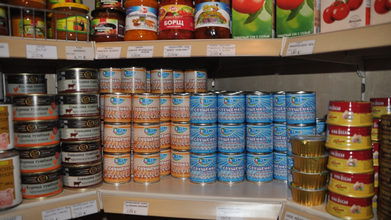
More than 70 percent of infant and toddler food products, including drinks and snacks, sold in the United States are ultra-processed and also contain additives that are associated with several health problems, according to a new study.
The study comes as the Donald Trump-led US government recently released updated dietary guidelines for Americans. For the first time, the recommendations urge citizens to avoid highly processed foods and also suggest limiting added sugars and refined carbohydrates.
The February 2026 study published in the peer-reviewed journal Nutrients analyzed 651 food products sold by the top 10 largest US grocery stores for children aged 6 months to 36 months.
The results showed that a whopping 71 percent of products were ultra-processed foods (UPFs) -- containing higher mean levels of total sugar, added sugar, sodium, and energy density than non-UPF products.
The food products also contained significantly harmful additives. Flavor enhancers (36 percent) were the most common additive, followed by thickeners (29 percent), emulsifiers (19 percent), and colors (19 percent).
The study showed that all snack-size packaged products (94 percent) were ultra-processed, followed by full-size packages (86 percent) and pouches (73 percent).
"We’re seeing a growing body of evidence that certain additives may harm health. With emulsifiers, thickeners, and stabilizers potentially altering gut function, and synthetic colors affecting behavioral outcomes in children, the high use of cosmetic additives found in US baby foods is particularly concerning,” said Dr. Elizabeth Dunford, Adjunct Assistant Professor, Department of Nutrition at the University of North Carolina at Chapel Hill, US.
Notably, the sugar content was greatest for snack and finger foods, with the amount of sugar and added sugars twice that of their non-UPF counterparts. Similarly, the sodium content was also consistently higher among UPFs than non-UPFs.
Almost all snack-size packaged products (94 percent) were ultra-processed, followed by full-size packages (86 percent) and pouches (73 percent).
The researchers called for improving labeling and regulatory standards for identifying UPF ingredients and additives to ensure the availability of appropriate and healthy products targeting the youngest consumers.
Why UPFs Are Harmful
In recent years, there has been a huge increase in the availability and variety of commercial complementary foods on the market in the US, as well as in India.
Research has shown a corresponding increase in several noncommunicable diseases.
Studies have established health risks of regular consumption of UPFs for adults and young children, including type 2 diabetes, obesity, hypertension, and heart disease. In adults, UPF consumption is also linked with irritable bowel syndrome, depression, and premature death.
UPF And Rising NCD Burden In India
India is facing a significant rise in non-communicable diseases (NCDs) such as type 2 diabetes, obesity, hypertension, cancers, chronic respiratory diseases, and heart disease, among others.
The Economic Survey, recently tabled in the Parliament by Union Finance Minister Nirmala Sitharaman, flagged the concerning trend, which it attributed to unhealthy diets, lifestyle changes, including sedentary lifestyles, increased consumption of ultra-processed foods (UPFs), and environmental factors.
“India is one of the fastest-growing markets for UPF sales. It grew by more than 150 per cent from 2009 to 2023. Retail sales of UPFs in India surged from $0.9 billion in 2006 to nearly $38 billion in 2019, a 40-fold rise. It is during the same period that obesity has nearly doubled in both men and women,” it said.
“The rising use of UPFs imposes a substantial economic cost through higher healthcare spending, lost productivity, and long-term fiscal strain,” it added.
Frida Baby Thermometer Under Scrutiny After Brand Sexualizes Its Packaging
Credits: Canva (Representational)
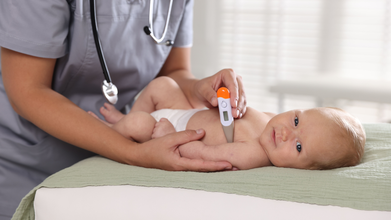
Frida Baby thermometer is facing severe backlash after parents criticized the company's marketing language on its packaging. The parents claimed that the company cracked sexual jokes on using baby thermometers and that it crossed a line for a product that was designed for infants.
The controversy gained more traction this week after a social media user posted about it on X with photos stating that the marketing relies on sexual jokes.

An X user @staystaystace wrote: "sexual jokes to market baby products is actually sick and twisted @fridababy this is absolutely appalling and disgusting".
Frida Baby Thermometer: What Was The Problem With Marketing
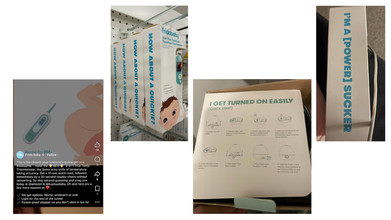
The photos include a screenshot of the thermometer packaging on which the graphics are pointed out to be problematic and inappropriate by the parents. Furthermore, the caption on the official account of Frida Baby social media reads: 'This is the closest your husband's gonna get to a threesome...'
In another photo of Frida Baby 3-in-1 Eat, Forehead and Touchless Thermometer, the marketing phrase reads: 'How About A Quickie?'
Another photo on steps for using the humidifier, the caption on the packaging reads: 'I Get Turned On Easily'. While a fourth photo reads: 'I'm A [Powerful] Sucker'.
Parents claim that the brand has used sexual market phrases found similarly on self care toys and massagers for products which are made for infants.
Read: Six-year-old Child Dies Of Medical Negligence During MRI At Greater Noida Imaging Centre

Amid this, older content from 2020, including deleted social media posts resurfaced featuring a baby with visible nose discharge and the caption read: 'What Happens When You Pull Out Too Early #nosefrida #dontmove'.

More recently, Frida Baby again drew attention for an Instagram post that centered on breastfeeding. The carousel post includes slides with statements like: 'Boobs, everyone loves to see them', followed by commentary on how breasts are widely accepted in pop culture, but criticized in the context of feeding a child. The final slide reads: 'Show Us What Your Boobs Can Do', which directs readers to company's website. A user on the Instagram post commented: "Hey so why do you sexualize your products??"
Another photo that resurfaced from 2021 reads: 'Top Windi Pro-Tips to tap that [g]ass (and sometimes even [poop emoji]):
- - Massage it real good
- - Lube that ish up
- - Wear a poncho
However, there were some parents who also defended the brand's tone and argued that humor is clearly aimed at adults who are navigated through the realities of parenting.
Frida Baby Thermometer: How Did The Brand React?
In an emailed statement, as reported by Complex, the spokesperson for the brand said:
From the very beginning, Frida has used humor to talk about the real, raw, and messy parts of parenting that too often go unspoken. We do this because parenting can be isolating and overwhelming, and sometimes a moment of levity is what makes a hard experience feel human, shared, and survivable.
Our products are designed for babies, but our voice has always been written for the adults caring for them. Our intention has consistently been to make awkward and difficult experiences feel lighter, more honest, and less isolating for parents.
That said, humor is personal. What’s funny to one parent can feel like too much to another. We’re never trying to offend, push boundaries for shock value, or make anyone uncomfortable. Importantly, our tone is never separate from our product. The humor we use is always grounded in a specific feature, benefit, or innovation — a reflection of the real problem we are solving for families.
Frida was built to support families through some of the most vulnerable and transformative chapters of their lives. We stand firmly behind that mission. We will continue to show up with honesty, empathy, and courage.
With each decision we make, we will continue to evaluate how we express our voice so that our commitment to families is unmistakable and our tone always meets the moment.
- Follow Us :


© 2024 Bennett, Coleman & Company Limited