
- Health Conditions A-Z
- Health & Wellness
- Nutrition
- Fitness
- Health News
- Ayurveda
- Videos
- Medicine A-Z
- Parenting
How To Tell If Your Infant Is Hungry?
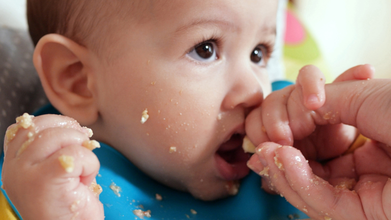
Credits: Canva
Infants cannot speak, so how do new parents know if their babies are hungry?
Picture this. You have just changed your baby's diaper, and went to bed, to finally rest. Suddenly, you hear a loud wail. Your baby is crying, again! This time, it is the hungry cry.
But what if we tell you that you no longer have to disrupt your rest with your baby's cry for hunger? This is only possible when you already know when to feed your baby. Babies cannot tell when they are hungry, so more often than not, parents may miss to understand they are hungry, until the hunger cry starts. But there are some cues you can look for to feed your baby!
Read: Are Indians 'Pressure Cooker' Parenting Their Kids? Gurugram CEO Raises Questions
Hunger Cues In Your Baby
Increased Activity
Your baby might become more alert and active. Thinking about food can make babies excited, so you may notice them moving around more than usual.
Head-Turning
Babies often turn their heads from side to side as if searching for food.
Mouth Movements
Look for signs like opening and closing their mouth, resembling a tiny bird waiting to be fed.
Rooting Reflex
Turning their head toward the breast, chest, or bottle is a classic hunger cue.
Sucking Motions
Babies may make sucking motions with their mouths, even if they don’t have a pacifier or bottle nearby.
Lip Smacking or Drooling
Increased drooling, lip-smacking, or sticking out their tongue are all signals they’re getting ready for a meal.
Sucking on Hands or Clothing
Your baby might start sucking on their fingers, hands, or even their clothes as a sign of hunger.
Clenched Fists
Watch for little fists clenching in frustration and impatience.
Focused Eye Contact
Babies who recognize their primary feeder might stare and follow you around the room with their eyes.
Facial Expressions
A furrowed brow or a distressed look might be your baby’s way of saying, “When’s the next meal?”
The “Neh” Sound
According to Dunstan baby language, the sound “neh” just before crying often means hunger.
Also remember that hunger pangs are strong enough to wake most babies, even from deep sleep. However, if your baby consistently sleeps for extended periods, it’s important to ensure they’re feeding frequently enough for their age.
For newborns, it’s generally recommended that they don’t regularly sleep longer than 4 hours at a stretch. Occasional long naps are fine—especially if they give you a much-needed rest! However, if your baby frequently sleeps through feeding times, consult your pediatrician to determine if gentle wake-ups for feeding are necessary.
How do you know your baby is feeding well enough?
It can be difficult to ensure that your baby is well fed, especially if you are breastfeeding, or when your baby is not of the age when he can talk. However, there are signals too for this, in fact your baby also learns how to signal that they need more milk or food.
It also depends on the age. For instance, a newborn will feed often, usually every 2 to 3 hours and sometime smore often. They feed up to 12 times every 24 hours. As your baby grows, their tummies grow too, in fact the tummy grows form a size of cherry at birth to walnut in 3 days. In a week, it is at the size of plum and in a month, it is of the size of a large chicken egg.
The "I am not hungry right now" signs for babies are:
- releasing or pushing away the breast or bottle
- closing their mouth and not responding to encouragement to latch on or suck again
- open and relaxed hands (instead of clenched)
- relaxing their body and even going a little limp
- looking around and showing interest in playing or other things
- looking content and maybe even smiling
- appearing happily drowsy and ready to go back to sleep
Are Indians 'Pressure Cooker' Parenting Their Kids? Gurugram CEO Raises Questions
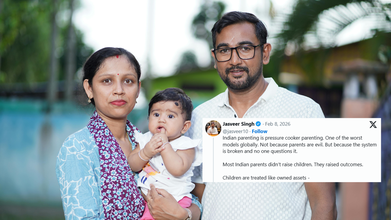
Representational image from Canva and X post
"Indian parenting is pressure cooker parenting. One of the worst models globally. Not because parents are evil. But because the system is broken and no one questions it," wrote co-founder and CEO of Knot Dating Jasveer Singh on X.
He further wrote: "Most Indian parents didn't raise children. They raised outcomes. Children are treated like owned assets."
Netizens reacting to his X post acknowledged the truth behind the statements he made. One of the users wrote: "This hit hard. Every line feels personal! You just described half of middle class India in one post."
While another wrote: "Oh my god! I love this post!! I'm sharing it -- it's brilliant. And so true. Hard feel!! I don't know who you are. But bless you".
What Is Pressure Cooker Parenting And Why Is It Being Discussed?
Singh's statement was not centered on parental intent, but on a system that leaves limited space for emotional expression for children and parents alike.
Pressure Cooker parenting comes from the utensil popularly used in Indian households called pressure cooker. It is a sealed pot that cooks food faster by using high pressure steam. It is compared to parenting because children are often under high pressure form their parents and society where they are expected to do certain thing and to become what their parents want.
While 2026 is switching away from gentle parenting, this way of parenting could do more harm to the child.
Pressuring the child could impact their confidence. Furthermore, when Singh wrote: "Children are raised like owned assets". It refers to the norm of how parents raise their kids to become something so they could be used as a social currency.
More often than not, a child's status, in terms of the work he or she does, and the salary he or she earns, the status of a family is decided. While it is an unsaid rule, it does pressurizes children into it.
What Is Wrong With Indian Parenting?
In a 2022 Facebook post shared by entrepreneur Ankur Warikoo, he noted things that are wrong with Indian way of parenting, which included:
- Comparison between children with others' children.
- Killing curiosity by not responding to their questions or saying that they are dumb and silly.
- Focusing more on society, especially on who to marry, how to dress, where to work.
- Looking at the world through their own experiences.
- Emotional blackmail.
- Dismissing mental health.
- Lack of trust in their own kids.
- Not teaching them about financial independence.
Is This Common Pregnancy Drug Linked To Cancer? Streeting Urges Public Inquiry
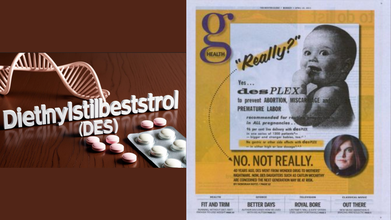
Credits: Harm and Evidence Research Collaborative and Association for Women In Science
This common pregnancy drug could be linked to cancer. Wes Streeting has been urged to launch a public inquiry into a miscarriage drug called Diethylstilbestrol, which, reports say has "ruined and devastated" the lives of countless women. On Monday, the Health Secretary Streeting met victims of the pregnancy drugs, which has been linked to cancer, early menopause and infertility.
What Is Diethylstilbestrol?
Diethylstilbestrol, commonly known as DES, is a synthetic form of female hormone estrogen, which was prescribed to thousands of pregnant women from 1940 to 1970s.
The drug was used to prevent miscarriage, premature labor and complications of pregnancy. This was also used to suppress breast milk production, as an emergency contraception and to treat symptoms of menopause.
What Is The DES Controversy?
In 1971, Diethylstilbestrol (DES) was linked to a rare cancer of the cervix and vagina known as clear cell adenocarcinoma, prompting US regulators to advise that it should no longer be prescribed to pregnant women. Despite this, the drug continued to be given to expectant mothers across parts of Europe until 1978. DES has also since been associated with other cancers, including breast, pancreatic and cervical cancers, The Telegraph reported.
Campaign group DES Justice UK (DJUK) is now urging Health Secretary Wes Streeting to order a public inquiry and introduce an NHS screening programme to identify people who may have been exposed to the drug before birth.
Victims described DES as “one of the biggest pharmaceutical scandals this country has ever seen,” warning that “the impact of this terrible drug cannot be underestimated as it has ruined and devastated so many lives,” according to The Telegraph.
In November, Streeting acknowledged that the “state got it wrong” and issued an apology to those affected. He also advised anyone who believes they may have been exposed to DES to speak to their GP.
Susie Martin, 55, from Manchester, whose mother was prescribed DES during pregnancy, told The Telegraph she has undergone between 20 and 30 operations as a result of the drug’s effects.
“The impact of this terrible drug cannot be underestimated as it has ruined and devastated so many lives, including my own,” she said. “The physical and emotional pain has been unbearable. I live with a constant fear that I will need more surgery or develop cancer—and I am far from the only one.”
Calling DES a “silent scandal,” Martin said she hopes the government’s engagement will lead to concrete action. “While I welcome Mr Streeting meeting us, it will only matter if he commits to meaningful steps for victims of this shameful chapter in British medical history, including a screening programme and a full statutory public inquiry,” she added.
What Is Happening With The DES Victims?
The Telegraph reported that compensation schemes have been set up for DES victims in the US and Netherlands, however, UK does not have one yet.
"There are harrowing accounts of harm caused by the historic use of Diethylstilbestrol (DES). Some women and their relatives are still suffering from the associated risks of this medicine which have been passed down a generation, and haven’t been supported. The Secretary of State has been looking seriously at this legacy issue and carefully considering what more the government can do to better support women and their families who have been impacted. NHS England has alerted all cancer alliances to this issue so that healthcare professionals are aware of the impacts of DES and the existing NHS screening guidance which sets out the arrangements for those who show signs and symptoms of exposure,” said a Department of Health and Social Care spokesman to The Telegraph.
COVID Vaccination Is Not Linked To Reduce In Childbirth, Says Study
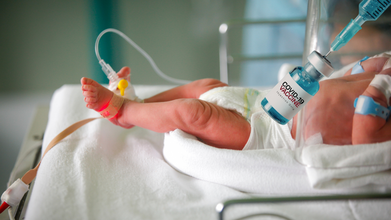
Credits: iStock and Canva
A large population-based study from Linköping University in Sweden has found no evidence that COVID-19 vaccination caused a decline in childbirth during the pandemic, countering persistent rumors that mRNA vaccines affect fertility. The findings have been published in the peer-reviewed journal Communications Medicine.
The study was conducted amid widespread misinformation, particularly on social media, suggesting that COVID-19 vaccines reduce the chances of becoming pregnant. These claims gained traction as several countries, including Sweden, recorded a drop in birth rates during the later stages of the pandemic, prompting questions about a possible link to vaccination.
“Our conclusion is that it’s highly unlikely that the mRNA vaccine against COVID-19 was behind the decrease in childbirth during the pandemic,” said Toomas Timpka, professor of social medicine at Linköping University and one of the study’s authors.
Why Researchers Investigated the Claim
Since the early months of the pandemic, unverified claims about vaccines and fertility have circulated widely online. When official data later showed fewer babies being born in some regions, researchers decided to examine whether vaccination could plausibly explain the trend or whether other social and demographic factors were at play.
Read: Ahmedabad Toddler Swallows Hulk Toy, Showed X-Ray, Doctors Remove It Via Endoscopy
To address the issue, the research team carried out an extensive analysis using real-world healthcare data rather than surveys or self-reported outcomes.
Study Looks at Nearly 60,000 Women
The study analyzed health records of all women aged 18 to 45 years living in Region Jönköping County, a region with a total population of around 369,000 people. This amounted to nearly 60,000 women included in the analysis.
Between 2021 and 2024, about 75 per cent of these women received at least one dose of a COVID-19 vaccine. Researchers examined data on childbirths, registered miscarriages, vaccination status and deaths using official healthcare records, allowing for a comprehensive comparison between vaccinated and unvaccinated groups.
Importantly, the researchers adjusted their analysis for age, recognizing that age is one of the most significant factors influencing fertility and pregnancy outcomes.
No Difference in Births or Miscarriages
When childbirth rates were compared between vaccinated and unvaccinated women, the researchers found no statistically significant difference. The same held true for miscarriage rates among women who became pregnant during the study period.
“We see no difference in childbirth rates between those who have taken the vaccine and those who haven’t,” said Timpka. “We’ve also looked at all registered miscarriages among those who became pregnant, and we see no difference between the groups there either.”
These findings align with several earlier international studies that have similarly found no association between COVID-19 vaccination and reduced fertility.
Other Factors Likely Behind Falling Birth Rates
According to the researchers, the decline in childbirth observed during the pandemic is more plausibly explained by broader demographic and social trends.
People currently in their 30s, the age group most likely to have children, were born in the second half of the 1990s. That period was marked by economic challenges and lower birth rates in Sweden, meaning today’s pool of potential parents is smaller than in previous generations.
In addition, pandemic-related factors such as health concerns, economic uncertainty, delayed family planning and lifestyle changes during lockdowns may have contributed to fewer pregnancies.
One of the study’s key strengths is its large, representative sample drawn from an entire region rather than a selected group. By using verified healthcare records and accounting for age-related effects, the researchers aimed to minimize bias and improve reliability.
The study received financial support from several sources, including the Swedish Research Council.
- Follow Us :


© 2024 Bennett, Coleman & Company Limited