
- Health Conditions A-Z
- Health & Wellness
- Nutrition
- Fitness
- Health News
- Ayurveda
- Videos
- Medicine A-Z
- Parenting
Is India Next In Social Media Ban For Teens? After Australia And New York, Madras HC Asks Center To Look Into It
Credits: iStock
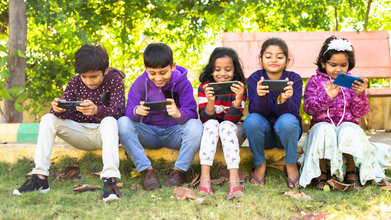
After Australia's social media ban for children under 16, New York is also considering a mental health warning for the young social media users. Social media platforms with infinite scrolling, auto play and algorithmic feeds will now be required to display warning labels about the harm to young users' mental health. This is under a new law, announced New York Governor Kathy Hochul.
“Keeping New Yorkers safe has been my top priority since taking office, and that includes protecting our kids from the potential harms of social media features that encourage excessive use,” Hochul said in a statement. This law aims to create a warning on platforms that offer "addictive feeds" auto play or infinite scrolls and applied to conduct occurring partly or wholly in New York. This however does not work for users when used outside the state. Hochul also compared the social media warning labels with products like tobacco, where there are labels like the risk of cancer on the packaging itself.
Not just this, but even India could be considering brining in a social media ban for teens.
What Is Happening In India With Teen Ban On Social Media?
While hearing a write petition, the Madras High Court asked the Union Government to look for possibilities in passing a legislation similar to the ban of under 16s using social media in Australia. The petition was to emphasize on the awareness of the stakeholders and parental windows in the device that could control the menace of pornographic material which is easily accessible to children. The court asked Centre to order internet provider service companies to provide a 'Parental Window' to prevent children from accessing such content.
The Madurai Bench of Justices G Jayachandran and KK Ramakrishnan told the authorities of child rights to accelerate this matter. The bench also noted that children could only be prevented from consuming such content only if there is a parental control app on the device. Judges also noted that parents have a higher responsibility in this, as children are highly vulnerable to such content.
What Is Happening In Australia?
To protect the mental health of children, Australia is now banning several social media apps, which include: Facebook, Instagram, Snapchat, Threads, TikTok, X, YouTube, Reddit, and streaming platforms Kick and Twitch. YouTube Kids, Google Classroom and WhatsApp are not covered under this rule as they do not fit those criteria. While anyone under 16 will be still able to watch most of the content without logging in, however, they cannot have an account on it. Critics are urging the government to widen the ban to include online gaming platforms such as Roblox and Discord, which are currently not covered.
Read: Australia Social Media Ban Explained: Why Government Plans to Restrict Accounts of Under-16s
The government says that it will also reduce the negative impact of social media's "design features that encourage [young people] to spend more time on screens, while also serving up content that can harm their health and wellbeing". A government study which was commissioned in 2025 found that 96% of children aged 10 to 15 used social media, and that seven out of 10 of them were exposed to harmful content. These content were misogynistic and violent in its nature, furthermore, content promoted eating disorders and suicide.
Children and parents will not be punished for infringing the ban, instead, social media companies will face fines of up to A$49.5m, which is equivalent of US$32m for serious or repeated breaches.
How To Tell If Your Infant Is Hungry?
Credits: Canva
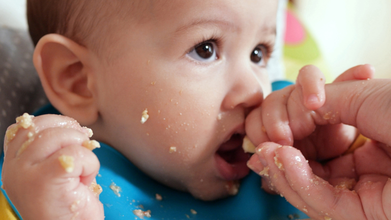
Infants cannot speak, so how do new parents know if their babies are hungry?
Picture this. You have just changed your baby's diaper, and went to bed, to finally rest. Suddenly, you hear a loud wail. Your baby is crying, again! This time, it is the hungry cry.
But what if we tell you that you no longer have to disrupt your rest with your baby's cry for hunger? This is only possible when you already know when to feed your baby. Babies cannot tell when they are hungry, so more often than not, parents may miss to understand they are hungry, until the hunger cry starts. But there are some cues you can look for to feed your baby!
Read: Are Indians 'Pressure Cooker' Parenting Their Kids? Gurugram CEO Raises Questions
Hunger Cues In Your Baby
Increased Activity
Your baby might become more alert and active. Thinking about food can make babies excited, so you may notice them moving around more than usual.
Head-Turning
Babies often turn their heads from side to side as if searching for food.
Mouth Movements
Look for signs like opening and closing their mouth, resembling a tiny bird waiting to be fed.
Rooting Reflex
Turning their head toward the breast, chest, or bottle is a classic hunger cue.
Sucking Motions
Babies may make sucking motions with their mouths, even if they don’t have a pacifier or bottle nearby.
Lip Smacking or Drooling
Increased drooling, lip-smacking, or sticking out their tongue are all signals they’re getting ready for a meal.
Sucking on Hands or Clothing
Your baby might start sucking on their fingers, hands, or even their clothes as a sign of hunger.
Clenched Fists
Watch for little fists clenching in frustration and impatience.
Focused Eye Contact
Babies who recognize their primary feeder might stare and follow you around the room with their eyes.
Facial Expressions
A furrowed brow or a distressed look might be your baby’s way of saying, “When’s the next meal?”
The “Neh” Sound
According to Dunstan baby language, the sound “neh” just before crying often means hunger.
Also remember that hunger pangs are strong enough to wake most babies, even from deep sleep. However, if your baby consistently sleeps for extended periods, it’s important to ensure they’re feeding frequently enough for their age.
For newborns, it’s generally recommended that they don’t regularly sleep longer than 4 hours at a stretch. Occasional long naps are fine—especially if they give you a much-needed rest! However, if your baby frequently sleeps through feeding times, consult your pediatrician to determine if gentle wake-ups for feeding are necessary.
How do you know your baby is feeding well enough?
It can be difficult to ensure that your baby is well fed, especially if you are breastfeeding, or when your baby is not of the age when he can talk. However, there are signals too for this, in fact your baby also learns how to signal that they need more milk or food.
It also depends on the age. For instance, a newborn will feed often, usually every 2 to 3 hours and sometime smore often. They feed up to 12 times every 24 hours. As your baby grows, their tummies grow too, in fact the tummy grows form a size of cherry at birth to walnut in 3 days. In a week, it is at the size of plum and in a month, it is of the size of a large chicken egg.
The "I am not hungry right now" signs for babies are:
- releasing or pushing away the breast or bottle
- closing their mouth and not responding to encouragement to latch on or suck again
- open and relaxed hands (instead of clenched)
- relaxing their body and even going a little limp
- looking around and showing interest in playing or other things
- looking content and maybe even smiling
- appearing happily drowsy and ready to go back to sleep
Are Indians 'Pressure Cooker' Parenting Their Kids? Gurugram CEO Raises Questions
Representational image from Canva and X post
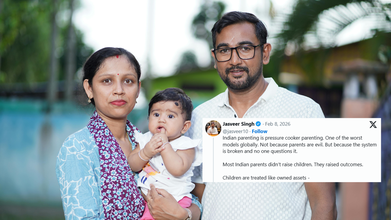
"Indian parenting is pressure cooker parenting. One of the worst models globally. Not because parents are evil. But because the system is broken and no one questions it," wrote co-founder and CEO of Knot Dating Jasveer Singh on X.
He further wrote: "Most Indian parents didn't raise children. They raised outcomes. Children are treated like owned assets."
Netizens reacting to his X post acknowledged the truth behind the statements he made. One of the users wrote: "This hit hard. Every line feels personal! You just described half of middle class India in one post."
While another wrote: "Oh my god! I love this post!! I'm sharing it -- it's brilliant. And so true. Hard feel!! I don't know who you are. But bless you".
What Is Pressure Cooker Parenting And Why Is It Being Discussed?
Singh's statement was not centered on parental intent, but on a system that leaves limited space for emotional expression for children and parents alike.
Pressure Cooker parenting comes from the utensil popularly used in Indian households called pressure cooker. It is a sealed pot that cooks food faster by using high pressure steam. It is compared to parenting because children are often under high pressure form their parents and society where they are expected to do certain thing and to become what their parents want.
While 2026 is switching away from gentle parenting, this way of parenting could do more harm to the child.
Pressuring the child could impact their confidence. Furthermore, when Singh wrote: "Children are raised like owned assets". It refers to the norm of how parents raise their kids to become something so they could be used as a social currency.
More often than not, a child's status, in terms of the work he or she does, and the salary he or she earns, the status of a family is decided. While it is an unsaid rule, it does pressurizes children into it.
What Is Wrong With Indian Parenting?
In a 2022 Facebook post shared by entrepreneur Ankur Warikoo, he noted things that are wrong with Indian way of parenting, which included:
- Comparison between children with others' children.
- Killing curiosity by not responding to their questions or saying that they are dumb and silly.
- Focusing more on society, especially on who to marry, how to dress, where to work.
- Looking at the world through their own experiences.
- Emotional blackmail.
- Dismissing mental health.
- Lack of trust in their own kids.
- Not teaching them about financial independence.
Is This Common Pregnancy Drug Linked To Cancer? Streeting Urges Public Inquiry
Credits: Harm and Evidence Research Collaborative and Association for Women In Science
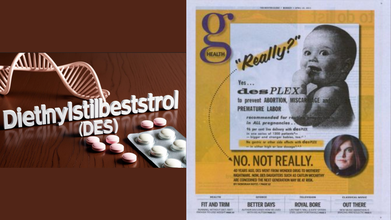
This common pregnancy drug could be linked to cancer. Wes Streeting has been urged to launch a public inquiry into a miscarriage drug called Diethylstilbestrol, which, reports say has "ruined and devastated" the lives of countless women. On Monday, the Health Secretary Streeting met victims of the pregnancy drugs, which has been linked to cancer, early menopause and infertility.
What Is Diethylstilbestrol?
Diethylstilbestrol, commonly known as DES, is a synthetic form of female hormone estrogen, which was prescribed to thousands of pregnant women from 1940 to 1970s.
The drug was used to prevent miscarriage, premature labor and complications of pregnancy. This was also used to suppress breast milk production, as an emergency contraception and to treat symptoms of menopause.
What Is The DES Controversy?
In 1971, Diethylstilbestrol (DES) was linked to a rare cancer of the cervix and vagina known as clear cell adenocarcinoma, prompting US regulators to advise that it should no longer be prescribed to pregnant women. Despite this, the drug continued to be given to expectant mothers across parts of Europe until 1978. DES has also since been associated with other cancers, including breast, pancreatic and cervical cancers, The Telegraph reported.
Campaign group DES Justice UK (DJUK) is now urging Health Secretary Wes Streeting to order a public inquiry and introduce an NHS screening programme to identify people who may have been exposed to the drug before birth.
Victims described DES as “one of the biggest pharmaceutical scandals this country has ever seen,” warning that “the impact of this terrible drug cannot be underestimated as it has ruined and devastated so many lives,” according to The Telegraph.
In November, Streeting acknowledged that the “state got it wrong” and issued an apology to those affected. He also advised anyone who believes they may have been exposed to DES to speak to their GP.
Susie Martin, 55, from Manchester, whose mother was prescribed DES during pregnancy, told The Telegraph she has undergone between 20 and 30 operations as a result of the drug’s effects.
“The impact of this terrible drug cannot be underestimated as it has ruined and devastated so many lives, including my own,” she said. “The physical and emotional pain has been unbearable. I live with a constant fear that I will need more surgery or develop cancer—and I am far from the only one.”
Calling DES a “silent scandal,” Martin said she hopes the government’s engagement will lead to concrete action. “While I welcome Mr Streeting meeting us, it will only matter if he commits to meaningful steps for victims of this shameful chapter in British medical history, including a screening programme and a full statutory public inquiry,” she added.
What Is Happening With The DES Victims?
The Telegraph reported that compensation schemes have been set up for DES victims in the US and Netherlands, however, UK does not have one yet.
"There are harrowing accounts of harm caused by the historic use of Diethylstilbestrol (DES). Some women and their relatives are still suffering from the associated risks of this medicine which have been passed down a generation, and haven’t been supported. The Secretary of State has been looking seriously at this legacy issue and carefully considering what more the government can do to better support women and their families who have been impacted. NHS England has alerted all cancer alliances to this issue so that healthcare professionals are aware of the impacts of DES and the existing NHS screening guidance which sets out the arrangements for those who show signs and symptoms of exposure,” said a Department of Health and Social Care spokesman to The Telegraph.
- Follow Us :


© 2024 Bennett, Coleman & Company Limited