
- Health Conditions A-Z
- Health & Wellness
- Nutrition
- Fitness
- Health News
- Ayurveda
- Videos
- Medicine A-Z
- Parenting
Older, Younger or Middle Child: Does Birth Order Shape Your Personality?

Credits: iStock
Are you a younger sibling in your family and you relate to other younger siblings? Do you feel some of your habits and traits match other younger siblings? Or are you the middle child and you feel that sometimes you are excluded. When you talk about it, other middle children also agree with you. If this is the case with you, then you may be interested to know the Birth Order Theory.
This theory was developed by Alfred Adler in 1964, who focused on the importance of birth order on personality development. In this theory, he says that though children may be born into the same household, their birth order greatly influence their psychological development.
As per Adler's birth order theory, a child could have certain personality traits which are as followed:
- The Oldest Child: more authoritarian, and feels powerful due to high expectations set by the parents
- The Youngest Child: treated like a spoiled baby and cannot rise above the other siblings
- The Middle Child: even tempered, but has trouble fitting in as they have always been sandwiched between the younger and the older siblings
However, for middle child, their characteristics would often get itself a term, called the Middle Child Syndrome.
What Exactly Is A Middle Child Syndrome And What Sets Them Apart From Their Younger And Older Siblings?
Middle child syndrome is the belief that middle children are excluded, ignored, and neglected because of their birth orders.
People often talk about “middle child syndrome,” the idea that the child who is neither the oldest nor the youngest develops a very particular personality. While some of this comes from family dynamics rather than science, many families do notice certain patterns.
Personality Traits
Middle children sometimes feel overshadowed by their siblings. The oldest is often seen as responsible and strong-willed, while the youngest gets extra attention for simply being the baby of the family. The middle child may end up somewhere in the middle of all this, which can make them quieter, more even tempered, and sometimes unsure of where they fit in.
Family Relationships
When it comes to parents, middle children might feel that they do not get the same level of attention as their siblings. The older child usually carries more responsibility, and the younger child often gets extra care and protection. The middle child may feel they slip through the cracks and receive less one-on-one time with their parents.
Sibling Rivalry
Feeling unseen can spark a sense of competition. Many middle children find themselves competing for attention from both parents and siblings. At the same time, they often become the peacemaker of the family simply because they are used to being in the middle of everything.
Feeling Left Out of Favoritism
When parents unintentionally favor the oldest for their achievements or the youngest for their sweetness, the middle child may feel they are no one’s first pick. They are not the trailblazer or the baby, and this can shape how they see their place in the family.
Carrying These Feelings Into Adulthood
Some people believe that these early experiences can follow middle children into adulthood. If a middle child grew up feeling overlooked, they might struggle with co dependency or constantly try to keep the peace in relationships. They may also find it difficult to believe they can be someone’s closest friend or favorite person.
Their personalities often seem muted when it is compared to the other siblings, this is because they have always blended into the background. These patterns can show up at work, in friendships, and in romantic relationships.
What Research Actually Shows
Although middle child syndrome is talked about a lot, scientific research has not clearly confirmed it. There have been studies that show some truth to the theories, while others deny. Some research suggests that middle children do feel less close to their parents or are less likely to turn to their parents when they are going through stressful times in their lives. A 2019 study showed that middle children were less likely to feel comfortable talking to their parents on topics like sex education. Though it is important to note that this is a broad topic to begin with, and could have cultural variations.
Other studies have suggested they might be less family oriented or more prone to certain perfectionistic traits. But these findings are not consistent across research. In fact, a number of large studies show no strong link between birth order and major personality traits such as extraversion, emotional stability, or agreeableness.
Some studies even contradict each other entirely. For instance, one study suggested middle children might have a higher risk of depression, while another found that oldest children were more likely to experience mental health issues.
So Does Middle Child Syndrome Exist?
With so many conflicting findings, scientists cannot say for sure. Many experts believe that personality is shaped by a mix of family environment, parenting styles, cultural background, and individual temperament. Birth order may play a small role, but it is unlikely to be the determining factor.
In short, middle child syndrome is more of a popular idea than a proven scientific fact. Each child’s experience is unique, and many different influences shape who we become.
Giant 99th Percentile Baby Of 5.9Kg Born In New York Has Taken The Internet By Storm
Credits: Canva
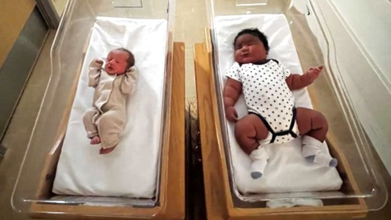
A giant baby weighing 5.9 kg was born to a mother in New York. She was left in shock and amaze when she saw that she had delivered a boy much bigger than she expected. The newborn baby weighed almost twice as much as an average baby. The baby is born to Terrica and Shawn on January 31 in Cayuga Medical Center. His weigh has made him the heaviest baby ever born at the Ithaca-based hospital, reported the NY Post.
The mother of four said she knew her son would be a little heavy, however did not know he would be this big. She said he is already wearing three-to-six month old baby clothes and diaper. She feels like she has given birth to a three-month-old.
The hospital also posted a photo of the baby on Facebook, comparing him with another newborn baby alongside. The other baby too was born on the same day, whose name is Margot and weighs only 1.8 kg.
Robyn Torgalski, System Director of Maternal and Child Health at Centralus Health, described the two births as a powerful reminder that every newborn and every birth story is unique. She noted that whether a baby weighs four pounds or thirteen, the medical team is fully equipped to deliver the highest level of care to both mother and child. Torgalski added that she is proud of the maternity services at Cayuga Health and feels privileged to support families during such an important life event.
Read: 99th Percentile Baby: What It Means, Risks, And What Parents Should Know
Giant Babies: All About Them
As per the Guinness World Records, the heaviest recorded baby ever was 9.97 kg born in Italy in 1955.
Dr Sermed Mezher, a digital health content creator, and a London based GP, shared: "Babies in the womb who measure in the 99th percentile for weight are referred to as macrosomic baby, meaning they are significantly larger than average for their gestational age. While most macrosomic babies are healthy, their larger size can increase the risk of certain complications during pregnancy and delivery."
What Does It Mean To Be A 99th Percentile Baby?
Babies in the 99th percentile for weight are larger than 99% of babies at the same gestational age. This may lead to birth complications such as shoulder dystocia—when the baby’s shoulders become stuck during delivery—or increase the likelihood of cesarean section. Mothers may also experience a higher risk of perineal tearing, postpartum hemorrhage, and greater pregnancy weight gain. Contributing factors include maternal diabetes, genetics, or excess weight gain during pregnancy.
This larger birth size is medically categorized under fetal macrosomia, which refers to babies in the top 10% of weight for gestational age—with the 99th percentile representing the most extreme cases.
What Causes A Baby To Be a 99th Percentile Baby?
While we do not know the cause in this case, there are certain reason a baby may fall into the category, which includes:
- You have a large fundal height (a measurement of fetal growth)
- Significant weight gain during pregnancy
- Gestational diabetes or pre-existing diabetes
- History of delivering large babies
- Prolonged pregnancy past due date
- Parental genetics (you were a large baby yourself)
Rare Brain Surgery In 2.5-Year-Old Helps Reverse Devastating Stroke Effects

Credit: Canva
A team of doctors in Uttar Pradesh successfully performed a rare and highly complex neuro-interventional procedure on a two-and-a-half-year-old girl that enabled significant neurological recovery.
The child initially had severe indigestion and mild fever. However, it quickly escalated into repeated seizures, altered sensorium, and sudden loss of movement.
At ApolloMedics Super Speciality Hospital, Lucknow, the child was diagnosed with deep Cerebral Venous Sinus Thrombosis (CVST) with multiple brain infarcts -- a condition associated with high mortality risk and potentially devastating long-term neurological disability.
“Deep cerebral venous thrombosis in toddlers is exceptionally rare, and neuro-intervention in pediatric stroke is particularly challenging because of the small size of vessels and increased risk of bleeding,” said Dr. Dewansh Mishra, Interventional Neuro-Radiologist, at ApolloMedics.
“Literature on catheter-directed thrombolysis in such young patients is limited. In this case, the child was deteriorating quickly, and timely escalation to precision neuro-intervention was crucial to prevent irreversible brain injury and give her the best possible chance of recovery,” he added.
The Rare Brain Surgery
Dr. Mishra said that the child was also diagnosed with Antiphospholipid Antibody (APLA) syndrome, a clotting disorder that increases the tendency of blood to clot excessively.
Infection and dehydration further worsened the condition and accelerated stroke progression.
Recognizing the urgency, a multidisciplinary team of doctors took a critical, high-risk decision to escalate treatment without delay. They performed intracranial catheter-directed thrombolysis, under general anesthesia, preventing irreversible brain injury in the toddler.
Through the femoral vein in the thigh, a microcatheter was carefully navigated into the intracranial venous system, and clot-dissolving medication was delivered directly at the site of thrombosis to restore venous drainage. This was successful in limiting further neurological damage.
"After nearly three weeks of intensive care and rehabilitation, the child was discharged with significant neurological recovery. She is now able to walk, speak, and perform activities that children of her age do," the hospital said in a statement.
The case, marked by rapid deterioration and a narrow window for intervention, will be presented at the Indian National Stroke Conference 2026 in Kochi, underlining both its clinical significance and the growing capabilities of advanced stroke care in India.
Can Stroke Occur In Very Young Children?
While stroke is more common in adults than in children, the condition can occur in children and debilitate their lives.
Pediatric stroke is a rare condition affecting one in every 4,000 newborns and an additional 2,000 older children each year.
Stroke in young children is similar to that of adults and is caused by a brain injury due to the interruption of blood flow to part of the brain.
In young children, the diagnosis is often delayed. A stroke typically begins suddenly in children and infants, with Seizures the most common symptom.
Extreme sleepiness or altered mental status and a tendency to use only one side of the body are other major symptoms.
Priyanka Chopra, Nick Jonas Open Up About Malti’s Premature Birth And NICU Battle

Credits: Canva
Priyanka Chopra and Nick Jonas, we all know them as a power couple. However, there are moments that have broken them and they both have talked about it. This was the moment of their daughter Malti Marie Chopra Jonas' birth.
On February 4 episode of the Jay Shetty Podcast, Jonas, 33, opened up about his daughter's birth. "She came to the world under sort of very intense circumstances, which I have not really talked about ever. She came out, she was one pound and 11 ounces, and purple basically. These angels at the NICU kind of resuscitated her in that moment, got her taken care of really quickly, and intubated and everything else."
Also Read: Shingles Can Strike More Than Once, Vaccination Offers Protection, say experts
In fact, recently a video has been circulating of Priyanka Chopra Jonas talking about the premature birth of her daughter too. She described this period as "tough" and said that it was extremely hard on her. She also called Malti a "miracle baby".
On the Jay Shetty podcast, she revealed that the couple were forced to announce her birth, whereas they wanted to wait till her health gets better. They had put everything on halt and visited the NICU every single day. "We received a text saying that her (Malti) birth would be out in the newspapers, if we don't, they are going to put it in within three hours. So we were kind of forced into announcing her birth because we wanted to control our own narrative. We weren't ready. We didn't know what would happen with her or how she would be."
Malti's Premature Birth
Priyanka shared that she was informed about her premature delivery in the 27th week. This is what made her completely "shut down". She also recalled sitting in front of the fireplace for nine hours and was not able to process the situation.
Like Jonas, Priyanka too noted that Malti was purple at birth and required immediate NICU attention. She also said that the nurses' fingers were too big for her small mouth. She recalled feeling "numb" at that time.
However, Jonas shared that Priyanka and him "had a lot of tough conversations day in, day out about caring" for Malti. He also appreciated his wife's strength on handling the situation. "The way in which she handled it was so inspiring to me, and you know, allowing for those days to be tough, but to be tougher for our little girl was the focus."
Malti received six blood transfusions and gained weight in the hospital. After nearly three and half months, she was able to go home.
Priyanka reveals that in her house there is a "big mandir" with "a large Shiv Ji murti". This is where everyone sat as a family and she cried not out of fear, but out of gratitude. "Gratitude that she survived, that she was home, that she chose us, and that we were able to make it happen. IVF is tough."
Read: What Parents of Premature Babies Must Know About the NICU, According to a Neonatologist
What Parents Of Prematurely Born Babies Must Keep In Mind?
Health and Me had earlier spoken to Dr Sanjay Wazir, Medical Director, Neonatology and Pediatrics at Motherhood Hospitals, Gurugram who pointed out that Neonatal Intensive Care Unit or the NICU may seem overwhelming, however, it must be seen as a sanctuary of healing.
"In the NICU, premature or unwell newborns receive specialized medical attention, constant monitoring, and compassionate care from expert hands. Here, the mother and the baby are well taken care of. This will help the baby lead a healthy life. Hence, NICU care is important for all the premature or unwell babies," he says.
What Happens Inside The NICU?
The doctor explains that the NICU provides a controlled and nurturing environment where babies can grow stronger outside the womb. "It helps maintain their body temperature, supports breathing, and ensures proper nutrition through feeding tubes if necessary," he says.
Every machine in the NICU is for a specific purpose, right from oxygen support to heart rate monitoring, ensuring that each baby receives precisely what they need. Parents often find comfort knowing that the experts in the NICU are constantly watching over their child’s progress, explains the doctor.
The doctor points out that parents are essential part of the NICU journey. "Your touch, your voice, and your calm presence can help your baby feel safe and comforted," he tells to all the parents. However, what is extremely important is to maintain hygiene guidelines, staying involved in daily care, and communicating regularly with the doctors and nurses to "strengthen your bond and confidence as caregivers." The doctor says that during this time, the mother will also be taught about Kangaroo care, which is skin-to-skin contact that helps the mother bond with her baby.
- Follow Us :


© 2024 Bennett, Coleman & Company Limited