
- Health Conditions A-Z
- Health & Wellness
- Nutrition
- Fitness
- Health News
- Ayurveda
- Videos
- Medicine A-Z
- Parenting
Should Kids “Learn to Tolerate” Delhi-NCR Pollution? Doctor Addresses Parents’ Fears About Air Purifiers and Immunity
Credits: PTI
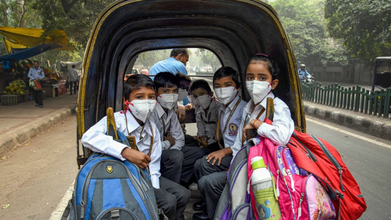
Delhi continues to choke, and again wakes up to toxic air on Friday, as the Air Quality Index (AQI) stayed in 'severe' category. As of 8am, the Anand Vihar monitoring station recorded an AQI of 418 as per the Central Pollution Control Board (CPCB). As of 7am, as per aqi.in, Delhi's average AQI was recorded at 455. As of mid-day, around 10am, the AQI was recorded at 303, which is equivalent to smoking 10.3 cigarettes noted aqi.in.
Parents too are now concerned about their children's health. A Delhi resident Akshat Verma, posted on his LinkedIn that his three-year-old son now needs to understand the term AQI. He writes: "One week he’s learning how to hold a pencil... next week he’s learning why he can’t go to school because the air is ‘too poisonous'."
Also Read: Taking Magnesium And Melatonin Together? Here’s How It Affects Your Sleep
Many parents echo the feeling, and many have raised questions too, including if at all an air purifier helps a child as the moment the child steps out, he will be breathing polluted air. Addressing all the questions, Dr Shreya Dubey, who is a leading pediatrician and newborn specialist uploaded a video on her Instagram @anantakidsofficial.
"If we have to stay in Delhi-NCR, then the child should have the habit to tolerate air pollution". "Doctor, if we use air purifier, won't the child's immunity become weak?" These are some of the questions the doctor is asked repeatedly by parents.
Her answer to all these questions is simple: "Air toxicity has nothing to do with immunity."
The doctor explains that if someone is smoking about 30 cigarettes a day, that does not make his immunity better than the one who smokes just 5 cigarettes in a day. The doctor says that exposure to toxic pollutants has no relation with tolerance or immunity building, in fact, longer exposure can cause more damage.
Also Read: China’s ‘Zombie Cell’ Pill Claims To Extend Human Life To 150—Could It Work?
How Can You Protect Your Child Against Delhi's Toxic Air?
The doctor suggests to use air purifier for at least 8 to 10 hours at night so the child's lungs can recuperate. She also suggests that for those who cannot afford an air purifier, they can keep air purifying plants at home. In fact, NASA has compiled a list of indoor plants that can improve indoor air quality. The list includes:
- Spider Plant, that can remove formaldehyde, xylene, and toluene
- Snake Plant, that can remove formaldehyde, benzene, xylene, toluene, and nitrogen oxides
- Peace Lily, that can remove formaldehyde, benzene, trichloroethylene, xylene, and ammonia
- Aloe Vera, that can remove formaldehyde and benzene
- Boston Fern, that can remove formaldehyde and xylene
The doctor also suggests other alternative for an air purifier, which includes wearable purifier for indoor pollution, charcoal bags in child's room, and DIY fan filter boxes.
What Can Exposure To Pollution Do To You?
Chronic pollution exposure aggravates oxidative stress and systemic inflammation. This means, with every breath you take, you inhale a toxic swamp.
As per Pusan National University, long term air pollution exposure actually triggers allergic immune responses in the lungs. Furthermore, a 2022 study published in the International Journal of Environmental Research and Public Health also shows the negative impact on immune system with alarming and harmful air quality.
As per another 2000 study, published by the British Society for Immunology, people living in areas with higher pollution levels show measurably different immune responses than those in cleaner environment.
Air pollution contains toxins like particulate matter, ozone, carbon monoxide, nitrogen dioxide, and sulfur dioxide. It also includes hazardous air pollutants (HAPs), such as lead, mercury, asbestos, benzene, and other volatile organic compounds. When one breathes this toxic and poisonous air the respiratory system bears the initial brunt of it. The pollutants then damage the delicate tissues lining your airways, and disrupts the barrier that normally prevents harmful substances from entering your body. When this first line of defense is compromised, pathogens find it easier to established infections.
India Ends OTC Sale of Cough Syrups, Doctor's Prescription Now Mandatory

Credit: Canva
India’s Union Ministry of Health and Family Welfare has issued a notification ending the over-the-counter (OTC) sale of all syrups, including cough syrups.
Under the new rules, a doctor's prescription will now be required to purchase cough syrups across the country.
“Consequently, the sale and dispensing of cough syrups in smaller villages will now be required to take place only through duly licensed pharmacies in accordance with the provisions of the Drugs and Cosmetics Act, 1940 and the Rules framed thereunder,” the notification said.
Why Are the Rules Being Amended?
The amendment comes months after contaminated cough syrups were linked to the deaths of 22 children in Madhya Pradesh and Rajasthan, raising fresh concerns over the safety and regulation of commonly used liquid medicines.
Following the incident last year, health authorities in India had banned three cough syrups Coldrif, Respifresh TR and ReLife after traces of diethylene glycol (DEG) were detected in the products. The Coldrif contamination was linked to the deaths of 22 children in the country.
“The amendment has been undertaken to strengthen regulatory oversight of syrup formulations and to align the exemption framework with contemporary public health and safety requirements,” the notification said.
“The measure is expected to promote responsible distribution and sale of cough syrups while ensuring greater compliance with regulatory standards across the country,” it added.
Also read: Introducing Eggs Before Age One May Lower Allergy Risk by 17%, Says Study
Experts Welcome Move To Restrict Cough Syrup Sales
Dr Kuldeep Kumar Grover, Associate Director, Pulmonology and Critical Care, CK Birla Hospital, Gurugram called it a
"a good initiative to include all syrup varieties, cough syrups included, under prescription medicines".
Cough syrups have substances that might lead to drowsiness, addiction, or drug interaction in patients who do not seek medical advice before taking the medicines.
"It is important to note that a cough could be a symptom of other serious conditions like infections, asthma, and allergies. Prescription-based access encourages proper evaluation, accurate treatment, and safer medication use," Grover said.
Dr. (Prof.) Mohsin Wali, former Physician to the President of India, said cough syrups and similar formulations often contain suppressants such as codeine and dextromethorphan (DXM), along with other solvents.
Dr. Wali, Senior Consultant and Head of Preventive Cardiology at Pacific One Health, recalled previous incidents in which contaminated Indian-made cough syrups were linked to deaths in Gambia and other African countries.
"Industrial-grade solvents were detected in some of these products, leading to kidney failure, severe metabolic acidosis, and, in some cases, death," he said.
According to Dr. Wali, the new notification will help curb the overuse, misuse, and addictive use of cough syrups while improving patient safety.
What Did The Notification Say?
The Ministry notified an amendment to the Drugs Rules, 1945, through Gazette Notification G.S.R. 927(E) dated December 29, 2025, published in the Gazette of India Extraordinary, Part II, Section 3, Sub-section (i), dated December 30, 2025.
The amendment omits the word “Syrup” from Schedule K, Serial No. 13, Entry 7 under the heading “Class of Drugs.”
Schedule K of the Drugs Rules, 1945, provides exemptions from certain provisions of the Drugs and Cosmetics Act, 1940, and the rules framed under it for specified classes of drugs.
Before this amendment, Entry No. 13 of Schedule K permitted the sale of cough syrups in villages with a population of less than 1,000 without requiring compliance with certain retail sale licensing provisions.
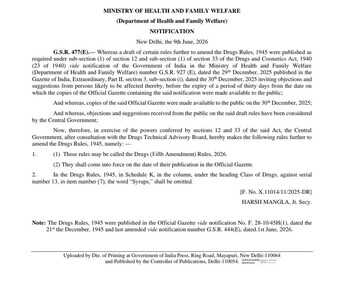
With the omission of the word “Syrup” from the entry, this exemption will no longer apply to cough syrups.
Manufacturers, distributors, and retailers dealing with cough syrups have been advised to ensure strict compliance with the applicable licensing and regulatory requirements under the Drugs and Cosmetics Act, 1940, and the Drugs Rules, 1945.
Ban On Pediatric Cough Syrups
Last year, India formally prohibited the use of certain commonly available OTC cough and cold medicines in children below the age of four.
The policy move, notified through a gazette notification, banned a fixed-dose combination (FDC) of Chlorpheniramine Maleate and Phenylephrine Hydrochloride—two ingredients commonly found in pediatric cough syrups.
The decision followed growing global concerns over the safety of these medicines in very young children, with India joining several countries that have introduced stricter regulations.
Countries including the United States, Canada, and the United Kingdom had previously issued guidelines or warnings regarding the use of OTC cough and cold medicines in young children.
3 Infants Hospitalized In US Botulism Outbreak Tied To Powdered Formula
Credit: Canva
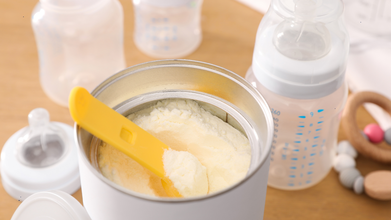
A new botulism outbreak in the United States linked to the now-recalled Nara Organics Whole Milk Organic powdered infant formula has led to hospitalization of at least three infants in three states, according to a notice from the Centers for Disease Control and Prevention (CDC).
The affected infants, aged between 2 and 5 months, are from California, Pennsylvania, and Washington state. All three have been hospitalized and are receiving treatment for infection caused by the bacterium Clostridium botulinum.
The CDC noted that on June 13, Nara Organics recalled all Nara Organics Whole Milk Organic Infant Formula products, including all lot numbers and both can sizes. The products were sold online and at major retailers nationwide.
“Testing of opened cans of Nara Organics brand formula and unopened Nara Organics product samples is underway, and results are expected in the coming weeks,” the CDC said.
This is the second recent outbreak of infant botulism linked to powdered formula. Earlier this year, investigators from the California Department of Public Health, working with federal officials and other state health departments, identified 51 suspected or confirmed cases of infant botulism across 19 states between March 2022 and December 2025. Those infants had consumed ByHeart infant formula.
What Parents And Caregivers Should Do
Also read: Why Sleeping Pill Addiction Is Common Among Football Players
The CDC has urged parents and caregivers to immediately stop using any Nara Organics Whole Milk Organic Infant Formula.
If you have unopened cans of the recalled formula, throw them away or return them. Parents should also wash any items and surfaces that may have come into contact with the formula with hot, soapy water or in the dishwasher.
Seek immediate medical attention if your infant consumed the recalled formula and develops any of the following symptoms:
- Poor feeding
- Loss of head control
- Difficulty swallowing
- Decreased facial expression
Symptoms of infant botulism can take several weeks to appear. Parents whose infants consumed the recalled formula should monitor them for symptoms for up to one month after their last exposure.
What Is Botulism?
Read More: Introducing Eggs Before Age One May Lower Allergy Risk by 17%: Study
Botulism is a rare but serious illness caused by a toxin produced by the bacterium Clostridium botulinum. The toxin attacks the nervous system and can lead to life-threatening complications if not treated promptly.
Botulism is considered a medical emergency because it can cause paralysis and breathing difficulties.
Types of Botulism
There are several forms of botulism, including:
- Foodborne botulism
- Wound botulism
- Iatrogenic botulism
- Inhalation botulism
- Infant botulism
Infant botulism is the most common form in babies between 2 and 8 months old. It occurs when Clostridium botulinum spores grow in a baby's intestines and produce toxin. Honey and contaminated soil are known sources of exposure.
Symptoms of Infant Botulism
Symptoms typically begin 18 to 36 hours after exposure and may include:
- Constipation is often the first sign
- Weak or floppy movements
- Weak cry
- Drooling
- Drooping eyelids
- Difficulty feeding or sucking
- Progressive paralysis
Infant botulism often begins with constipation but is usually first recognized through feeding difficulties, a weak or altered cry, and poor head control.
If left untreated, the illness can progress to severe paralysis, breathing difficulties, and prolonged hospitalization.
More Indian Women Turning To Egg Freezing For Future Family Planning: Know The Risks And Benefits

Credit: AI generated image
Egg freezing, once perceived as a concept limited to celebrities or affluent urban populations, is gradually becoming an important part of reproductive planning among Indian women, according to fertility experts.
Dr. Tarang Yadav, Senior Consultant - IVF, Obstetrics and Gynecology, ShardaCare–Healthcity, told HealthandMe that India is witnessing a gradual shift in conversations surrounding reproductive health, with more women seeking fertility consultations proactively rather than after experiencing difficulty conceiving. As per the expert, this trend is particularly visible in metropolitan and tier-2 cities.
The reason? Increasing awareness regarding fertility, delayed parenthood, evolving lifestyles, and advancements in reproductive medicine have contributed to growing interest in fertility preservation across different age groups and professional backgrounds.
"Today, more women are prioritizing education, career growth, financial stability, and personal readiness before planning pregnancy," Dr. Tarang said.
According to the World Health Organization, around 17.5 per cent of the adult population globally, nearly 1 in 6 people, experience infertility at some point in their lives, highlighting the growing need for accessible fertility care and awareness.
Also read: High Prolactin Levels Behind 40% Surge In Female Infertility Cases, Warn Doctors
What Is Egg Freezing?
Dr. Tarang explained that egg freezing, medically known as oocyte cryopreservation, allows women to preserve healthier eggs at a younger reproductive age, potentially improving future reproductive opportunities. While it does not guarantee pregnancy later in life, it offers an additional reproductive option for women who may wish to delay childbearing for personal, social, or medical reasons.
According to current international fertility preservation guidelines, planned oocyte cryopreservation can be considered in appropriately counselled women, particularly when undertaken at a younger age and after proper fertility assessment.
Who May Benefit From Egg Freezing?
Dr. Tarang noted that egg freezing is increasingly being considered not only for social reasons but also for several medical indications.
Women who can benefit from fertility preservation include those:
- planning a delayed pregnancy due to career or personal circumstances, who have not yet found a suitable life partner,
- cancer patients undergoing chemotherapy or radiotherapy, women with severe endometriosis, patients undergoing ovarian surgeries,
- with diminished ovarian reserve
- with a family history of premature ovarian insufficiency
"In such situations, fertility preservation can provide psychological reassurance and reproductive flexibility before ovarian function declines further," Dr. Tarang said.
Read More: India Makes Significant Progress In Maternal Care, Nutrition And Child Immunization: NFHS-6
Why Timing Matters
Although egg freezing can be considered at different ages depending on individual ovarian reserve and reproductive goals, outcomes are generally better when eggs are frozen before the age of 35. Younger eggs tend to have better quality and chromosomal competence, which may improve future IVF outcomes.
The expert stressed the importance of early fertility counselling and ovarian reserve assessment. Tests such as Anti-Müllerian Hormone (AMH), ultrasound-based antral follicle count (AFC), and overall reproductive evaluation help determine whether a woman is an appropriate candidate for egg freezing.
Common Concerns About Egg Freezing
Addressing common concerns around the procedure, Dr. Shanujeet Kaur, Associate Director and Senior Gynecologist, Department of Fertility and Gynecology at Cloudnine Group of Hospitals, Chandigarh, told HealthandMe that some women may experience temporary mood swings due to hormonal medications used during ovarian stimulation.
Light to moderate exercise, including walking and stretching, is generally safe during treatment, though high-intensity workouts may be discouraged as the ovaries enlarge.
Current research suggests egg freezing is generally safe, with no strong evidence linking fertility medications used during the procedure to long-term health problems such as breast cancer, ovarian cancer, or infertility in most women.
Recovery after egg retrieval is typically quick, with most women able to resume normal activities within one to three days, though mild cramping, bloating, spotting, or fatigue may occur temporarily.
The expert also advised maintaining a balanced diet, staying hydrated, and following personalised medical guidance regarding birth control and lifestyle measures during treatment.
- Follow Us :


© 2024 Bennett, Coleman & Company Limited