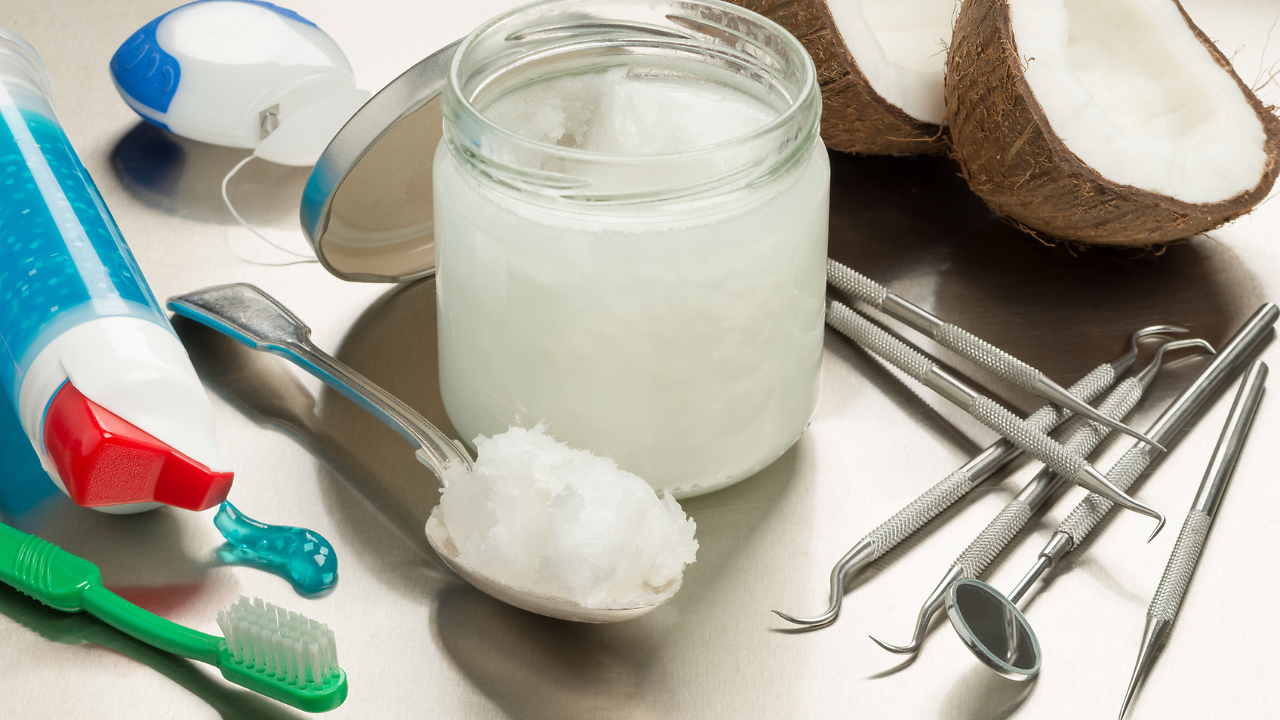
Every year on September 23, India marks National Ayurveda Day. Most articles around it tend to either worship Ayurveda blindly or dismiss it entirely. The truth, as usual, sits somewhere in between, and a look at the research shows that a few old habits hold up surprisingly well.The Oil Pulling Question Take oil pulling, the practice of swishing oil in the mouth for several minutes each morning. It sounds unscientific, but it has actually been tested in real clinical trials. A 2009 study by researchers Asokan, Emmadi and Chamundeswari, published in the Indian Journal of Dental Research, tested sesame oil pulling against chlorhexidine mouthwash in teenagers with gum disease. It found oil pulling reduced plaque about as effectively as the mouthwash did.But the full picture is more complicated. A separate eight-week trial found that swishing plain distilled water produced nearly as much of a drop in plaque as swishing oil did. This suggests the benefit may come from the act of swishing itself, not the oil. Oil pulling probably helps gum health, but the quality of evidence backing it is still low. In short, worth trying, but not worth swearing by.Tongue scraping fares a little better. Dentists, regardless of their views on ayurveda, generally agree it helps reduce the bacteria responsible for bad breath.What Meal Timing Research Shows The most striking overlap between old practice and new research, though, is around meal timing. Ayurveda has long insisted that the biggest meal of the day should be eaten by early afternoon, not at night. There isn't a lot of research on this specific idea, but what little exists does point the same way. A 2023 study by researchers including Anna Palomar-Cros, published in the journal Nature Communications, found that eating a later first or last meal of the day, especially dinner after 9 pm, was linked to a higher risk of cardiovascular disease, particularly in women. A smaller, earlier study by researchers at the University of Surrey, published in Current Biology in 2017, found that when healthy volunteers ate the exact same meals five hours later than usual, their blood sugar rhythm shifted and glucose levels changed, even though the food itself never changed.It isn't a large body of research, and no one is claiming ayurveda "predicted" modern meal timing. But the little that has been studied lines up with what ayurveda has said for centuries.Where The Evidence Runs Out Not everything survives scrutiny, though. Claims about "flushing out toxins" through practices like oil pulling or dry brushing don't hold up to scientific testing, the body doesn't work that way, and no clinical study has shown otherwise.Even global health bodies are approaching ayurveda with caution rather than outright endorsement. The World Health Organization, in partnership with India's Ministry of Ayush, set up a Global Centre for Traditional Medicine in Jamnagar, Gujarat, backed by a $250-million investment. Its stated purpose is to build scientific evidence around traditional practices, a signal that much of ayurveda remains under study and is not already proven.The takeaway isn't that ayurveda is either superstition or ancient genius. It's that a few of its habits- earlier meals, tongue scraping, oil pulling with realistic expectations - are backed by real, if modest, evidence. The rest still needs more research before anyone can call it science.(Disclaimer: This article is for informational purposes only and is not a substitute for professional medical advice.)