

Login to get the latest articles, videos,
gallery, and a lot more…
 Email
 Google
 Facebook
Deepinder Goyal's Temple Device: Why Doctors Are Questioning Its Science
Credit: X

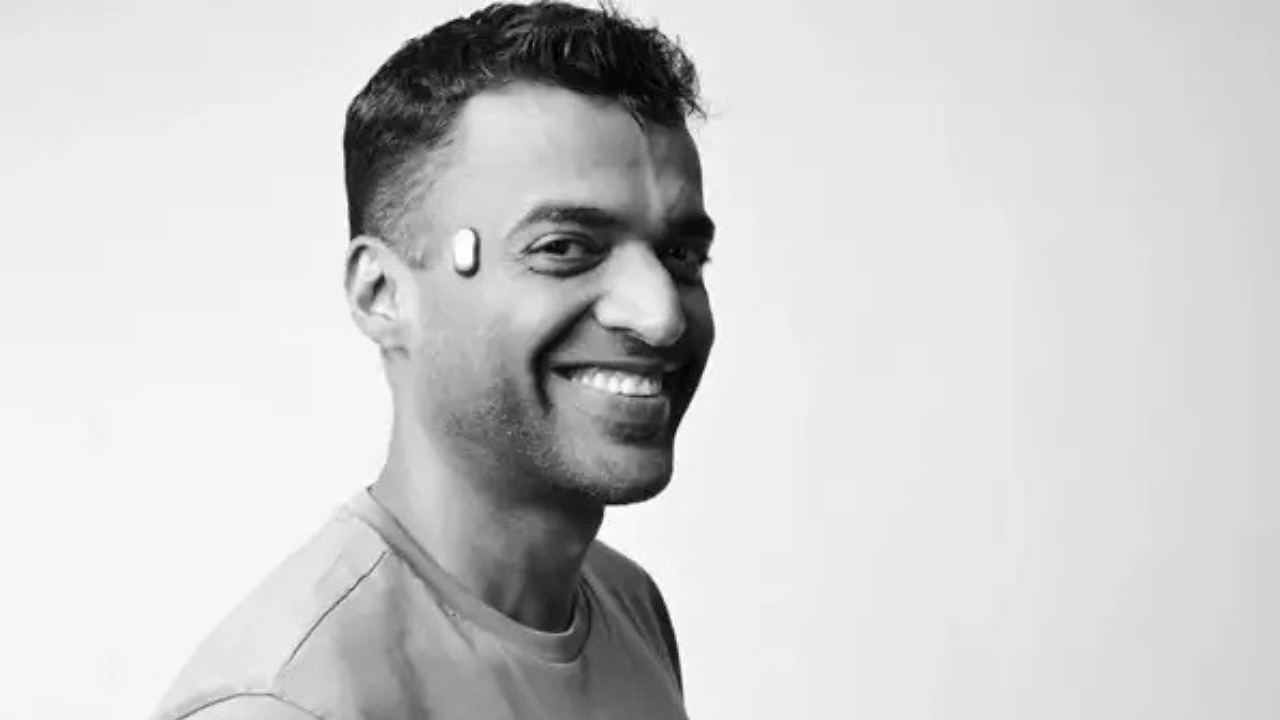
Dear Concerned Indian Doctors,I see your rage against Temple on X. I have a few points to make:1. First and foremost, a business lesson: if Temple were a scam, and any of what we said weren't true, people would know it in just a few days of using Temple. We have 14-day, no-questions-asked returns (which even Apple doesn't offer in India). If the product doesn't work, it fails out of the gate and the company dies before recovering a tenth of its R&D.2. We have already spent $30m building Temple, $20m out of which is my own money. Selling a few thousand devices recovers a small fraction of this investment. A scam that pays nothing is not a scam anyone would run.3. I left the Eternal CEO role to chase purpose with Temple. This is not about money. I have enough of it to last for generations. My incentives are fully aligned with getting the science right. I am not staking a reputation earned over 20 years on making a quick buck.4. Our employees bought into our round a few months ago. The round we're raising now is mostly our customers. Scams don't build that cap table.5. Most wearable companies start with internal studies. Whoop shipped its band in 2015, and the first published validation followed a few years later. We hold ourselves to a higher standard; pre-prints are a step prior to peer reviewed publications, and they are coming up.6. At some point you have to stick your neck out and say: we believe in our science, and the product is now valuable enough for people to pay for and use. We believe we are there. More validation continues in public. 7. We are confident that we are building something that the world is going to be positively astonished with. We stand by our science and our methods. Each of our claims is easily verifiable by individuals and institutions alike, and you will see a lot of independent studies come up on their own when the device becomes available to use.Last but not the least, the most ground breaking features in Temple are not even public yet. And some of them, thankfully, have nothing to do with doctors 🤭Hope this addresses some or all of your concerns. If not, keep raging 😘🤗
— Deepinder Goyal (@deepigoyal) November 5, 2026
Goodmorning to you good people (not you Deepinder). Now that India has entered the commercial era of "scienceploitation", I would like to educate and inform the people on this topic, using one of Temple device's claims as an example. This is long, but stay with me, you will really benefit.But first, what is Scienceploitation?It is a marketing and communication tactic where brands, influencers, or media outlets borrow or manipulate language from legitimate, emerging areas of science (such as stem cell research, the microbiome, or epigenetics) to promote unproven health, wellness, or beauty products and services.The term was coined by @CaulfieldTim (I am honored to have known him and written an editorial with him in the BMJ), a professor of health law and policy at the University of Alberta.Temple Device is your first boss battle against scienceploitation. Let me explain this using their own biggest claim - ENTROPY. Temple claims it measures Entropy.What is entropy? In lay terms, entropy is a measure of how spread out, mixed up, or disorganized things naturally become over time. In human health, entropy can be a measure of disorder, wear and tear, and loss of organization in your body's cells, tissues, and organ systems.Low Entropy = High Health (Order): A young, healthy body is in a state of low entropy. Your cells are communicating well, your DNA is intact, your proteins are folded properly, and your heartbeats have a smooth, adaptable rhythm.High Entropy = Disease or Aging (Disorder): As entropy increases, biological "mess" builds up. Damaged DNA accumulates, proteins misfold, cells stop working right, and communication breaks down.Aging is essentially a slow, natural rise in entropy. While conditions like cancer (uncontrolled, chaotic cell growth), neurodegeneration (like Alzheimer’s protein tangles), and metabolic dysfunction (like uncontrolled blood sugar) represent spikes of high entropy in specific parts of the body. Note that - aging is a normal anatomical and physiological process, it is not a disease.Now you know how complex this term is? Well, this is what Deepinder Goyal's Temple device claims to measure.A device can produce a number without proving that the number means what its advertising says. That is the central problem with Temple’s “Entropy.”“Entropy” has different scientific meanings. In physics, it concerns energy transformations. In heartbeat or brainwave analysis, it describes how irregular or unpredictable a signal is. Measuring one does not mean you have measured the other, or someone’s overall health.Yes, wearable recordings can be used to calculate signal entropy. A Polar H10 chest strap, for example, records heartbeat intervals that suitable software can analyse. GE’s clinical Entropy monitor analyses electrical signals from the forehead to help assess anaesthesia. Neither tells you how much “disorder” your body contains or how long you will live.Temple’s published research describes an optical sensor that shines light into skin and detects changes associated with blood flow. That can provide useful physiological information of flow and perfusion only there or at the heart level, but not the brain or other systems. And detecting blood-related signals does not automatically measure whole-body heat loss, metabolism or thermodynamic entropy. Those claims are wild. Extraordinary claims require extraordinary evidence.Researchers have estimated human thermodynamic entropy production. The experiment cited by Temple used a whole-body calorimeter, measurements of breathing gases and mathematical modelling. It did not demonstrate that a small optical sensor at the temple could do the same job. Misrepresenting and misinterpreting genuine research and extrapolating that to a new device does not establish that Temple performs the measurement described in that research - this is classical Scienceploitation. It Is "sciencey" word salads. Non-medical people will fall for this sort of gimmicks.Temple also claims that lower resting “Entropy” means better health. That is not an established universal rule. Even the theoretical paper it cites discusses the importance of maintaining adequate entropy production and increasing it when needed—not simply driving the resting value ever lower. A lower number needs a proven health meaning before it becomes a health goal. Deepinder's Science Team has to prove this first, before they let their "machine" measure it - if it really can.A reading that changes with exercise, meals, stress or temperature may be responding to real physiology. But that does not prove it measures immune health, digestion, reproductive function or recovery. Responding to many things is not the same as understanding or measuring all those things.Temple lists (their own) preliminary studies of heart rate and brain-circulation-related signals. Those studies do not establish the advertised health meanings of “Resting Entropy,” “Entropy Max” or “Span.” These cannot be measured using currently available wearable tech, including Temple. Combining readings into a new score does not remove the need to validate that score, or if the score is really meaningful to start with. Pretty much like Homeopathy. So much stuff, no content or context.Highly advanced wearable science is not impossible. The problem is presenting an unvalidated interpretation as an established fact about your body. Calling a product “wellness” does not make its scientific claims true. Temple device is the commercial, expensive example of consumer scienceploitation. The website needs to be updated with medical and health truths rather than magical thinking and delusions of so-called founder and his science team.Deepinder's Temple device is very much like Baba Ramdev's Coronil. Only one difference. Former is scienceploitation, latter is pseudoscience and both are harmful in their own ways. Learn to identify a scam and fraud when you see one.
— TheLiverDoc™ (@theliverdoc) November 7, 2026
Temple's core pitch collapses under basic medical scrutiny. It is sold as an adhesive optical sensor placed over the temple of the head, that gives a measure of the blood flow of the brain. And a laughable gravity ageing hypothesis. Blood flow to the brain is by the Internal Carotid & Vertebral Systems. To assess them, you need transcranial Doppler Ultrasound measuring Middle Cerebral Artery or phase contrast MRI. Optical signals placed over the temple skin, might possibly give data about the superficial temporal artery, that supplies the face & scalp. So this marketed device can possibly measure extra-cranial flow changes, but not reliably- blood flow to the brain. The Gravity ageing hypothesis is flawed too. Ageing is multifactorial- Metabolic factors, genomic instability, mitochondrial dysfunction, chronic inflammation, senescence etc. Cerebral autoregulation keeps blood flow to the brain relatively stable across postures. Deepinder Goyal's hypothesis is reductionist. Goyal framing it as NOT a medical device, does not make it a scientific device. It is what it is- Pseudoscience.
— Dr Jason Philip. M.S., MCh (@Jasonphilip8) November 6, 2026
Dear Temple Team,Doctors are asking for scientific evidence, not your financial history, personal sacrifices, or business credentials. Stop calling legitimate scientific scrutiny “rage.”You have responded to questions about medical accuracy with investment figures, return policies, personal reputation, and promises of future studies. None of these constitutes scientific validation.A few simple points:1.A 14-day return policy is not scientific validation. Patients can feel better on placebo treatments too. Subjective satisfaction cannot establish medical accuracy.2.Spending $30 million doesn’t prove efficacy. Medical history is full of expensive technologies that failed rigorous testing.3.Personal reputation is not evidence. Science doesn’t become more credible because a successful entrepreneur believes in it.4.Customer investment is not independent validation. Financial confidence and scientific credibility are two different things.5.Promising future publications doesn’t validate present claims. If you make health-related claims today, doctors are justified in asking for evidence today.6.Individual experiences cannot replace properly designed validation studies. We need accuracy, reproducibility, clinically meaningful outcomes, and independent testing.And one final point:Doctors are not against innovation. We are against asking the public to trust medical claims before the evidence is available.If Temple delivers what it promises, doctors will be among its biggest supporters.But science is not a popularity contest, and criticism is not “rage.”You cannot answer questions about scientific evidence with a balance sheet, a biography, and emojis.Publish the data. Let independent researchers examine it. Let the evidence speak.That’s all we’re asking.@theliverdoc
— Dr Rishabh Jain (@DrRishabhOnco) November 5, 2026
Thank you @deepigoyal for saying Temple is shipping with no research at clinical outcomes/ peer reviewed levelAnd coming to all the money you have talked about - Could have easily been spent on healthcare problems that India is actually having...
— Zubin Sharma MD (@doc_zubin) November 5, 2026