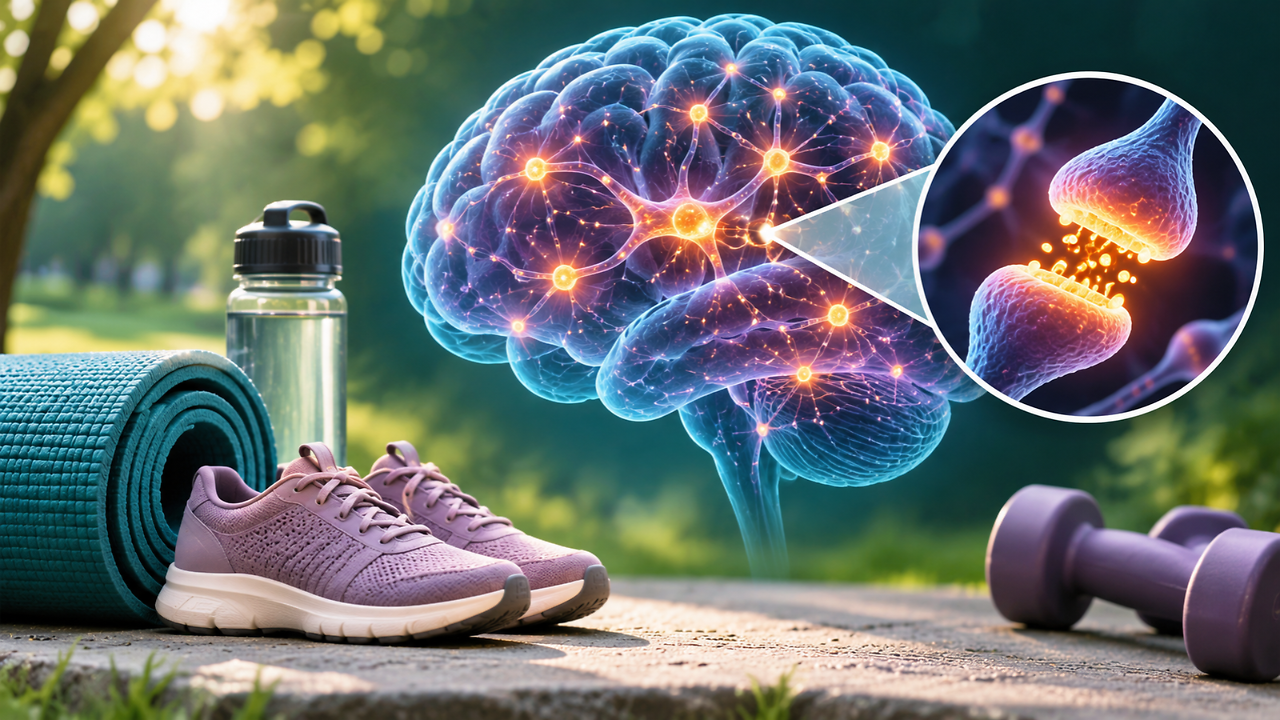
Physical activity has always been known to improve brain health, memory and mental health. Researchers have found a biological clue that could help explain the link between being physically active and having a higher density of synapses, which are the connections through which brain cells communicate. These synapses are found in brain regions involved in thinking, emotions and behaviour.The study, published in Biological Psychiatry: Cognitive Neuroscience and Neuroimaging, used brain imaging to examine the synaptic density in people, investigating deeply how physical activity could impact the brain's communication networks.Researchers found that physically active participants had higher synaptic density across corticolimbic brain regions compared to people who were inactive. The results were noticeable in prefrontal circuits and remained evident in analyses accounting for body mass index (BMI) and depressive symptoms.Exercise & Brain ConnectionsAlso read: JAMA Study Finds CT Scans In Children May Lead To Higher Brain Tumour RiskThe study is based on 51 participants, of whom 61% were women. Researchers classified them as physically active or insufficiently active and compared synaptic density across brain regions involved in cognitive and emotional functioning.To assess synaptic density, scientists used positron emission tomography (PET) imaging with a radiotracer called [18F]SynVesT-1. The tracer targets synaptic vesicle protein 2A (SV2A), a protein found in nerve terminals, allowing researchers to estimate synaptic density in the living brain.Physically active participants showed higher synaptic density across corticolimbic regions than insufficiently active participants.The researchers also found links between physical activity and synaptic density in specific brain regions. It remained marginally significant after accounting for BMI and depressive symptom.What Are Synapses In Brain?Also read: AIIMS Delhi Performs India’s First Robotic-Guided Deep Brain Stimulation Surgery For Parkinson’s DiseaseSynapses are the junctions through which neurons transmit information to one another. They are essential for learning, memory, attention, emotional regulation and other brain functions.The brain continually adapts by strengthening, weakening, forming and reorganising synaptic connections. This ability, known as synaptic plasticity, is fundamental to learning and maintaining brain function as people age.Declining synaptic density has been known to occur due to several neurological and neurodegenerative conditions, including Alzheimer's disease. Preserving synaptic health is therefore an essential research area in brain ageing and cognitive decline.The researchers believe physical activity may support synaptic health, especially within circuits involved in cognition and emotional processing. Interpreting The Findings The findings do not establish that physical activity directly increases synapses. Because the study was cross-sectional, researchers assessed participants at one point rather than tracking changes in their brains over time.It is possible that physical activity supports synaptic health. But people with healthier brains may also be more likely to remain physically active, meaning the relationship could work in both directions. The small sample size also means the findings need to be replicated in larger studies.The study, however, adds to the evidence that physical activity may benefit the brain in ways that go beyond cardiovascular health, muscle strength or weight management. It raises the possibility that regular exercise can help maintain the connections in the brain that help cells in important regions communicate.