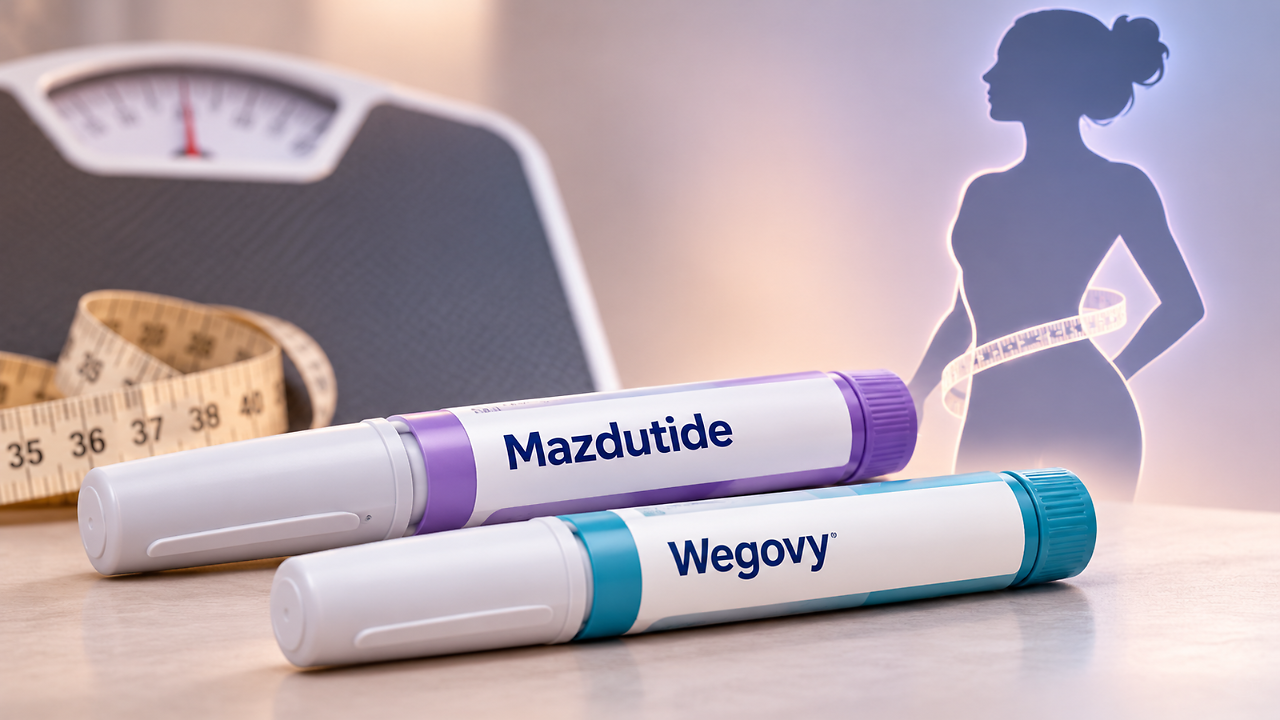
Mazdutide, an experimental weight-loss drug, could soon join the ever-expanding market of GLP-1 medications. The results from a recent clinical trial funded by Eli Lilly has found that mazdutide has shown an average reduction of 18.1% in body weight over 32 weeks. The trial was published in The Lancet Diabetes & Endocrinology. The findings have drawn attention because the experimental drug produced significant weight loss in less than eight months, establishing its position among existing medicines like Wegovy.However, the findings come from a phase 2 trial involving 179 participants. Its comparison with existing players like Wegovy are yet to be done formally. What Did The Mazdutide Study Find?Also read: Ozempic, Mounjaro Users Report Burning Skin Sensation: What Is Allodynia?Published in November 2026, the randomised, double-blind, placebo-controlled trial evaluated mazdutide in 179 overweight or obese adults with overweight but without type 2 diabetes. Participants, who were recruited from 24 centres in the United States, received the once-weekly injections of different doses of the drug or a placebo. At 32 weeks, the average weight changes were:Mazdutide 16 mg: 18.1% reduction in body weightMazdutide 10 mg: 15.6% reductionMazdutide 3–6 mg: 7.3% reductionPlacebo: 0.9% reductionThe study also reported further weight reductions by week 48, suggesting that weight loss had not reached its maximum by the primary assessment.However, tolerability of the drug drew attention too. Gastrointestinal problems, including nausea, vomiting and diarrhoea, were among the most common side effects. Around 20% of participants receiving the highest 16 mg dose quit the treatment because of adverse events, primarily gastrointestinal disorders.How Does Mazdutide Work?Also read: Australia Approves First GLP-1 Weight Loss Pill: How It Works & Who Is EligibleMazdutide works differently from semaglutide, the active ingredient in Ozempic and Wegovy. It activates two hormone receptors involved in regulating appetite and metabolism: glucagon-like peptide-1 (GLP-1) and glucagon.GLP-1 helps regulate blood sugar, which slows down emptying of the stomach and increases feelings of fullness, which can reduce food intake.Glucagon is another hormone involved in regulating blood glucose and energy metabolism. By activating glucagon receptors along with GLP-1 receptors, mazdutide can affect energy expenditure and metabolism in addition to regulating appetite.This dual action distinguishes it from semaglutide, which primarily targets the GLP-1 receptor.Mazdutide Vs WegovyAlso read: GLP-1 Drugs May Be More Effective Than Metformin At Preventing Diabetes: StudyOzempic and Wegovy contain the same active ingredient, semaglutide, but have different approved uses and dosing. Ozempic is primarily prescribed for type 2 diabetes and certain cardiovascular and kidney conditions, while Wegovy is approved for weight management.Here is how the trial results compare:Mazdutide 16 mg showed 18.1% weight reduction in 32 weeks. Wegovy 2.4 mg showed 14.9% in 68 weeks. In the STEP 1 trial, published in The New England Journal of Medicine in 2021, participants with overweight or obesity who received semaglutide 2.4 mg lost an average of 14.9% of their body weight over 68 weeks. Participants did not have diabetes.Although mazdutide's 18.1% result seems higher than the 14.9% reported with Wegovy, the comparison has limitations. The trials differed in duration, participant characteristics, doses and study design. A direct head-to-head trial would be needed to establish which treatment produces greater weight loss. Is Mazdutide A Promising Weight-Loss Drug?Mazdutide has also been studied in China. In the phase 3 GLORY-2 trial, participants receiving 9 mg lost an average of 16.65% of their body weight over 60 weeks, compared to 1.50% in the placebo group. Its recent findings are promising but it is too early to call mazdutide more effective than existing treatments. The US study was a relatively small phase 2 trial, and its highest dose led to a high rate of discontinuation due to adverse events. Larger phase 3 trials are important to establish its long-term effectiveness, safety and tolerability.