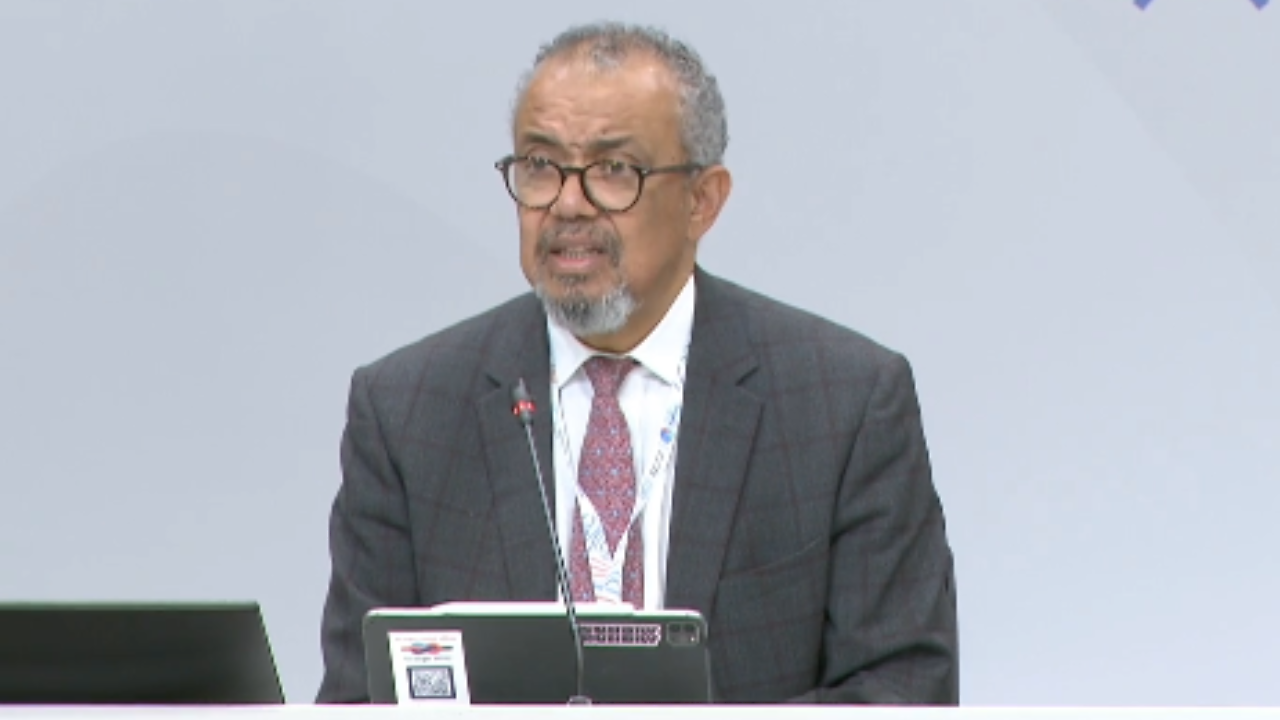
Climate change is already driving illness, disrupting essential services and putting health at risk, WHO Director-General Dr Tedros Adhanom Ghebreyesus warned at COP31 in Türkiye on Monday. Calling the climate crisis a health crisis, he urged governments to strengthen health systems, implement existing climate plans and increase funding for proven interventions. Speaking at a news briefing alongside Turkish Health Minister Kemal Memişoğlu, Tedros said the health impacts of climate change were no longer a distant threat. "They are here and now," he said, pointing to heat, floods, droughts, wildfires and air pollution that are increasingly affecting healthcare services. "Health is also the most compelling reason for climate action," he said. COP31: WHO Chief Lists Three Priorities For Health Also read: COP31 Begins On Health Day: How Will Countries Measure The Health Impact Of Climate Change?Tedros outlined three priorities to address the health impacts of climate change, saying the newly launched Antalya Initiative for Health Resilience (AIR) could help countries put them into practice. 1. Build climate-resilient health systems Hospitals and clinics must be able to operate through heatwaves, floods and storms. This requires reliable electricity and water, early warning systems, resilient supply chains and trained healthcare workers. 2. Move from plans to implementation Countries already know many of the measures that work, but financing, capacity and coordination remain major barriers to implementing them at scale, Tedros said. He stressed that climate-related health risks cannot be addressed by health ministries alone. Ministries overseeing finance, environment, energy, transport, housing and urban planning must work together and integrate health into national adaptation plans and climate commitments. 3. Increase funding for proven interventions Tedros called for greater investment in measures that can save lives, reduce emissions and strengthen economies. "Climate action is not simply a cost. It's an investment in healthier people, more resilient communities and stronger economies," he said. A WHO technical analysis published on November 4 found that six priority climate-health actions could save 1.6 million lives annually and generate US$24 in benefits for every dollar invested. What Is The Antalya Initiative For Health Resilience? Read More: Climate Crisis Is A Health Crisis: Just 6 Actions Could Save 1.6 Million Lives, Says WHOLaunched by the COP31 Presidency, the Antalya Initiative for Health Resilience (AIR) is a voluntary, non-binding initiative to help countries share practical experience and strengthen health systems against climate-related risks. It will support the documentation of successful interventions, peer learning and the exchange of approaches that countries can adapt to their own settings. AIR complements the WHO-led Alliance for Transformative Action on Climate and Health (ATACH), which brings countries and partners together to make, renew and report climate-health commitments. While ATACH provides a platform for coordination, AIR focuses on sharing practical lessons from implementation. The initiative will also build on the Belém Health Action Plan (BHAP), adopted at COP30, with lessons and resources carried forward through ATACH at future COPs. "The focus now should be implementation, implementation and implementation," Tedros said, urging countries to learn from existing best practices rather than reinvent solutions. He called on governments to strengthen climate resilience across health systems and urged climate negotiators and funders to make health an explicit part of climate decisions and financing. COP31 Health Day: What To Expect Health Day, which opens COP31 on November 9, focuses on building dynamic and resilient health systems. It features four high-level panel discussions and a ministerial roundtable covering climate-resilient healthcare, digital health, climate-sensitive health technologies, humanitarian assistance and climate-health financing. The scale of the health threat underscores the urgency. Around 3.5 billion people live in contexts highly vulnerable to climate change. More than 90% of deaths from climate-related disasters over the past two decades occurred in developing countries. Air pollution, including pollution from fossil fuel combustion, causes around seven million deaths globally each year, according to WHO.