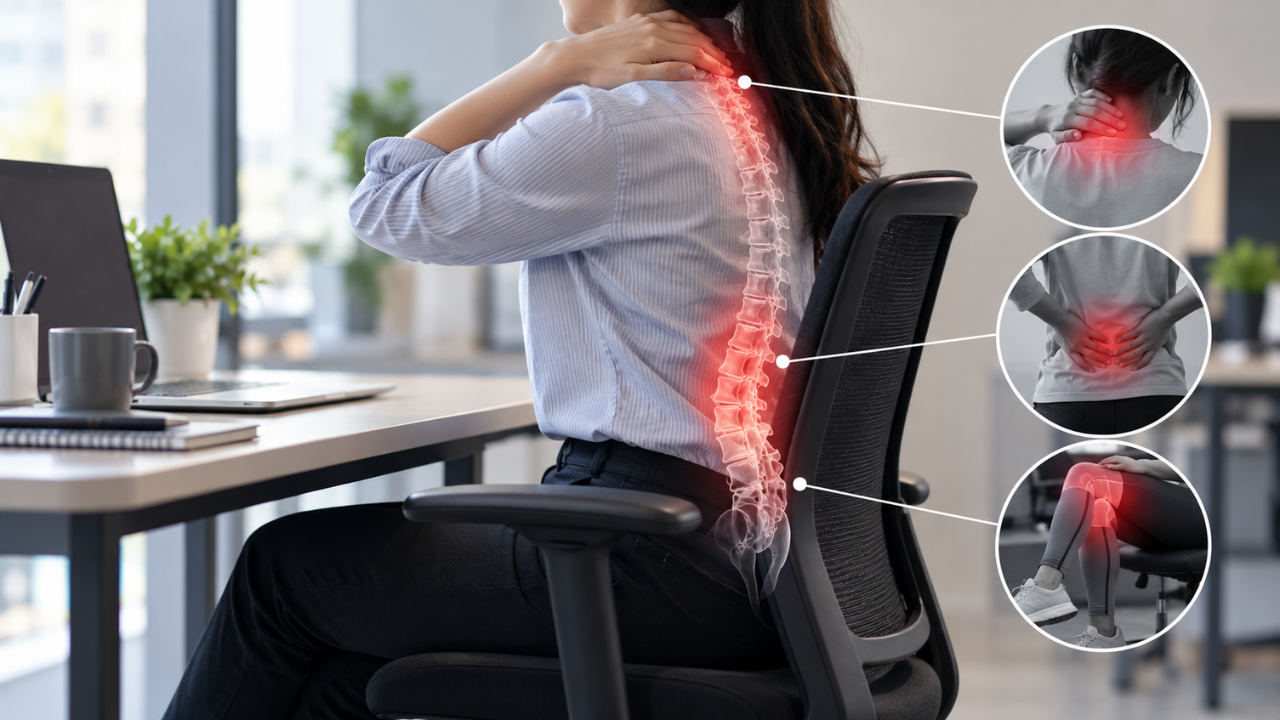
Millions of office workers spend eight to 10 hours at a desk on a regular basis. While sitting in one place may seem harmless, staying in the same position for prolonged periods can gradually affect muscles, joints, mobility and even metabolic health. Those are some of the reasons why experts call "sitting the new smoking". Physiotherapists agree that the problem is not just 'bad posture'. The bigger concern is spending too much time without changing positions or moving your body. HealthandMe spoke to Dr. Swapnil Keny, Consultant Orthopaedics & Joint Replacement, Fortis Hospital, Kalyan and Dr. Preeti Tare, Physiotherapist, P. D. Hinduja Hospital and Medical Research Centre, Khar about what office workers need to do to minimise the risks from sitting for prolonged periods. Effects Of Prolonged Sitting Dr. Swapnil Keny explains, "When sitting at a place becomes uninterrupted and constant posture, it builds pressure on the muscles of the neck, shoulders, back, and hips. The hip flexor muscles may become tight, and the glutes muscles along with other postural muscles may become inactive. The effects are not limited to the spine: prolonged sedentary behaviour is also associated with poorer metabolic and cardiovascular health." Dr. Preeti Tare similarly points out that the earliest consequence may simply be a reduction in movement rather than an obvious injury. Dr. Tare says, “The first change I notice is usually not an injury, but reduced movement. The hip and ankle joints spend hours in limited positions, while the glutes, deep abdominal muscles and upper-back muscles contribute less. The neck and shoulders compensate, especially when we lean towards a screen. Over time, this can reduce joint mobility, muscle endurance, and tolerance for everyday movement. Prolonged sitting can also affect blood circulation and metabolic health, so the impact goes well beyond back pain.”Also read: That 3 PM Energy Crash May Be More Than Work Stress: Are You Missing Key Nutrients? One Habit Experts Want Office Workers To Change If there is one change office workers should make, both experts agree that it is to stop sitting continuously for hours. “I would ask office workers to stop sitting continuously for hours. Set a reminder to stand up, walk a little or change position regularly. This simple habit reduces the time the same muscles and joints remain under static load. It is more useful than trying to maintain a “perfect” posture all day,” says Dr. Keny. Dr. Tare recommends being even more proactive rather than waiting for discomfort to appear. She says do not wait for symptoms to appear. From time to time, make it a habit to get up and move around consciously. These small changes, like walking to speak to a colleague instead of sending a message, standing during a phone call or taking the longer route to refill a water bottle, can help break up prolonged periods of inactivity and alleviate risks. She says, “Break up sitting before your body starts complaining. Don’t wait for back pain or stiffness to remind you. Every 30–45 minutes, get up, walk to refill your water, speak to a colleague, or simply move around for a couple of minutes. From a physiotherapy perspective, frequent movement is important because tissues respond better to changing loads than to staying in one position for hours. The best posture is ultimately your next posture.”Also read: World Physiotherapy Day - Beyond Surgery: Why Physiotherapy Decides How Well You Really Heal Is An Hourly Break Really Enough? One of the most important points office workers must remember is that moving around once every hour is bare minimum. It should also not become an excuse for remaining inactive for the rest of the day. “Hourly breaks are a good starting point, but they are not a complete solution. The total amount of movement across the day matters too. A few minutes of walking every hour cannot fully replace regular exercise, walking during breaks and an active commute. Think of movement as a daily habit, not just a reminder on the computer,” says Dr. Keny. Dr. Tare agrees that movement breaks and overall physical activity play different roles. In other words, the goal should be to reduce sedentary time while also building regular physical activity into the day. “Both matter, but they serve different purposes. Short movement breaks interrupt the long, uninterrupted periods of sitting, while your overall daily activity builds strength, endurance and cardiovascular fitness. Someone who gets up every hour but remains inactive outside work is still largely sedentary. I encourage patients to think in layers: break up sitting during work, walk whenever possible, and include structured exercise during the week. No single movement break can compensate for an otherwise inactive day.” Routine Movement For Desk WorkersOffice workers do not necessarily need elaborate exercises between meetings. Instead, experts recommend weaving frequent movements throughout the existing workday. “It is good practice to sit and stand alternatively and walk while on calls wherever feasible, throughout the day. Add a few gentle exercises such as shoulder rolls, neck movements, hip stretches and repeated sit-to-stand movements. Outside work, aim for regular walking and exercise. The idea is not to work out at your desk, but to maintain the movement of the body all the time,” says Dr. Keny. Dr. Tare suggests a similar approach built around consistency rather than intensity. Desk workers need to stop treating movement as a separate activity. Stand during calls, walk during breaks, change sitting positions, take regular short walks and incorporate simple movements throughout the workday. “I prefer a routine that is realistic enough to follow every day. Alternate between sitting and standing, take a short walk every 30–45 minutes and use phone calls as opportunities to move. Twice or three times during the day, do a few sit-to-stands, shoulder movements, gentle spinal rotations and calf raises. Walk during your lunch break if possible. The aim isn't to turn your workstation into a gym; it is to prevent eight hours from becoming eight hours of almost no movement.”