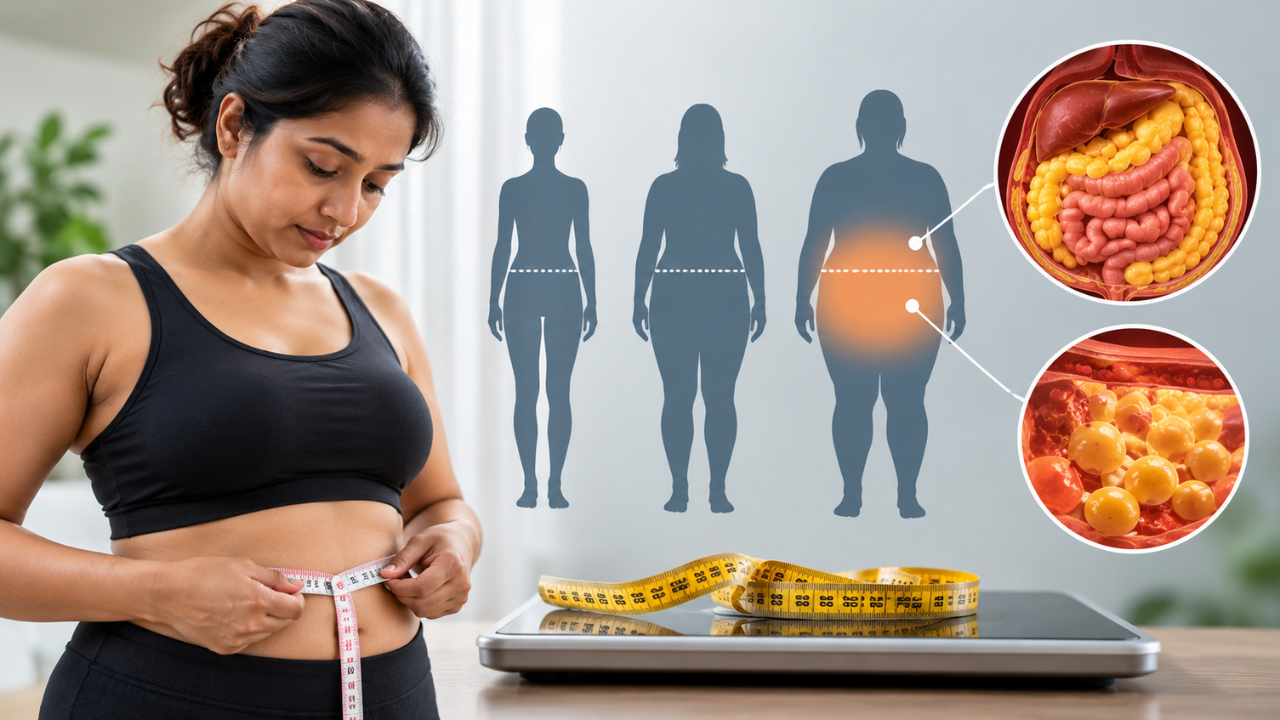
A person's body mass index (BMI) may seem normal while they may already be at a significant metabolic risk. According to experts at the first AIIMS Obesity Summit in New Delhi, which is themed “Decoding Obesity: Biology to Remedy,” this is particularly observed frequently among South Asians. Addressing the summit on Saturday, AIIMS Director Dr Nikhil Tandon said obesity cannot be understood simply through numbers. He argued that doctors need to look beyond weight and BMI to understand where fat is distributed in the body and how the individual's overall health is affected due to the additional fat. “People will say, you know, subcutaneous is all right, visceral is bad,” Tandon said, referring to the difference between fat stored under the skin and fat accumulated around internal organs. He said that while measures like waist circumference remain essential, they do not fully capture the complete complexity of obesity. South Asians Face Higher Metabolic Risk Even At Lower BMI Tandon spoke about how South Asians can develop metabolic issues at lower BMI levels because of differences in fat distribution in the body. “A lot of people of South Asian descent may not qualify as people who are obese, but because of central disposition of fat, they can have metabolic, maybe metabolically unhealthy at very, very low BMIs,” he said. He compared the body types and prevalence of lifestyle disorders in South Asians and Pima Indians, mentioning that South Asians showed a substantially higher incidence of diabetes at lower BMI levels. He said that obesity should not be assessed solely by what we see on the weighing scale. “If at similar numbers, two people have very different health outcomes, then you have to understand the reason for the difference in health outcomes rather than be fixated in the number,” Tandon said.Also read: Thin Outside, Fat Inside: Why A Slim Body May Still Hide Metabolic Health Risks?Obesity Does Not Occur Due To Willpower Issue The summit's discussions also challenged the idea that obesity can be managed by just eating less and exercising more. Prof Naveet Wig, patron of the summit, shared his own experience of repeatedly gaining and losing weight, explaining that his experience had reinforced the complexity of obesity. “It is a relapsing disease. It is a relapsing problem. It is a chronic problem,” he said, adding that obesity involves multiple factors including genetics, environment, behaviour, sleep, muscle, adipose tissue, the gut and the brain. He also cautioned against using medication like GLP-1 as many may turn it into a substitute for comprehensive obesity care. “We can't let drug become a doctor,” Wig said, stressing the importance of nutrition, exercise, sleep and preservation of muscle mass. He noted that modern obesity care now includes GLP-1 therapies, including oral options, as well as surgical treatments. He questioned whether enough attention is being paid to nutrition, muscle preservation and sleep when these treatments are used.Also read: Can You Really Lose 5 Kg In A Week With Just 4 Minutes Of Exercise? Japan's Viral Workout Explained Prevention May Need To Start Much Earlier Tandon also stressed that obesity prevention cannot begin late in adulthood. He explained that body weight, blood pressure, cholesterol and glucose tend to follow patterns established early in life. Major changes in these trajectories could be due to underlying influences that need to be addressed. “You don't go to sleep at night with a BMI of 23 and wake up with a BMI of 30,” he said, explaining that obesity as a process that develops over time. He argued that eating habits, physical activity and other behavioural patterns become established early, making childhood and early-life interventions particularly important. Ultimately, Tandon said, preventing weight gain in the first place may be easier than trying to reverse obesity later. “Once you become obese, it's incredibly difficult to lose weight. And once you lose weight, it's incredibly difficult to sustain that weight loss,” he said.The experts say that obesity treatment should focus not simply on making patients lighter, but on making them healthier by paying attention to metabolic health, fitness, nutrition, muscle mass, sleep and long-term sustainability.