
- Health Conditions A-Z
- Health & Wellness
- Nutrition
- Fitness
- Health News
- Ayurveda
- Videos
- Medicine A-Z
- Parenting
What Is Bone Burnout? Why Gym Overtraining Is Causing Joint Pain In 20s
Credits: Canva
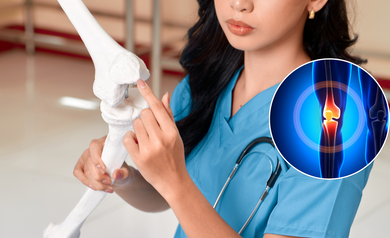
You must have heard of burnout- feeling drained, stressed, or completely wiped out but here’s the twist, burnout isn't all in your head. Your bones and joints suffer from it too. Overtraining, disregarding pain, or forcing your body to the limit can result in what specialists refer to as "bone burnout," resulting in joint pain and stiffness, as well as early-onset arthritis. Your skeleton labors in silence, so paying attention to your body, resting, and training intelligently isn't advice, it's survival for your bones.
Over the past decade, gym culture has shifted from being a niche interest to a defining lifestyle for young adults, especially in urban areas. Strength training, high-intensity interval workouts, and endurance-based exercises dominate fitness routines, social media feeds, and wellness conversations. Yet, while pushing the body to achieve peak performance has its benefits, there is a hidden risk many young adults are unaware of- bone burnout.
Bone burnout is the premature breakdown and wear and tear of bones and joints, brought on most often by overtraining, poor technique, and neglect of initial signs of stress. Not officially a medical diagnosis, the syndrome is being more widely referred to by orthopaedic experts as a developing problem among those in their 20s and 30s. It is most commonly presented with chronic joint pain, stiffness, swelling, and, in severe cases, premature arthritis like osteoarthritis.
Dr. Rakesh Rajput, orthopaedic surgeon, explains, "Today's young adults are overloading their joints and bones past their natural limits. Once cartilage starts breaking down and warning signals are neglected, enduring damage is done. Years down the road, what began as mild pain can progress to permanent joint issues."
How Modern Lifestyle Contributes to Joint Overload?
There are a number of factors why young adults are particularly susceptible to bone burnout. Unlike older individuals, younger people tend to overestimate their physical resistance. Numerous spend excessive amounts of time on weight training, functional fitness, and cardio workouts without adequate rest, warm-up, or recovery strategies. Deviant postural habits and repetitive strain also serve to increase wear on cartilage and joints.
Even minor misalignments while squatting, lunging, or running can speed up stress on hips, knees, and spine. Repetitive high-impact exercises like plyometrics or sprint intervals amplify damage, especially when added to improper footwear or poor diet. Young adults can also ignore pain, thinking it is a part of exercising, and not a warning sign.
Dr. Rajput adds, “Ignoring knee or back pain can compromise cartilage faster than natural aging. We’re seeing meniscus tears and early degenerative changes in patients as young as 20 to 30, conditions historically observed in much older adults or elite European athletes.”
What Is Bone Burnout?
Bone burnout targets mostly the cartilage, the tough but flexible tissue that lines joints and helps to absorb shock. While cartilage receives a limited supply of blood, unlike muscle, this lowers its ability to recover from frequent stress. If young adults participate in high-volume, high-intensity training without adequate rest, microtraumas develop. Over time, sometimes years, months, or decades, these tiny injuries develop into chronic inflammation, pain, and decreased mobility.
Study also indicates that repetitive overload can transform joint mechanics. Pathologic loading patterns load ligaments, tendons, and adjacent musculature, establishing a cascade of biomechanical problems. For instance, flawed squatting technique can stress the anterior cruciate ligament (ACL) and patellar tendon and cause lifelong knee instability.
Early Warning Signs of Bone Burnout to Watch Out For
Being able to recognize bone burnout early will prevent irreversible harm. Watch out for:
- Recurring joint stiffness or pain after training
- Swelling or redness over involved joints
- Decreased range of motion
- Increased pain with activity and decreased with rest
- Clicking, popping, or grinding noise in the shoulders or knees
Dr. Rajput states, "If these symptoms extend beyond a few days, it is essential to have medical evaluation. Prompt treatment can avoid long-term conditions and protect future mobility."
Smart Fitness Practices To Avoid Bone Burnout
Prevention of bone burnout involves a balanced strategy of intensity and recovery. Some of the most important strategies are:
Organized Warm-Ups and Cool-downs: Warming up muscles before intense exercise decreases joint strains. Dynamic stretching and low-impact movements acclimatize cartilage and tendons to stress.
Balanced Exercise: Integrating strength, flexibility, and endurance exercises prevents one muscle group or joint from overuse.
Recovery Days: Recovery is necessary for cartilage repair. Overtraining without recovery makes the body more susceptible to joint degeneration.
Footwear and Equipment: Support during high-impact activities lessens cumulative stress.
Nutrition: Sufficient calcium, vitamin D, and protein provide support for bone density and muscle recovery.
Monitoring Symptoms: Pain is not a badge of effort but should be considered a signal. Ignoring pain results in long-term effects.
Routine check-ups with orthopaedic doctors or sports physiotherapists by young adults who do high-volume training, particularly those with ongoing discomfort, are also suggested by Dr. Rajput.
Is There Any Treatment For Bone Burnout?
Prevention will always be the best way, but new developments in orthopaedic care are also now offering alternatives for individuals already suffering from bone burnout. Lifestyle changes, physiotherapy, and preventive treatment are first-line therapies. But for more severe cartilage or joint injury, new innovations deliver successful solutions:
Robotic-Assisted Surgery: Robotic-assisted precision systems enable knee and joint operations to be performed minimally invasively, facilitating quicker recovery and less post-operative complication.
Partial Knee Replacement or Joint Resurfacing: For active young adults with localized joint damage, these operations reduce pain and conserve natural joint tissue, putting off the necessity for total replacement.
Targeted Physiotherapy: Individualized rehabilitation programs restore normal movement patterns, minimize inflammation, and increase supportive musculature.
Dr. Rajput adds, "Even with surgery, these advancements enable young patients to preserve mobility, quality of life, and the capacity to remain active without long-term restrictions."
What Are The Long-Term Consequences of Disregarding Bone Burnout?
Ignoring bone burnout in one's 20s can give way to a lifetime of joint problems. Chronic pain, reduced mobility, and early-onset osteoarthritis are being seen with more frequency in younger people, affecting both daily life and career. In addition, adaptations to move in a way that is less painful can result in secondary injuries to hips, back, and shoulders, leading to a chain of musculoskeletal ailments.
Bone burnout is a grim reminder that intensity without intelligence can be a trap. While young adults stand to gain much from living a physically active life, excessive training without a guide can hasten joint wear and tear. The silver lining is that with intelligent exercise programs, early symptom detection, and contemporary medical techniques, bone burnout can be prevented and controlled.
Dr. Rajput has this to say: "Fitness should add life, not detract from it. Young adults need to focus on joint health, listen to their body, and apply strategies that blend performance and preservation. Avoiding bone burnout now means an active, healthy future.
Dr. Rakesh Rajput is an orthopaedic surgeon, HOD & Director – Orthopaedics at CMRI Kolkata in India
For How Long Should You Be Able To Hold A Plank In Your 20s?

Planks target almost all core muscles. (Photo credit: iStock)
For people spending too much time on social media, fitness often takes a back seat—and not for the best. If you are someone who is new to the gym, one of the most difficult parts of the regimen is performing and holding a plank for long enough. Planks are among the most effective workouts for a stronger core and for better management of belly fat. Yet, holding one for even a minute can become a herculean task, even for younger individuals. But for people in their 20s, what is the ideal duration for holding a plank? Let’s find out.
Read more: High BP? This Ancient Chinese Practice May Be As Good As Brisk Walking
What are the benefits of planks?
Experts say planks are very effective for strengthening the core, as they engage multiple muscles at once, such as the following:
- Obliques (sides)
- Rectus abdominis (the front of your abdomen)
- Transverse abdominis (the deep, stabilising muscles that wrap around your midsection)
Unlike ab exercises like crunches, planks target multiple muscle groups at once. This workout also helps stabilise the core while moving. It is effective for maintaining proper alignment during movement and for protecting the lower back. Experts say that, alternatively, lifting boxes at home is more or less the same as loading and unloading boxes from your car to your home. This emphasis on stability becomes more important with age.
In a 2012 study, older adults who successfully completed a nine-week core stability programme reported better spinal mobility, improved trunk strength, and enhanced dynamic balance. These factors collectively reduce the risk of falls. However, experts warrant caution, stating that focusing too much on plank duration could make the workout less effective. Instead, there is a good reason to strive for steady form and, over time, better endurance.
Read more: No Time for the Gym? Short Bursts of Intense Activity Daily May Cut Risk of 8 Diseases and Death
How long should you be able to hold a plank?
Timing a plank is not a one-size-fits-all approach. Several factors can influence how long one can hold a plank position, including overall fitness; body weight and proportions; as well as experience with planks and other breath control and muscular endurance exercises. Fitness experts say that age plays a significant role when it comes to plank duration. As one gets older, natural changes such as weaker joints and a decrease in muscle mass and strength can affect how long a plank can be maintained. Consistent training can help increase this duration.
While there is no specific number that everyone must aim for, people should try to improve their plank duration based on their age. Take a look at the ideal duration of holding a plank across age groups:
- 18–39 years: 45–99+ seconds for the general population; 1–2 minutes for fitter individuals
- 40–59 years: 30–75 seconds for the general population; 45–90 seconds for fit individuals
- 60+ years: 20 seconds to one minute for the general population; 30–75 seconds for fitter individuals
High BP? This Ancient Chinese Practice May Be As Good As Brisk Walking
Credit: iStock
High blood pressure (BP) has become a public health problem that is driving cardiovascular diseases like heart attacks and strokes globally. While medications are important to keep hypertension under control, lifestyle changes and healthy practices are also crucial.
Several global health guidelines recommend regular physical activity, but adhering to exercise programs daily becomes a challenge for many people. But in the overtly busy schedules, sparing 10 minutes for an exercise regimen can be easier than travelling to the gym.
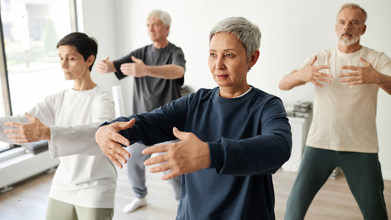
A large randomized clinical trial, published in the Journal of the American College of Cardiology (JACC), has proved that a traditional Chinese mind-body practice — baduanjin — may help lower blood pressure, that too, without any equipment.
Baduanjin is a slow, structured movement, focused on deep breathing and meditation.
Importantly, the clinical trial proved that the ancient Chinese technique could lower BP as effectively as brisk walking.
In people practicing baduanjin, BP reductions were seen after three months and were sustained for one year.
"Given its simplicity, safety, and ease with which one can maintain long-term adherence, baduanjin can be implemented as an effective, accessible, and scalable lifestyle intervention for individuals trying to reduce their blood pressure," said Jing Li, Director, National Center for Cardiovascular Diseases in Beijing, China.
Baduanjin: The 10 Minute Routine
Baduanjin is a standardized eight-movement sequence that integrates aerobic, isometric, flexibility, and mind-body components.
It has been in practice for centuries and commonly performed in community settings across China. The routine typically takes 10–15 minutes and requires no equipment and only minimal initial instruction.
Because it is low- to moderate-intensity, it is considered safe and accessible for many adults.
Also read: Cardiovascular Diseases Lead As India’s Top Killer: US Cardiologist Points Out Risk Factors
The Clinical Trial
A team of Chinese researchers led the first large, multicenter randomized trial to look at the impact of baduanjin on blood pressure.
They followed 216 participants, aged 40 years or older, across seven communities to determine changes in 24-hour systolic BP from baseline to 12 and 52 weeks.
Compared to people indulging in self-directed exercise, practicing baduanjin five days a week reduced
- systolic blood pressure by approximately 3 mg Hg
- systolic blood pressure by 5 mg Hg.
Notably, the benefits were sustained even without ongoing monitoring, a key challenge for many lifestyle interventions that struggle to maintain long-term adherence outside structured programs.
"Baduanjin has been practiced in China for over 800 years, and this study demonstrates how ancient, accessible, low-cost
approaches can be validated through high-quality randomized research," said Harlan M. Krumholz, Editor-in-Chief of JACC and the Harold H. Hines, Jr Professor at the Yale School of Medicine.
"The blood pressure effect size is similar to that seen in landmark drug trials, but achieved without medication, cost, or side effects. This makes it highly scalable for community-based prevention, including in resource-limited settings," they added.
Also read: AHA Cholesterol Guidelines 2026: How Indians Can Improve Heart Health
How To Practice Baduanjin
- Stand upright with your feet shoulder-width apart and keep your movements slow and controlled.
- Coordinate each motion with steady, deep breathing, inhaling and exhaling smoothly as you move.
- Move through the traditional eight postures in sequence, focusing on posture, balance, and relaxation rather than speed or force.
- Practice for about 10 to 15 minutes a day in a quiet space, maintaining calm attention throughout.
No Time for the Gym? Short Bursts of Intense Activity Daily May Cut Risk of 8 Diseases and Death
Credit: Canva
If you believe only gym workouts matter, you might be mistaken. While gyms offer a structured space to exercise, busy schedules often lead many to skip workouts—and feel guilty about it.
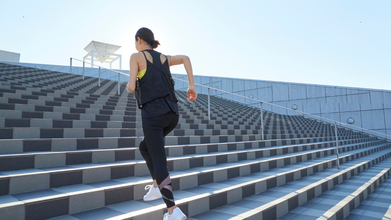
However, a new study suggests that even short bursts of vigorous everyday activity—such as running to catch a bus or climbing stairs quickly—can significantly reduce the risk of several major diseases and even lower the risk of death.
The research, based on nearly 96,000 people and published in the European Heart Journal, found that just a few minutes of intense activity each day was linked to a lower risk of:
- Major cardiovascular disease
- Irregular heartbeat
- Type 2 Diabetes
- Immune-mediated inflammatory diseases
- Liver disease
- Chronic respiratory diseases
- Chronic kidney disease
- Dementia
“We know that physical activity reduces the risk of chronic disease and premature death, and there is growing evidence that vigorous activity provides greater health benefits per minute than moderate activity,” said Minxue Shen from the Xiangya School of Public Health, Central South University, China.
Also read:Just Twice A Week At-home Resistance Training Enough To Build Muscle, Reveal New Guidelines
Longer Workouts or Intense Bursts?
To explore whether exercising more intensely offers greater benefits than simply exercising longer, the researchers followed 96,408 participants for seven years.
Each person wore a wrist-based accelerometer to track movement, including short bursts of activity often overlooked.
The findings showed that compared to those who did no vigorous activity, participants with the highest levels had:
- 63 percent lower risk of dementia
- 60 percent lower risk of type 2 diabetes
- 46 percent lower risk of death
“Our findings suggest that adding short bursts of activity that make you slightly breathless—like climbing stairs quickly or walking briskly between tasks—can have substantial health benefits,” Shen said.
“Even 15–20 minutes per week, just a few minutes a day, can make a meaningful difference,” the Professor added.
Also read: Exercising Could Make Your Brain Younger, Says Doctor
Is Vigorous Activity Safe for Everyone?
The World Health Organization (WHO) recommends that adults (18–64) perform at least 150–300 minutes of moderate-intensity aerobic physical activity, or 75–150 minutes of vigorous-intensity activity per week.
The new study suggests that intensity also plays a key role—and may vary depending on the disease being prevented.
The researchers noted that these findings could help shape more personalised exercise recommendations in the future. However, they cautioned that vigorous activity may not be suitable for everyone, particularly:
- Older adults
- People with certain underlying medical conditions.
- Follow Us :


© 2024 Bennett, Coleman & Company Limited