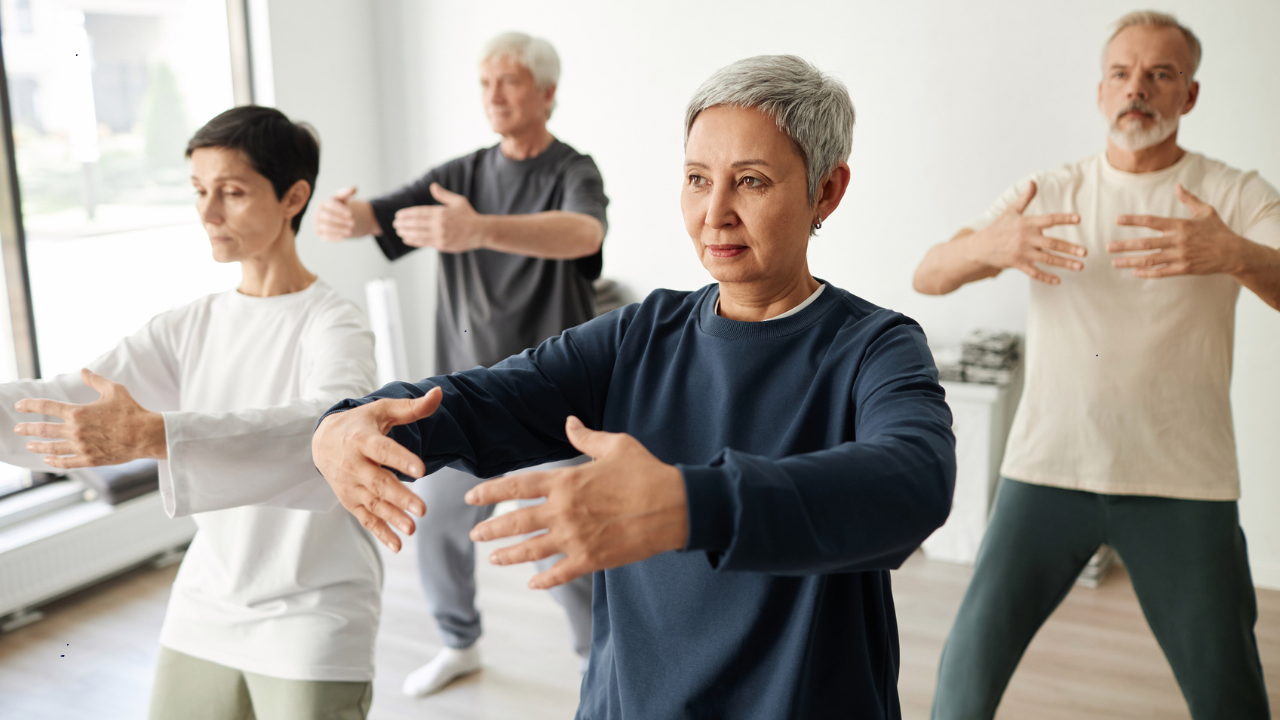
High blood pressure (BP) has become a public health problem that is driving cardiovascular diseases like heart attacks and strokes globally. While medications are important to keep hypertension under control, lifestyle changes and healthy practices are also crucial. Several global health guidelines recommend regular physical activity, but adhering to exercise programs daily becomes a challenge for many people. But in the overtly busy schedules, sparing 10 minutes for an exercise regimen can be easier than travelling to the gym.A large randomized clinical trial, published in the Journal of the American College of Cardiology (JACC), has proved that a traditional Chinese mind-body practice — baduanjin — may help lower blood pressure, that too, without any equipment. Baduanjin is a slow, structured movement, focused on deep breathing and meditation. Importantly, the clinical trial proved that the ancient Chinese technique could lower BP as effectively as brisk walking. In people practicing baduanjin, BP reductions were seen after three months and were sustained for one year. "Given its simplicity, safety, and ease with which one can maintain long-term adherence, baduanjin can be implemented as an effective, accessible, and scalable lifestyle intervention for individuals trying to reduce their blood pressure," said Jing Li, Director, National Center for Cardiovascular Diseases in Beijing, China. Baduanjin: The 10 Minute Routine Baduanjin is a standardized eight-movement sequence that integrates aerobic, isometric, flexibility, and mind-body components. It has been in practice for centuries and commonly performed in community settings across China. The routine typically takes 10–15 minutes and requires no equipment and only minimal initial instruction. Because it is low- to moderate-intensity, it is considered safe and accessible for many adults. Also read: Cardiovascular Diseases Lead As India’s Top Killer: US Cardiologist Points Out Risk Factors The Clinical Trial A team of Chinese researchers led the first large, multicenter randomized trial to look at the impact of baduanjin on blood pressure. They followed 216 participants, aged 40 years or older, across seven communities to determine changes in 24-hour systolic BP from baseline to 12 and 52 weeks. Compared to people indulging in self-directed exercise, practicing baduanjin five days a week reduced systolic blood pressure by approximately 3 mg Hgsystolic blood pressure by 5 mg Hg. Baduanjin also showed comparable results and a safety profile to brisk walking at one year. Notably, the benefits were sustained even without ongoing monitoring, a key challenge for many lifestyle interventions that struggle to maintain long-term adherence outside structured programs. "Baduanjin has been practiced in China for over 800 years, and this study demonstrates how ancient, accessible, low-cost approaches can be validated through high-quality randomized research," said Harlan M. Krumholz, Editor-in-Chief of JACC and the Harold H. Hines, Jr Professor at the Yale School of Medicine. "The blood pressure effect size is similar to that seen in landmark drug trials, but achieved without medication, cost, or side effects. This makes it highly scalable for community-based prevention, including in resource-limited settings," they added. Also read: AHA Cholesterol Guidelines 2026: How Indians Can Improve Heart HealthHow To Practice BaduanjinStand upright with your feet shoulder-width apart and keep your movements slow and controlled.Coordinate each motion with steady, deep breathing, inhaling and exhaling smoothly as you move.Move through the traditional eight postures in sequence, focusing on posture, balance, and relaxation rather than speed or force.Practice for about 10 to 15 minutes a day in a quiet space, maintaining calm attention throughout.