
- Health Conditions A-Z
- Health & Wellness
- Nutrition
- Fitness
- Health News
- Ayurveda
- Videos
- Medicine A-Z
- Parenting
1 in 7 Stroke Patients In India Are Under 45; Hypertension Leads Risk Factors: ICMR Study

Credit: Canva
One in seven stroke patients in India are young adults aged below 45 years, with hypertension leading as the major risk factor, according to a study by the Indian Council of Medical Research (ICMR).
The study, published in the International Journal of Stroke, showed that two in five patients arrived in the hospital after 24 hours of onset of symptoms, highlighting the need for improving awareness about the first hour (golden hour) in stroke care.
“The findings highlight the gaps in acute stroke care, including delayed hospital arrival, limited access to advanced treatments, and inadequate follow-up services,” said Prashant Mathur, Director, ICMR—National Centre for Disease Informatics and Research, Bengaluru, in the paper.
“Stroke continues to pose a major public health burden, with poor outcomes. The study shall contribute to the development of evidence-based comprehensive strategies for stroke prevention, effective management, and improved treatment outcomes,” he added.
What Stroke Patterns Did The Study Find?
The team included 34,792 stroke cases from 30 Hospital-Based Stroke Registries (HBSRs) across India, recorded between 2020 and 2022.
About 64 percent of the stroke patients were males, and 36.6 percent were females.
Stroke in the younger age group (aged below 45 years) constituted 13.8 percent of the total cases. More than 70 per cent of the participants were residents from rural areas.
Hypertension (74.5 percent) was the most common risk factor, followed by smokeless tobacco use (28.5 percent) and diabetes mellitus (27.3 percent).
Ischemic stroke accounted for 60 percent of cases. Only 20.1 percent were presented within 4.5 hours of symptom onset, while 37.8 percent of cases presented after 24 hours.
The commonest symptoms at onset included motor impairment (74.8 percent), followed by speech disturbance (51.2 percent), dysphagia (30.4 percent), and impaired consciousness (25.6 percent).
The study also highlighted substantial disparities in stroke care services. Time-sensitive therapies like thrombolysis were given in 4.6 percent of cases, while thrombectomy was administered in 0.7 percent of ischemic strokes.
At three months, 27.8 percent of patients had died, while nearly 30 percent suffered significant disability, and 1.1 percent had a recurrent stroke. This highlighted the need for improving comprehensive stroke care across India.
Burden Of Stroke In India
Stroke remains one of the leading global health burdens, causing significant deaths and disability worldwide, including in India. Compared to Western countries, stroke also tends to occur at a younger age and is associated with a higher case fatality rate in the country.
The Global Burden of Disease Study 2021 identified hypertension, air pollution, tobacco smoking, high cholesterol, increased salt intake, and diabetes as the leading risk factors of stroke.
Incidence of stroke is increasing significantly in low- and middle-income countries (LMICs), especially in India, due to population growth, aging, and greater exposure to risk factors.
The estimated stroke incidence in India ranged from 108 to 172 per 100,000 population, and 1-month case fatality varied from 18 percent to 42 percent.
As per data from the ICMR-NCDIR, India has a crude stroke incidence rate of 138.1 per 100,000 population and an age-standardized case fatality rate of 30 per 100,000 population.
Mumbai Climate Week: WHO Launches Health Initiatives To Prevent Heat Impact, Deaths In South Asia
Credit: Canva
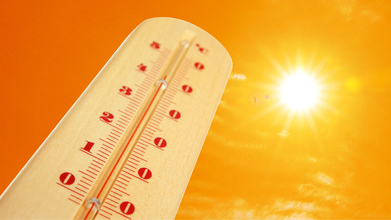
Amid changing climatic conditions that are soaring temperatures and leading to over 200,000 deaths annually in South Asia, the World Health Organization (WHO) today announced two health initiatives that will prevent the impacts of extreme heat and save lives in the region.
Extreme heat in South Asia, including in India, is rapidly threatening human health and can potentially also cause economic instability in the subcontinent.
The two initiatives -- the South Asia Climate–Health Desk and the South Asia Scientific Research Consortium -- were announced at the ongoing Mumbai Climate Week in collaboration with several global and regional partners.
The initiatives, with an investment of $11.5 million by the Rockefeller Foundation and Wellcome, aim to connect climate science to health action to prevent heat-related deaths and illnesses.
“Few regions feel the impacts of extreme heat as sharply as South Asia, and I welcome the clear determination to respond. We all know that every death primarily due to excess heat can be prevented, and heat health action plans are saving lives,” said Celeste Saulo, Secretary-General at the World Meteorological Organization (WMO) Climate and Health Joint Programme.
“By uniting science, government leadership and support, and community action, countries here are proving that this challenge can be met,” Saulo added.
What Are The 2 Health Initiatives?
The South Asia Climate–Health Desk, implemented with the Indian Institute of Tropical Meteorology (IITM), India Meteorological Department (IMD), aims to improve how climate and weather information is translated into action to protect health.
It is one of the first units under the joint program to embrace research and development and operational domains in climate and health, and will also help develop more robust decision support tools, such as early warning and risk assessments.
The South Asia Scientific Research Consortium, under the Indian Institute of Science Education and Research (IISER) Pune, is expected to deepen the region’s scientific understanding of how heat affects different populations.
By developing tailored heat‑risk thresholds, this consortium aims to ultimately strengthen heat action planning, early warning systems, and preparedness efforts, helping communities and institutions better adapt to rising temperatures.
The Risks Of A Warming South Asia
UN Secretary-General António Guterres has called for urgent global action to address the growing risk of extreme heat worldwide, which takes a heavy toll on health in South Asia – the world’s most populous region.
According to WMO, Asia is warming nearly twice as fast as the global average, intensifying extreme weather and placing growing pressure on lives and livelihoods, health systems, economies, and ecosystems across the region, putting the most vulnerable and exposed communities at critical risk.
In India, pre-monsoon temperatures regularly rise above 50 degrees Celsius, with heat-related mortality exceeding 200,000 deaths per year.
Extreme heat also undermines economic stability and productivity.
In 2024 alone, heat exposure in India led to 247 billion potential labor hours lost. The Lancet Countdown reported that the reduced labor capacity led to an estimated $194 billion loss in income.
12.4 Lakh HIV Tests In Haryana Detect 5,877 Cases
Credits: Canva
Haryana has significantly stepped up its HIV prevention and treatment efforts this year, screening more than 12.4 lakh people and expanding services across the state. Officials say the focus is not only on detection but also on reducing stigma and ensuring patients receive timely care.
Large scale testing across the state
Between April 2025 and January 2026, authorities tested 12,40,205 samples for HIV. Out of these, 5,877 people were found positive.
According to Additional Chief Secretary (Health) Sumita Misra, the state has been strengthening its response by making testing widely available and free. Haryana currently runs 104 integrated counselling and testing centres, including a mobile testing unit in Faridabad. These centres offer confidential screening so people can get tested without fear or hesitation.
A major focus has also been on preventing transmission from mother to child. During the same period, 5,65,830 pregnant women were screened. Among them, 613 tested positive and were immediately linked to treatment to reduce the risk of passing the infection to newborns.
Expanding treatment access
Alongside testing, treatment facilities have also grown. Haryana now operates 24 anti retroviral therapy centres in cities such as Rohtak, Gurugram, Faridabad, Karnal, Hisar, Ambala and Mewat. Thirteen of these centres were recently set up inside medical colleges to improve accessibility.
The state also runs five facility integrated ART centres and four link ART centres. At present, 40,851 patients are receiving HIV treatment across Haryana.
To support patients financially, the government introduced a monthly assistance scheme in December 2021. People living with HIV receive Rs 2,250 every month. So far, Rs 54.3 crore has been distributed under the programme.
Reaching vulnerable communities
The state is also tackling sexually transmitted infections through 31 dedicated clinics that provide free counselling, testing for syphilis, and treatment.
Beyond hospitals, outreach teams are working directly with high risk groups. Forty two targeted intervention projects run by Red Cross societies and NGOs engage with female sex workers, men who have sex with men, intravenous drug users, truck drivers, and migrant laborers.
For people dependent on opioids, Haryana operates 12 opioid substitution therapy centres and three satellite units. A total of 9,014 patients are registered and around 4,570 receive regular treatment.
Officials say several government departments are also involved in awareness programmes to educate communities and reduce stigma, which remains one of the biggest barriers to early testing and consistent treatment.
What IS HIV?
HIV- also referred as the human immunodeficiency disease, is a virus that attack cells of an individual’s immune system, and overtime makes the immune system weak, hence it loses its capability to fight against ordinary diseases, which in return increases the risk of catching up with infections and tumours. An individual is likely to develop AIDS in nearly 8 to 10 years, if HIV is left untreated. AIDS is considered as the final stage of HIV. This chronic disease can cause complications. Read to know more.
Symptoms for HIV
HIV symptoms can vary among individuals. The initial symptoms are Fever, sickness which is same as viral infections. Symptoms include:
- Fever
- Sore throat
- fatigue
- Swollen lymph nodes
- Headache
- Skin rash
- Pneumonia
- Nausea
- Vomiting
- Weight loss
- Weakness
- Skin rashes or bumps
- Night sweats
- Diarrhoea
Every person might experience the same symptoms, many individuals might go through some completely different set of symptoms. Since, the symptoms vary from person- to- person, many people can start noticing these symptoms at earliest stages and most of them aren’t even aware about any of this.
US NIH Director Jay Bhattacharya To Run CDC Temporarily

Credits: Wikimedia Commons
The U.S. public health system is heading into another phase of upheaval. In a move that surprised many within the medical community, the administration has asked National Institutes of Health (NIH) Director Jay Bhattacharya to temporarily lead the Centers for Disease Control and Prevention (CDC) as well.
The decision comes as part of a broader restructuring inside the U.S. Department of Health and Human Services ahead of the 2026 midterm elections.
The current acting CDC chief Jim O'Neill will step down from both his CDC and deputy HHS roles. He is expected to be offered leadership of the National Science Foundation instead.
One man, two powerful agencies
Bhattacharya already oversees the NIH — the country’s largest medical research body — which manages nearly $50 billion in research funding. Now, he will also run the CDC, the nation’s frontline agency for detecting disease outbreaks and coordinating responses to health threats in the U.S. and abroad.
The dual responsibility has raised eyebrows across public health circles.
Former CDC leaders argue the two institutions serve very different purposes and require constant attention. The NIH primarily funds and conducts research, while the CDC deals with real-time emergencies — from pandemics to food-borne outbreaks — and works closely with state health departments. About two-thirds of the CDC’s budget supports local public health programs.
Critics worry the arrangement could slow crisis response.
Several former officials say it is unrealistic for one person to manage both agencies effectively, especially since they are located in different cities and operate on entirely different timelines — one long-term and scientific, the other urgent and operational.
Turmoil inside the CDC
The leadership change follows months of instability at the agency under Health Secretary Robert F. Kennedy Jr..
In August, President Donald Trump dismissed former CDC director Susan Monarez after disagreements over vaccine policy. The firing triggered multiple senior resignations and intensified internal tensions.
During O’Neill’s tenure, the CDC rolled back long-standing vaccine guidance for children and adopted recommendations from a newly restructured advisory panel. The panel itself had been replaced with members skeptical of vaccines — a decision that further deepened controversy within the scientific community.
Public health experts say frequent policy reversals risk eroding public trust in vaccination and disease prevention programs.
Read: How Susan Monarez's Appoint As CDC Director Can Change US Health Sector?
A temporary appointment — for now
Under federal law, Bhattacharya can only serve as acting CDC director until late March unless a permanent nominee is confirmed by the Senate. The administration must formally nominate a candidate within 210 days of Monarez’s removal, though the clock pauses while a nomination awaits approval.
In other words, the role could remain temporary — or stretch longer if confirmation battles drag on.
Read: A Year After RFK JR Promised To Make America Healthy Again, What Actually Happened?
Bigger election-year strategy
The personnel changes are part of a wider departmental reshuffle. The administration is reorganizing leadership to improve coordination between the White House and health agencies before the midterm campaign season.
Republican campaign planners reportedly intend to center healthcare messaging around insurance costs, drug affordability, and access to healthier food — issues they believe resonate strongly with voters.
For now, though, the focus remains on whether combining leadership of the country’s research powerhouse and its disease-control nerve center will stabilize the system — or strain it further at a time when public health agencies are still rebuilding trust after years of pandemic-era divisions.
- Follow Us :


© 2024 Bennett, Coleman & Company Limited