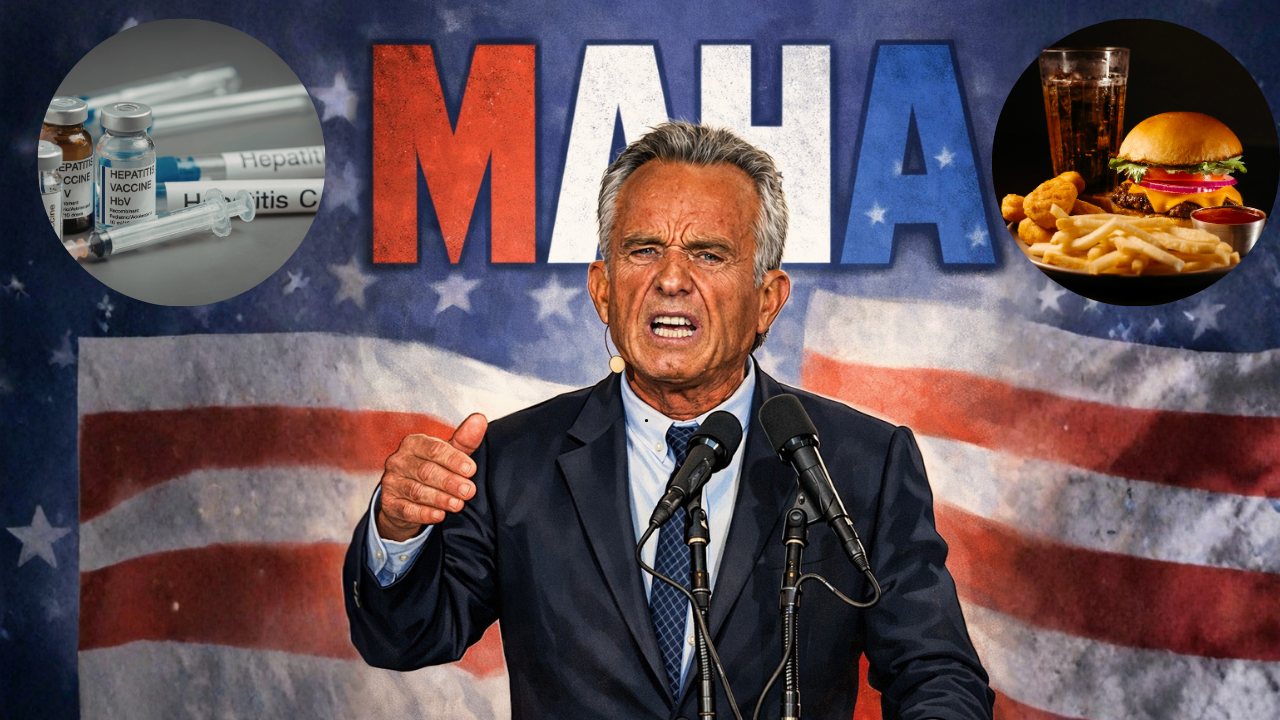
When Robert F Kennedy Jr took charge of America's health as the Secretary of Health and Human Services in 2025, the promise was sweeping. It included: restoring trust, clean up the food supply, rethink vaccine, though he clearly did state during debates that he is not against it, and reshape a system he said had failed many families for decades. On February 13, 2025, the day he was sworn in, the US President Trump said, "Our public health system has squandered the trust of our citizens. They don’t trust us. They don’t trust anybody, frankly. They’ve gone through hell.” Trump promised that Kennedy would "lead out campaign of historic reforms and restore faith in American health care". A year from now, Health and Me analyzes those MAHA (Make America Healthy Again) promises. he Make America Healthy Again (MAHA) movement produced policy changes, lawsuits, agency upheavals and intense public debate, but also falling trust in public health agencies and uncertain long-term impact.Read: I'm Not Afraid Of Germs, I Snorted Cocaine Off Toilet Seats, Says US Secretary of Health, RFK JrThe Fight Against Ultra Processed FoodsKennedy’s campaign had centered on a simple message: American children are sicker because their food is broken. As health secretary, he created a MAHA Commission to investigate children’s health.Its first report blamed rising chronic illness partly on diet and raised alarms about herbicides like glyphosate and atrazine being found in children and pregnant women. Farmers and food companies revolted, lobbying lawmakers in agricultural states.The backlash worked. By the commission’s follow-up report in September, pesticide references had vanished entirely, a clear sign of political limits.Read: Under RFK Jr's MAHA, More Food Dyes Are Getting Banned In USStill, Kennedy pushed nutrition policy aggressively. New dietary guidelines promoted whole milk, red meat and less ultraprocessed food. Supporters applauded a focus on real food, and food companies even pledged to remove artificial dyes by 2027.But critics said the results were partial at best. Nutrition expert Dr. Marion Nestle told CNN that despite momentum, progress stalled: “One big disappointment is the lack of progress on removing industrial and agricultural chemicals from the food supply.”An Anti-vaxxer's Vaccine PolicyNo area defined Kennedy’s first year more than vaccines.He fired members of a CDC advisory panel, replaced them, sometimes with skeptics, and cut the list of routinely recommended childhood vaccines from 17 to 11, aligning the U.S. closer to Denmark’s schedule. Several vaccines, including flu and hepatitis A, were removed from routine recommendations.Supporters framed it as restoring parental choice. Critics called it dangerous.Read: RFK Jr. Removes Entire CDC Vaccine Advisory CommitteeYale public health expert Dr. Jason Schwartz told CNN the consequences could be severe: “Today, the federal government’s public health agencies and leaders represent the greatest threat to efforts to prevent measles… a scenario that would have been inconceivable a few years ago.”Outbreaks soon followed, measles deaths returned after a decade without them. And polling showed trust in the CDC falling from 59% to 47%.Kennedy argued declining trust started before him and that transparency would fix it. But many scientists disagreed. Infectious disease expert Dr. Michael Osterholm told CNN the new approach replaced evidence with politics: “Decisions are being made based on ideology.”Health Agencies Saw A Lot Of Hirings, Firings, And Restructuring Within days of Kennedy’s swearing-in, thousands of employees across CDC, FDA and NIH were fired in a sweeping reorganization aimed at shrinking the department by about 20,000 workers.Leadership churn followed. A CDC director was ousted, nominees withdrawn, senior officials resigned, and a major shooting at CDC headquarters, carried out by a man angry about vaccines, intensified tensions. Hundreds of staff later urged Kennedy to stop spreading misinformation.Researchers warned expertise was disappearing. Johns Hopkins epidemiologist Dr. Caitlin Rivers told CNN local health departments depend on federal specialists: "A lot of those people aren’t there anymore.”Read: How Susan Monarez's Appoint As CDC Director Can Change US Health Sector?Meanwhile, Kennedy struggled with forces outside his control. According to Politico reporting, his attempts to regulate agricultural chemicals faltered because authority belonged to the Environmental Protection Agency and Republican lawmakers pushed back heavily.At the Food and Drug Administration, Kennedy’s agenda pulled in two directions.On one hand, the administration sought cheaper drugs and faster access. On the other, it raised evidence standards and blocked or slowed approvals, including scrutiny of a muscular dystrophy therapy after patient deaths.Also Read: Top U.S. Medical Associations Ousted from CDC Vaccine Workgroups in Sudden Shake-UpEven allies noticed contradictions. The agency alternated between right-to-try deregulation and skepticism toward pharmaceutical safety. The result: uncertainty for both industry and patients.Restoring Faith In Public HealthTrump promised Kennedy would restore faith in public health. Instead, surveys show trust in both health agencies and Kennedy himself fell.Read: What Is 'Make America Healthy Again' All About?Nutrition reforms gained modest support. Drug price messaging resonated politically. But experts repeatedly emphasized the same conclusion: vaccine policy overshadowed everything else.Nutrition policy expert Dr. Jerold Mande told CNN messaging that authorities had lied for decades may have backfired:“Most people will take from that: we shouldn’t trust anybody."