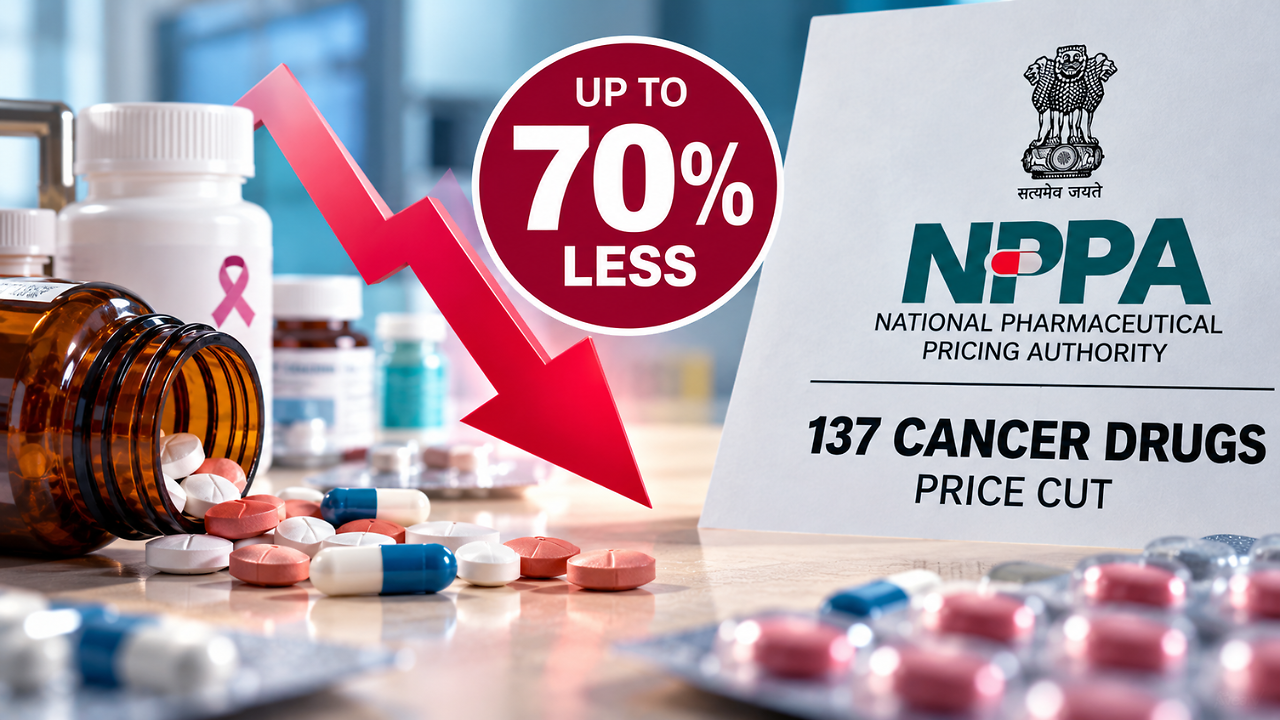
The National Pharmaceutical Pricing Authority (NPPA) has capped trade margins on 137 non-scheduled anti-cancer drugs at 30%. The move is expected to reduce the maximum retail prices (MRPs) of the cancer medicines by up to 70%.Announced by the Department of Pharmaceuticals under the Ministry of Chemicals and Fertilizers, the measure aims to curb excessive mark-ups in the distribution and sale of cancer medicines. It covers a range of anti-cancer drugs, including patented treatments, and is intended to ease the financial burden on patients and their families.The revised prices is reported to come into effect on November 9, 2026. Manufacturers have been directed to submit revised prices to the NPPA within seven days of the notification. Indian Government Caps Trade Margins On Cancer DrugsAlso read: Dr Rachna Shroff: Indian-American Cancer Researcher Who Turned Her Diagnosis Into AdvocacyTrade margins are the difference between the price at which a medicine enters the distribution chain and the price charged as it moves further along that chain. These margins reflect in the final cost of the medicines to the patients.According to the government, an analysis of market data found that non-scheduled anti-cancer medicines had an average trade mark-up of around 170%, some even reaching as high as 700%.Non-scheduled medicines are drugs that do not fall under the scheduled list of medicines subject to specific ceiling prices under the Drug Price Control Order. The latest intervention uses the government's powers under Paragraph 19 of the Drugs (Prices Control) Order, 2013, to cap trade margins in the affordable healthcare in serious illnesses like cancer. By limiting these margins, the government expects to bring down prices of these medicines and help patients to avoid switching to different medicines solely because of cost.The list includes 137 non-scheduled anti-cancer drugs recommended by an expert committee under the Directorate General of Health Services (DGHS). The committee included oncologists, medical specialists, hospital experts and government officials. The medicines covered include pembrolizumab, ribociclib and abemaciclib, which are used in the management of certain cancers. Other medicines on the list include atezolizumab and bevacizumab. Expected Savings Of Nearly ₹2,500 Crore For Patients Also read: H. pylori And Cancer: US Gastroenterologist Explains How A Common Stomach Infection Raises RiskWith this measure, the government expects to generate annual savings of approximately ₹2,500 crore for patients. The expected reduction in MRP ranges roughly from 20% to 70%, depending on the medicine.This is not the first the government has intervened in the pricing of anti-cancer drugs. In 2019, trade margins on 42 anti-cancer drugs were capped at 30%. After that, the MRPs of 526 brands of non-scheduled anti-cancer medicines were reduced by up to 90%, which generated annual estimated annual savings of ₹984 crore. The latest measure expands the rule to a larger group of medicines to improve affordability and better access to cancer treatment.NPPA's Directives To Drug Manufacturers The NPPA has asked drug manufacturers to submit revised MRPs within seven days of the announcement and make the updated prices available through their websites, hospital pharmacies and retailers. From November 9, hospitals and pharmacies must sell the cancer medicines at the revised prices without fail. Hospitals and retailers who sell anti-cancer medicines in substantial amounts everyday have specifically been asked to comply with the notification. The government has also asked manufacturers to maintain production and supply levels to prevent shortages after the price changes. State drug controllers will monitor compliance among manufacturers, distributors, retailers and healthcare institutions.Patients must confirm the exact brand, strength and formulation prescribed, as prices can differ across products from November 9. They should not change or discontinue cancer treatment on their own without consulting their oncologist.