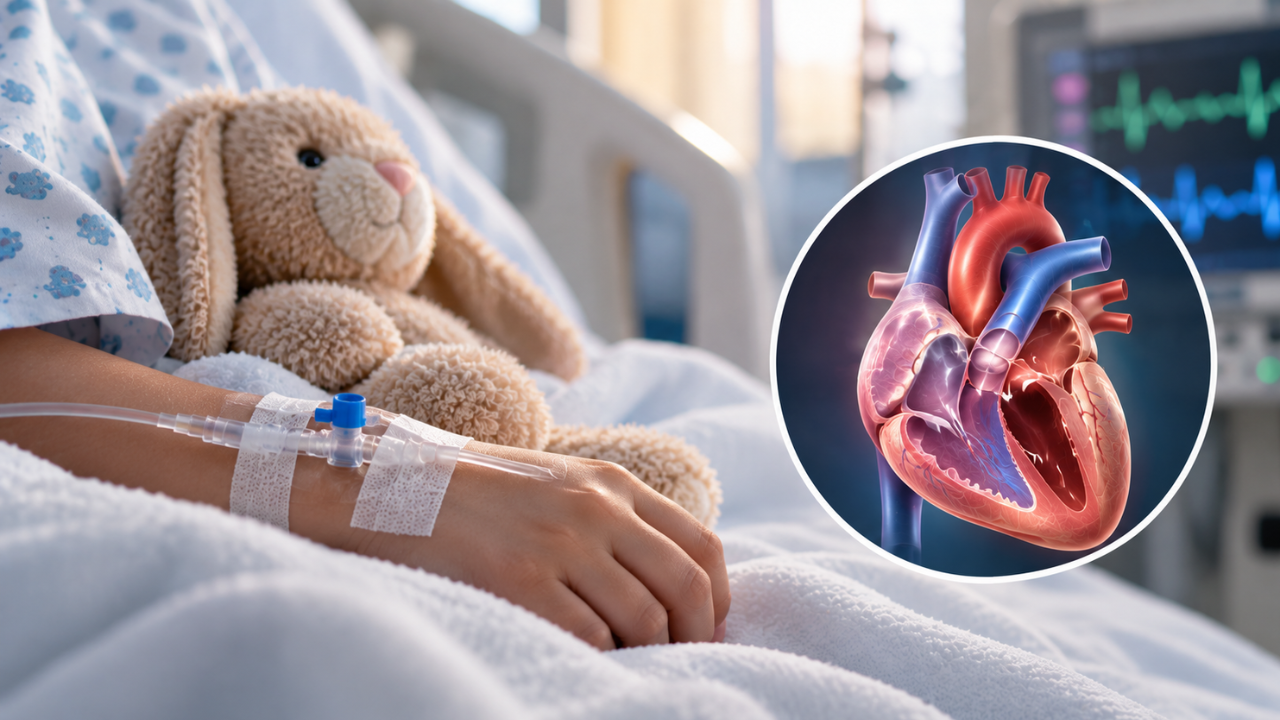
15-year-old Tanvi Pariyani’s death at AIIMS Delhi has raised questions about the treatment of a rare and complex congenital heart condition she had been living with since childhood. Tanvi, from Kota, had been visiting AIIMS since she was two. Her medical records listed ventricular septal defect (VSD) with pulmonary atresia, a combination that can make treatment considerably more complicated than just a 'hole in the heart'. Tanvi’s family has alleged that corrective surgery was repeatedly postponed. AIIMS, however, said its treating team concluded in 2017 that corrective surgery was not feasible because of the complexity of her cardiac anatomy and advised medical management. The hospital has now constituted a committee to review her complete clinical records, investigations, treatment, expert opinions and the circumstances surrounding her death. An autopsy is also underway. What Is Pulmonary Atresia With VSD? A VSD is a hole in the wall separating the heart’s two lower chambers. The right side of the heart pumps oxygen-poor blood towards the lungs through the pulmonary artery. In pulmonary atresia, the normal route through which blood leaves the right side of the heart and reaches the lungs is blocked or has not developed properly. This can severely block blood flow to the lungs and reduce the amount of oxygen entering the bloodstream. When pulmonary atresia occurs along with VSD, doctors have to deal with multiple abnormalities rather than simply closing the hole.Also read: Drug-Resistant Ringworm Sees Threefold Rise, Found In 29 Countries: CDC Treatment Is Complicated Some children may initially require procedures to ensure adequate blood reaches the lungs. Doctors may use medicines temporarily and later create an alternative pathway for blood flow through a shunt. In some patients, the pulmonary arteries remain very small and the body develops additional blood vessels supplying the lungs. These vessels, called major aortopulmonary collateral arteries (MAPCAs), may need to be brought together through a procedure called unifocalisation. A conduit may then be used to connect the heart to the lungs, while the VSD may also need to be closed. The anatomy can also change as a child grows. Small pulmonary arteries, abnormal blood vessels and rising pressure in the lungs can make later surgical repair more challenging.Also read: Sugar-Free Sweetener Used In Candies May Have A Harmful Metabolic Effect On Liver: Is Sorbitol Really Healthy? Events Leading Upto The Teen's Unfortunate Death According to AIIMS, Tanvi was admitted on August 24 after her condition deteriorated and was being evaluated for a possible heart-lung transplant. On September 1, she developed severe cyanosis, and her oxygen saturation fell to around 48%. AIIMS said she subsequently suffered a hypoxic spell followed by cardiac arrest. Despite oxygen support and resuscitation, she could not be revived and was declared dead at 5:06 am. “The Director, AIIMS, New Delhi has constituted a committee to examine the matter in detail, review the sequence of events and establish the facts,” the institute said. The committee’s findings and autopsy report will be important in establishing what happened and whether any intervention could have altered the outcome.