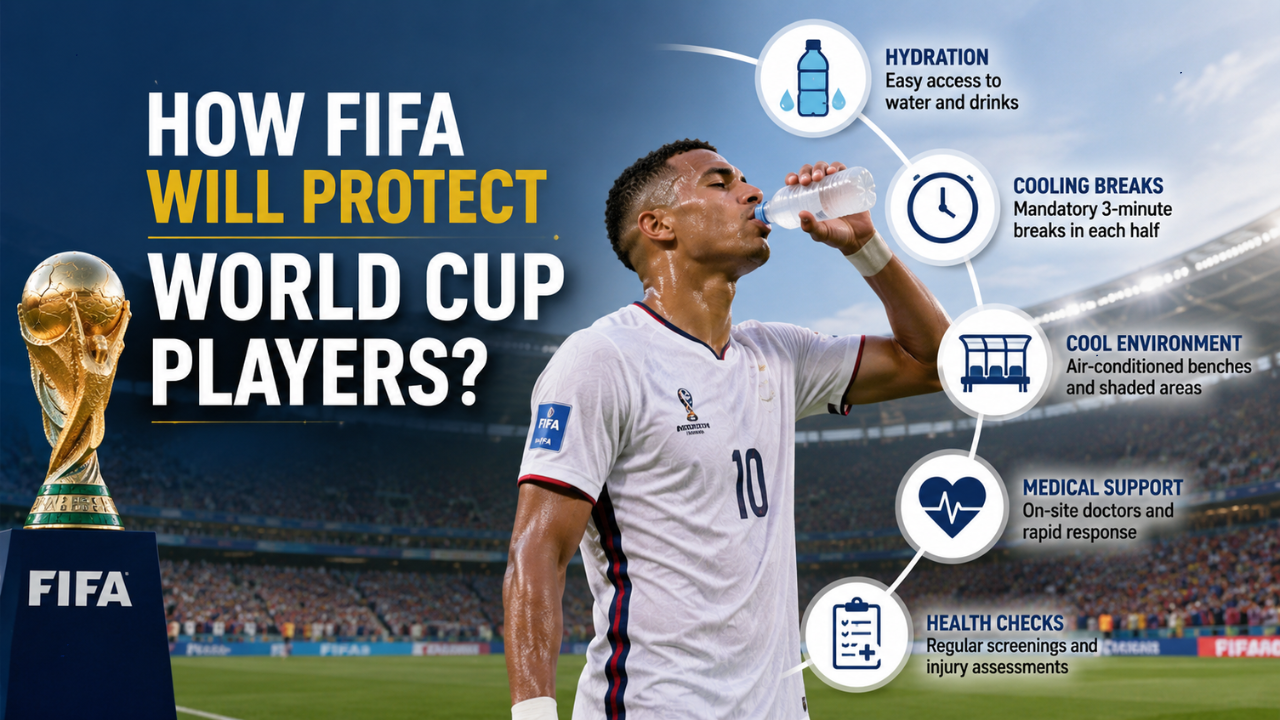
The much-awaited and high-voltage event, FIFA World Cup 2026, has begun amid soaring temperatures, with heat-related illnesses emerging as an early concern for fans and players alike. The 39-day event kicked off in Mexico on June 11, with the opening match held between Mexico and South Africa. However, the afternoon heat proved challenging for many spectators. At the FIFA Fan Festival in Houston's East Downtown, 22 people were treated for heat-related illnesses on the opening day of the tournament, including four who required hospitalization. Medical teams treated a total of 90 people during the event, according to the Houston Chronicle. FIFA: Doctors Warn About Heat Risks The tournament will be hosted by the United States, Canada, and Mexico across 16 cities in the three countries. Experts say extreme June and July heat can pose serious health risks for both fans and athletes. More than one-third of World Cup matches are at high risk for dangerously hot and humid conditions, NPR reported, while dozens more face moderate heat risk. "Players can overheat, and match officials as well," said Donal Mullan, a climate scientist at Queen's University Belfast and co-author of a study on heat risks at the 2026 World Cup. Under hot conditions, athletes can experience dangerous increases in body temperature that may lead to heat exhaustion or heat stroke. Mike Tipton, Professor of Human Applied Physiology at the University of Portsmouth, told The New York Times that high temperatures can also affect performance, with players sprinting less frequently, covering shorter distances, and matches becoming less intense overall. Recent examples from other sports have highlighted the dangers. During the French Open last month, Czech tennis player Jakub Mensik collapsed on court after a marathon match and later described the heat as "insane." As per experts, certain groups may face a higher risk during mass gatherings in summer heat, including:People aged 65 and olderIndividuals with chronic conditions such as heart disease, diabetes, COPD or kidney diseasePeople who are immunocompromisedPregnant fans.Scientists Urge Stronger Heat Protections Also read: FIFA World Cup 2026: What Keeps Messi and Ronaldo Biologically Younger Than Their Age? Experts ExplainLast month, a group of 21 scientists, including physiologists and climate experts, urged FIFA to strengthen its heat safety measures, arguing that existing guidelines were insufficient. The previous World Cup in Qatar was moved to winter partly to avoid extreme temperatures. According to World Weather Attribution, nearly a quarter of the 104 matches scheduled for the 2026 World Cup could be played under conditions that pose a risk of heat stress. FIFA's Measures To Protect Players And Fans FIFA says it has implemented several measures to reduce heat-related risks during the tournament, including: Shaded areas for spectatorsMisting systems Cooling buses Expanded water distribution points Specialized cooling bags for emergency treatment The tournament is also the first World Cup to implement mandatory three-minute cooling breaks midway through each half. Additional measures include climate-controlled benches for substitutes and staff, evening kick-off times for some matches, extra water breaks, and prioritizing covered stadiums where possible. FIFA said it remains "committed to protecting the health and safety of players, referees, fans, volunteers and staff." Read More: Congo Ebola Cases Rise to 676; FIFA World Cup Team Arrives in US After QuarantineMandatory Cardiac Screening All participating teams must ensure players undergo: Personal and family medical history assessment Clinical examination Resting 12-lead ECG within the previous 12 months Echocardiography within the previous 24 months FIFA also recommends the use of a standardized cardiac screening form developed by its cardiology consultants. Sudden Cardiac Arrest Protocol Any non-contact collapse on the field must be treated as a suspected sudden cardiac arrest until proven otherwise. Medical teams are permitted to enter the pitch immediately and begin resuscitation without waiting for the referee's approval.