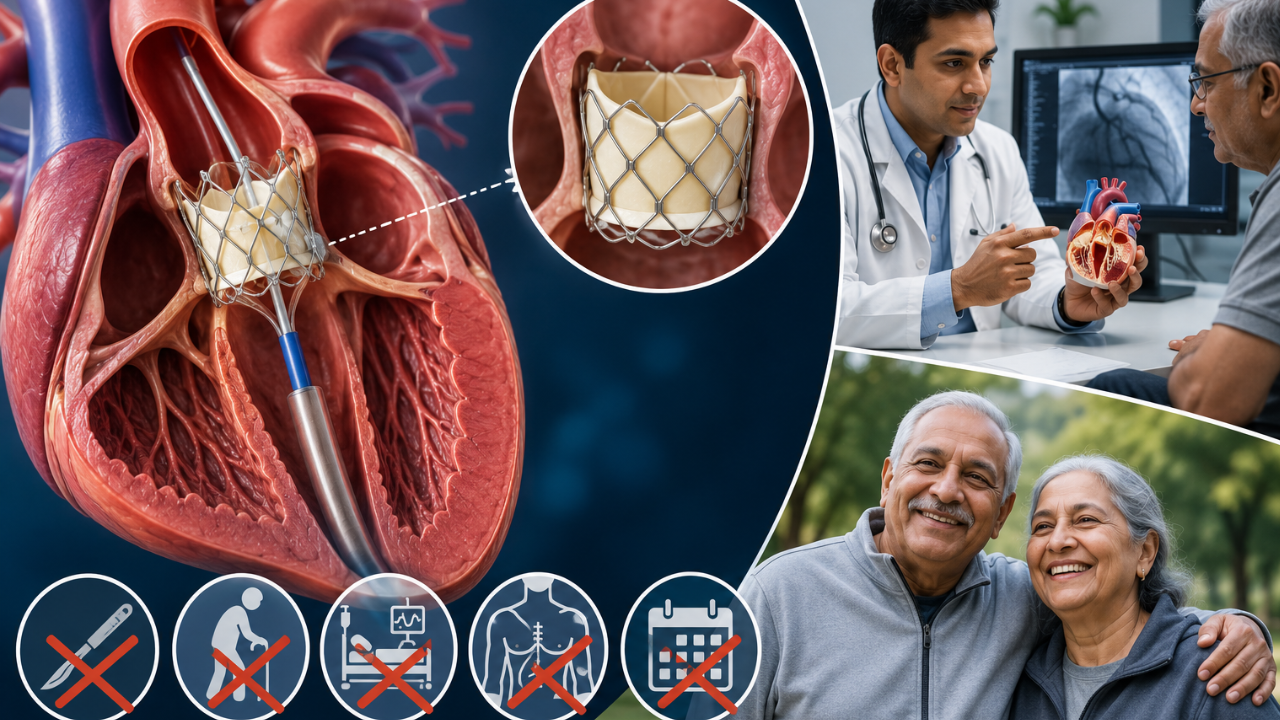
A city does not come to a standstill the moment one road narrows. First, traffic slows. Then detours become routine. People leave earlier, reach later, and modify their day around a problem that keeps getting worse. The heart can face a similar bottleneck. A valve that should open freely may begin to narrow, forcing the heart to work harder to move blood forward. The change may feel gradual, so patients and families often adjust to it rather than question it. That is where delay begins. Modern heart care has changed what can happen once the problem is recognized. TAVR has become an important option for many patients with severe narrowing of the aortic valve, offering a less invasive path than open-heart surgery for suitable candidates. The bigger challenge is often the myths that stop people from reaching the right evaluation at the right time. Here are five myths about TAVR that modern heart care has outgrown, left, and what patients and families need to know before old beliefs turn into costly delays. Myth 1: Heart valve treatment always means open-heart surgery For many families, valve replacement still conjures a single image: a daunting operation, an extended hospital stay, and a recovery that seems hard to picture. TAVR offers an alternative route for eligible patients. A replacement valve is delivered through a thin tube, most often through a blood vessel in the leg, and guided to the heart without opening the chest. Patients are also likely to spend less time in hospital after TAVR compared with surgical valve replacement. Modern valve care may involve a less invasive procedure, a shorter hospital stay, and a more comfortable return to daily routine, depending on the patient’s condition. Also read: Daraxonrasib: US FDA Approves Once-Daily Pill for Metastatic Pancreatic CancerMyth 2: TAVR is only for very elderly or very high-risk patients Many patients rule themselves out too early. Someone may feel too active, too independent, or “not sick enough” to ask about TAVR. Modern valve care has moved beyond that narrow view. TAVR is now an established option for an expanded range of appropriately selected candidates with severe aortic stenosis. Thus, TAVR should not be treated as a last-resort option. A timely valve evaluation can show whether TAVR, surgery, or continued monitoring is the right path. Myth 3: Feeling okay means the valve problem can wait A heart valve problem does not always announce itself clearly. Early signs can blend into ordinary explanations. Breathlessness may be blamed on age. Fatigue may be blamed on stress. Dizziness may be managed as a blood pressure or sugar issue. These explanations can sound reasonable while valve disease continues in the background. Aortic stenosis can also worsen over time, even when symptoms are absent at first. A new drop in stamina after 60 deserves attention. An echocardiogram can show whether the valve is narrowing and how well the heart is coping. Also read: H1N1 Cases, Deaths Rise Across India: States Reporting Surge, Red Flags to KnowMyth 4: Recovery from heart treatment always takes months Fear of recovery can become one reason families postpone care. TAVR can offer a gentler recovery for many older adults. Shorter hospital stays reduce the burden on caregivers. Earlier mobilisation can reduce deconditioning and anxiety after prolonged bed rest. Recovery still varies, and every patient needs a guided plan for activity, medicines, follow-ups, and rehabilitation when needed. Recovery after TAVR is carefully guided and often far less disruptive than most patients expect. Myth 5: TAVR is a one-size-fits-all procedure The best valve plan is never borrowed from another patient’s story. A heart team evaluates anatomy, valve characteristics, vascular access, and the full clinical picture before recommending TAVR or surgery. Current valve care also looks ahead, since some patients may need another procedure years later, and long-term follow-up is necessary. A lifetime heart-team approach is especially important as valve durability, surveillance, and future treatment options are planned. TAVR is personalized care. The right question is whether it fits the patient’s anatomy, health, goals, and future needs. What Families Must Remember Old myths can make modern care feel more frightening than it needs to be. A practical response begins with noticing change early. New breathlessness, chest pressure, dizziness, fainting, unexplained fever, or a sudden drop in energy must prompt medical advice. Care does not end after treatment. Ongoing checkups, echocardiograms, medications, dental care, walking routines, and cardiac rehab all help safeguard recovery and long-term valve health. Modern valve care has advanced and moved. Patients and families can move forward too by asking timely questions, seeking the right evaluation, and choosing treatments based on today’s possibilities, not yesterday’s assumptions. By Dr Maulik Parekh, Head – TAVR and Structural Heart Programme, Section Coordinator