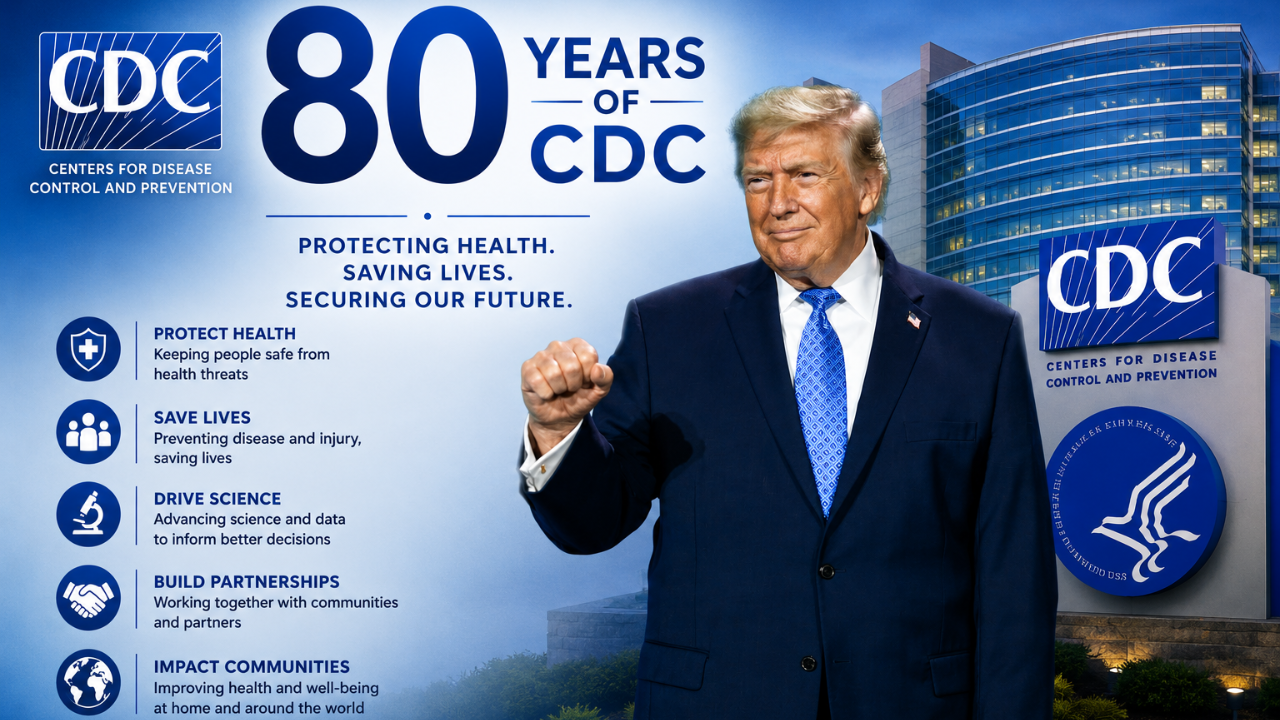
For nearly eight decades, the U.S. Centers for Disease Control and Prevention (CDC) has been regarded as one of the world's leading public health institutions. Established in 1946 to combat malaria, the public health agency has since evolved into a global authority and standard on infectious diseases, vaccinations, chronic illnesses, epidemics, emergency preparedness, health surveillance and much more. However, the institute has undergone significant changes President Donald Trump returned to the White House in January 2025. 80 Years Of CDC Since its inception in 1946, the CDC has led the response to numerous public health threats, including polio, HIV/AIDS, Ebola, Zika, H1N1 influenza, and the COVID-19 pandemic. CDC scientists have spent decades shaping its long-standing vaccination programs and policies, disease tracking systems, and emergency responses during epidemics that have influenced public health policies and practices globally. CDC Under Donald Trump’s Regime As the institution completes eight decades, we take a look at how it has changed over time under Donald Trump’s administration. From changes in vaccination policies, reduction in workforce to a shuffle in leadership, CDC has undergone a tectonic shift. While planning and preparedness for infectious disease has been a huge part of CDC's legacy, the current administration has increasingly focused on chronic diseases, nutrition, and environmental exposures. Appointment of Robert F. Kennedy Jr. as HHS Secretary One of the earliest and most controversial consequential decisions of the administration was the appointment of Robert F. Kennedy Jr. as Secretary of the U.S. Department of Health and Human Services (HHS). Kennedy, who is a renowned anti-vaxxer, introduced different goals for federal public health, particularly on chronic disease prevention, environmental health, and greater scrutiny of long-standing vaccine policies. Also read: Illinois Governor Claims Trump Continues To Suffer From Dementia Soon after the administration took office, HHS was significantly restructured, with plans to consolidate many public health functions under a newly created Administration for a Healthy America. Largest Staff Reduction In The History Of CDC In February 2025, more than 1,300 employees of Centers for Disease Control and Prevention lost their jobs. Workforce restructuring was carried out in multiple departments in the following months. Departments like outbreak surveillance, violence prevention, antibiotic resistance surveillance, Freedom of Information Act requests, and laboratory leadership programs were either downsized or eliminated. Public health experts widely critcised the move, warning that the reductions could hamper the country’s ability to detect and respond quickly to future outbreaks. Changes In Vaccine Policy One of the healthcare sections that saw perhaps the biggest change under Trump’s administration was vaccination. In June 2025, HHS dismissed all 17 members of the CDC's Advisory Committee on Immunization Practices (ACIP), the independent panel tasked for recommending how vaccines are used in the country. Also read: New Book Examines Donald Trump's Health, Age Concerns; White House Responds The committee was later recreated with new members. The move that drew criticism from several medical and scientific organisations. The administration revised several vaccine recommendations, particularly those relating to COVID-19, vaccination for healthy children and pregnant women. The U.S. additionally withdrew its financial support for Gavi, the Vaccine Alliance. It also stopped hundreds of millions of dollars in federal funding for mRNA vaccine research, including projects involving COVID-19, influenza and RSV vaccines. Changes In Gender-Related Healthcare Policies Major changes were made in reproductive and gender-related healthcare policies. One of the most talked about was the Mexico City Policy, also known as the ‘global gag rule’. The move restricted U.S. funding for non-government organisations that provide abortion services. Insurance coverage and funding for gender-affirming healthcare was withdrawn. Several LGBTQ+ references were removed from many federally supported health programs, which sparked widespread outrage. Changes In Leadership Susan Monarez was appointed as CDC Director in 2025. But her stint was short-lived after she was dismissed later that year. Reports stated that disagreements over vaccine recommendations led to the leadership dispute. Several senior CDC officials also resigned after Monarez’s exit. Trump supporters support these changes as they believe they are a part of a long-overdue overhaul of an institution they believe had grown too bureaucratic and too reliant on established scientific principles. However, many public health experts argue that the changes have affected scientific independence, disrupted long-standing public health programs, and altered the CDC's traditional role as a reliable evidence-driven body.