
- Health Conditions A-Z
- Health & Wellness
- Nutrition
- Fitness
- Health News
- Ayurveda
- Videos
- Medicine A-Z
- Parenting
ACC/AHA Cholesterol Guidelines 2026 Explained: Start Screening For Cardiovascular Diseases Early

Credits: Canva
The American College of Cardiology (ACC) and the American Heart Association (AHA) released the 2026 ACC/AHA Guideline on the Management of Dyslipidemia. These guidelines introduce important updates in cardiovascular risk assessment, lipid testing, and lipid-lowering therapy.
The guidelines focus on the cases of young people facing heart issues and thus highlight 10 key actions for 2026, which also includes early detection and starting cholesterol check as early as the age 19.
The guidelines have been published in the March 2026 issue of Circulation. The document was developed by a multidisciplinary panel that presented several organization, including the American Diabetes Association (ADA), National Lipid Association (NLA), and Preventative Cardiovascular Nurses Association (PCNA).
The 2026 guidelines will replace the widely used earlier AHA/ACC 2018 cholesterol guidelines, while incorporate new findings and big clinical trials, which will include lipid biomarkers, and enhanced cardiovascular risk prediction models.
What Are The New Steps Introduced By ACC/AHA 2026 Guidelines?
The focus of the new guidelines is on early detection and lifelong risk reduction. The key 10 actions include:
Read: AHA Cholesterol Guidelines 2026: How Indians Can Improve Heart Health
Early Prevention
One of the biggest shifts in the new recommendations is the focus on early detection and management of lipid disorders, especially among younger people. The aim is to reduce lifetime exposure to atherogenic lipoproteins and prevent the long-term development of atherosclerotic cardiovascular disease (ASCVD).
Use PREVENT For Risk Prediction
The guidelines introduce the PREVENT risk equations to estimate 10-year and 30-year cardiovascular risk in adults aged 30–79. This replaces the earlier pooled cohort equations and is expected to improve how patients are categorized according to risk.
Early Treatment For Borderline-risk Patients
Lipid-lowering therapy can now be considered for primary prevention in individuals with a borderline 10-year ASCVD risk (3–5%). For those with intermediate risk (5–10%), treatment decisions should involve shared discussions between doctors and patients.
LDL-C
The updated guideline reintroduces clear LDL-C and non-HDL-C treatment targets, along with percentage reduction goals. These benchmarks help clinicians decide when to intensify treatment.
ApOB Testing
The recommendations suggest measuring apolipoprotein B (ApoB), particularly in patients with high triglycerides, diabetes, or cases where LDL-C levels may underestimate the number of atherogenic particles.
Adults Must Undergo One-time Lp(a) Testing
Because lipoprotein(a) [Lp(a)] is a genetic risk factor for cardiovascular disease, the guideline advises that all adults undergo at least one lifetime test to identify inherited cardiovascular risk.
Coronary Calcium Scoring (CAC)
Coronary artery calcium (CAC) scoring can help guide treatment decisions, especially for people with borderline or intermediate cardiovascular risk who are unsure about starting statin therapy.
Lipid Therapy for High Risk Comorbidities
Adults aged 40–75 years with conditions such as diabetes, stage 3–4 chronic kidney disease, or HIV infection should receive lipid-lowering therapy for primary prevention, even if their baseline LDL-C levels are not elevated.
Secondary Prevention Methods
For patients with established ASCVD and high risk, the guideline recommends an LDL-C target below 55 mg/dL, as lower levels are linked to better cardiovascular protection.
Stating - The Cornerstone of Therapy
Despite newer medications, statins continue to be the first-line therapy for most patients with dyslipidemia and play a major role in reducing ASCVD risk. Additional treatments such as ezetimibe, PCSK9 inhibitors, bempedoic acid, and inclisiran may be added depending on treatment goals and patient needs.
AIIMS Delhi Sets Up Team To Process India's First Ever Passive Euthanasia For Harish Rana

"God asks no man whether he will accept life. That is not the choice. You must take it. The only choice is how."
This is what Justice JB Pardiwala said, quoting Henry Ward Beecher to allow India's first ever passive euthanasia for Harish Rana. AIIMS Delhi has now started protocols to implement the Supreme Court verdict for Harish Rana's passive euthanasia. Sources and several reports have mentioned that the process could take two to three weeks.
How Is AIIMS Delhi Preparing For Passive Euthanasia?
A specialized team headed by professor and head of the department of anesthesia and palliative medicine, Dr Seema Mishra, has been constituted to implement the process. The team comprises doctors from departments of neurosurgery, onco-anesthesia, and palliative medicine, and psychiatry.
“The process generally involves withholding or withdrawing the nutritional support gradually while ensuring adequate pain relief. The patient is given palliative sedation so that he or she is not in distress. Life support measures such as artificial nutrition, oxygen and medications are slowly withdrawn. The aim is not to prolong nor hasten death,” Dr Sushma Bhatnagar, former head of the department of onco-anaesthesia, pain and palliative care, AIIMS-Delhi.
Harish Rana Update
A video from Rana's home in Ghaziabad showed that relatives were offering prayers and a member of the Brahma Kumaris put a 'tilak' on his forehead. She said, "Sabko maaf karte hue, sabse maafi mange hue, so jaao...theek hai." Which loosely translates to: Forgiving everyone and asking forgiveness from everyone. Now sleep. It's okay.
The Brahma Kumari seen in the video was Sister Lovely from Mohan Nagar Seva Kendra in Ghaziabad. Komal, who is also a member of Brahma Kumaris based in Mount Abu, told this to news agency Press Trust of India (PTI). "She is following a ritual with the words that mean he (Harish) leave the world in a happy state, seeking and giving forgiveness...it is part of a meditative chant that comforts the soul and eases the entire process of soul merging with the sublime," she told PTI.
According to Komal, alongside medical consultations, the family also sought spiritual guidance as they prepared for the inevitable after the Supreme Court’s directions.
Read: Harish Rana Case Brings Spotlight On How Passive Euthanasia Has Evolved Over The Years
Harish Rana's Passive Euthanasia
The Supreme Court of India, in a landmark judgment allowed 32-year-old Harish Rana, who had been living in a vegetative state for last 13 years, the right to die. This means, that the apex court allowed passive euthanasia for Rana. The bench comprising Justice JB Pardiwala an Justice KV Vishwanathan allowed the withdrawal of life support of Rana, who has been in a coma and kept alive on tubes for breathing and nutrition after he sustained severe head injuries following a fall from a building in 2013 in Chandigarh.
The judgment is a win, however, Ashok, Rana's father said that his feelings are mixed. "As a father, this is extremely painful. But on humanitarian grounds, this is the best we can do for my son." He continued, "It is just not a matter of my son, but there are many others in such a state in the country. I think it is the grace of God who guided the Supreme Court judges... I am happy that with this judgments, many others may find a way."
Microsoft's New AI Model GigaTIME To Expand Access To Cancer Care, Says CEO Satya Nadella
Credit: Microsoft
Tech giant Microsoft's new artificial intelligence model GigaTIME will help reduce time and cost as well as expand access to cancer care, said CEO Satya Nadella today.
Nadella noted that its multimodal AI system has shown promise in transforming routine pathology slides into detailed spatial proteomics data -- a high-resolution map of proteins.
The advanced technology may help doctors analyze tumors faster, thus bringing hope to millions of cancer patients worldwide for a better and faster diagnosis.
Taking to social media platform X, Nadella said: “We’ve trained a multimodal AI model to turn routine pathology slides into spatial proteomics, with the potential to reduce time and cost while expanding access to cancer care”.
What is GigaTIME
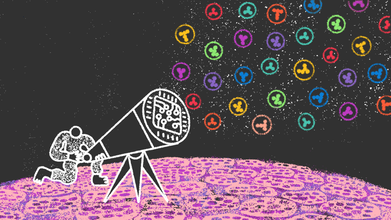
GigaTIME is a multimodal AI model for translating routinely available hematoxylin and eosin (H&E) pathology slides to virtual multiplex immunofluorescence (mIF) images.
H&E is the "gold standard" technique in pathology for diagnosing cancer. The mIF images share details of proteins and their locations in cancer cells, thus advancing precision immuno-oncology research.
Developed in collaboration with Providence and the University of Washington, the team trained GigaTIME on a dataset of 40 million cells with paired H&E and mIF images across 21 protein channels.
The multimodal AI, which analyzed standard pathology slides, showed the potential to generate a “virtual population” of tumor cells. It also revealed the detailed protein activity within cancer cells.
The images also offer deeper insights into how tumors behave and disease progression, enabling doctors to cut down the time and cost of diagnosis.
“GigaTIME is about unlocking insights that were previously out of reach,” explained Carlo Bifulco, chief medical officer of Providence Genomics and medical director of cancer genomics and precision oncology at the Providence Cancer Institute, in a Microsoft Blogpost
“By analyzing the tumor microenvironment of thousands of patients, GigaTIME has the potential to accelerate discoveries that will shape the future of precision oncology and improve patient outcomes,” Bifulco added.
How GigaTIME Works
In the paper, detailed in the journal Cell, scientists from Microsoft reported that they applied GigaTIME to 14,256 cancer patients from 51 hospitals and over a thousand clinics.
The AI system generated a virtual population of around 300,000 mIF images spanning 24 cancer types and 306 cancer subtypes.
This virtual population uncovered 1,234 statistically significant associations linking mIF protein activations with key clinical attributes such as biomarkers, staging, and patient survival.
"By translating readily available H&E pathology slides into high-resolution virtual mIF data, GigaTIME provides a novel research framework for exploring precision immuno-oncology through population-scale TIME analysis and discovery," the researchers said.
"The GigaTIME model is publicly available to help accelerate clinical research in precision oncology," they added.
Just twice a week at-home resistance training enough to build muscle, reveal new guidelines

Credit: Canva
Unable to hit the gym due to a crunch of time? Take heart, indulging in resistance exercises such as lifting weights and bodyweight just twice a week at home can help you build muscle, as per new guidelines from the American College of Sports Medicine (ACSM).
The first major update to resistance training guidelines in the last 17 years moved away from the previous stance and stressed the fact that any type of resistance training is better than no exercise at all.
The updated guidelines stress the importance of resistance training, even in small amounts, for improving
- strength,
- muscle size,
- power
- physical function.
What Does The New Guidelines Say
The new recommendations, published in the Medicine & Science in Sports & Exercise journal, are based on 137 systematic reviews involving more than 30,000 participants. It is the most comprehensive resistance training guideline to date.
More than perfection, the guidelines emphasized the need for consistency. Beyond the gym, the guidelines for the first time also recognize elastic bands, bodyweight training, and home-based routines for offering clear and measurable improvements in strength, muscle size, and functional performance.
"The best resistance training program is the one you'll actually stick with," said Stuart Phillips, distinguished professor in the Department of Kinesiology and an author on the Position Stand.
"Training all major muscle groups at least twice a week matters far more than chasing the idea of a 'perfect' or complex training plan. Whether it's barbells, bands, or bodyweight, consistency and effort drive results," Phillips added.
The guidelines stated that while the load, volume, or frequency of the exercise regimen can be fine-tuned, the primary goal for most adults should be to build a consistent routine.
Instead of rigid rules, Phillips said that personal goals, enjoyment, and long-term adherence matter most, especially for adults looking to stay strong, healthy, and functional as they age.
Also read: India For The First Time Has Guidelines On Muscle Loss
What is Resistance training?
Resistance training, also known as strength or weight training, is a central component of exercise programs.
It exercises muscles by contracting against external resistance, such as free weights, machines, resistance bands, water, or body weight, through isometric, isotonic, or isokinetic actions.
It has proven to
- improve muscular strength,
- power,
- endurance,
- overall health and sports performance.
- bone density.
The Physical Activity Guidelines for Americans recommends adults do muscle-strengthening activities two or more days per week, working all major muscle groups at a moderate or greater intensity.
Studies have proven that resistance training
- Improves blood glucose control,
- Boost gut health
- Improves cognition and brain health
- Cuts down stress, depression, and anxiety
- Reduces cardiovascular disease risks.
- Follow Us :


© 2024 Bennett, Coleman & Company Limited