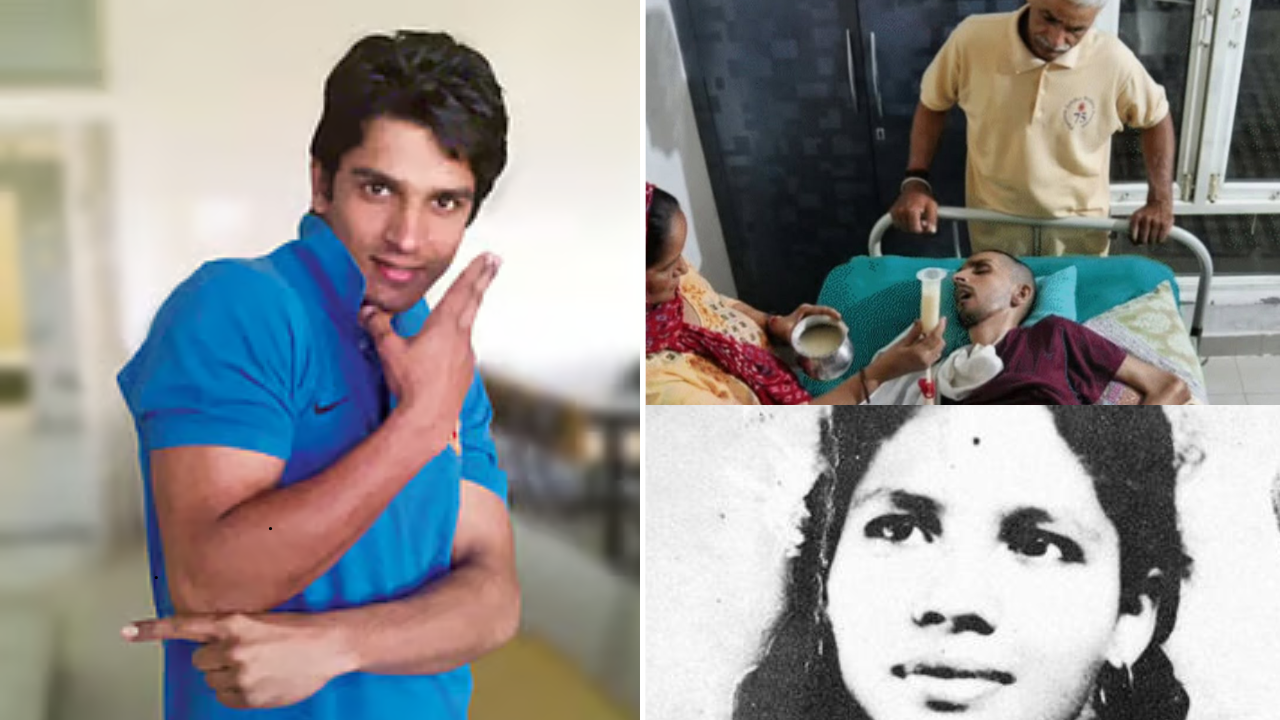
The Supreme Court of India, in a landmark judgment allowed 32-year-old Harish Rana, who had been living in a vegetative state for last 13 years, the right to die. This means, that the apex court allowed passive euthanasia for Rana. The bench comprising Justice JB Pardiwala an Justice KV Vishwanathan allowed the withdrawal of life support of Rana, who has been in a coma and kept alive on tubes for breathing and nutrition after he sustained severe head injuries following a fall from a building in 2013 in Chandigarh. The judgment is a win, however, Ashok, Rana's father said that his feelings are mixed. "As a father, this is extremely painful. But on humanitarian grounds, this is the best we can do for my son." He continued, "It is just not a matter of my son, but there are many others in such a state in the country. I think it is the grace of God who guided the Supreme Court judges... I am happy that with this judgments, many others may find a way."While, this is a landmark judgment, India's conversation on right to die has evolved slowly. What shaped the judgment is also the years old case of Aruna Shanbaugh. This was the case that set the legal framework for right to die, so it could be implemented in practice years later in Rana's case.Read: Supreme Court Allows 1st Passive Euthanasia For Man In Vegetative State For 13 Years The Cases That Shaped India's Right To DieIf one could trace the earliest debates that began around the "right to die", one could not overlook Gian Kaur v. State of Punjab (1996). This is where a three-judge bench of the Supreme Court upheld the constitutional validity of the offence of abetment of suicide under the Indian Penal Code. The apex court ruled that right to life under Article 21 does NOT include a right to die. While the court did not rule on the validity of active or passive Euthanasia, it did make an important observation, which was later used in the coming euthanasia jurisprudence. The court noted that the right to live with human dignity would also mean the existence of such a right upto the end of natural life. This means the right to a dignified life upto the point of death, which also includes a dignified procedure of death. Fast forwarding to 2006, the 196th Law Commission of India said that withholding life support or medical treatment of terminally ill patients does not attract criminal liability of attempt to suicide. The court noted that such a action should be done provided it is done in the best interest of the patient.Read: Supreme Court Steps In For 31-year-old's Passive Euthanasia Plea Who Has Been In Vegetative State For 10 Years Aruna Shandbaug CaseIn India, euthanasia is allowed under strict guidelines and is only legalized with the withdrawal of life support for terminally ill patients, which means, passive euthanasia. The landmark case if of Aruna Shanbaug, a nurse at King Edward Memorial Hospital who had been kept in a vegetative condition for more then four decades for finally to be granted passive euthanasia, that too "only by legislation", which means the process must be followed until Parliament makes legislation on this subject. Shanbaug was a victim of a brutal sexual assault in 1973 that deprived oxygen supply to her brain. In 2009, journalist Pinki Virani approach the Supreme Court to seek permission for euthanasia on Shanbaug's behalf. This was met with much criticism, including from the community of nurses who were taking care of Shanbaug since decades. However, many reports show that despite the care, Shanbaug's condition in hospital continued to worsen. The court in 2011 refused euthanasia largely due to the opposition from hospital staff who cared for her. However, it did deliver a historic ruling and legalized passive euthanasia in India, subject to prescribed safeguards and High Court approval, and made it lawful "only by legislation", as explained above. The Important Of Living Will And Right To Die With DignityDr Rajeev Jayadevan, a physician with extensive international clinical experience and a strong interest in public health wrote for Health and Me on the importance of living will. He also noted that recent legal developments "have highlighted the importance of advance planning for end-of-life care".Read: Harish Rana Case Highlights Why Planning For A Living Will Is ImportantThe doctrine evolved further in Common Cause v. Union of India (2018), when a Constitution Bench of the Supreme Court led by then Chief Justice Dipak Misra recognized that the right to die with dignity is part of Article 21 of the Constitution.The court ruled that passive euthanasia is legally valid. It said that while the sanctity of life must be respected, in cases of terminal illness or patients in a persistent vegetative state with no hope of recovery, priority should be given to the patient’s advance directive and right to self-determination.The judgment also introduced the concept of advance medical directives, or “living wills”.A living will is a written document in which a person can specify in advance the medical treatment they wish to receive if they become terminally ill or are no longer able to give informed consent.It can also allow family members to withdraw life support if a medical board determines that the patient cannot recover.The ruling strengthened patient autonomy by allowing people to make decisions about their end-of-life care even when they cannot communicate those wishes later.What Has Changed Through Judgments?While the 2018 ruling recognized living wills and passive euthanasia, the process was very complicated. It required approvals and countersigning by a judicial magistrate and multiple procedural steps, which made it difficult for families and hospitals to follow. In 2019, the Indian Council of Critical Care Medicine told the Supreme Court that these rules were too hard to implement.Read: Passive Euthanasia: Harish Rana’s Case May Reshape End-of-life Protocols, Say ExpertsIn 2023, a Constitution Bench simplified the process. Living wills no longer need a magistrate’s signature and can be attested by a notary or gazetted officer. More than one family member can be named as a decision-maker. Hospitals now rely on two medical boards that must give an opinion within 48 hours, and they only need to inform a magistrate rather than seek approval.The issue came to the forefront in the case of Harish Rana, who suffered severe brain injuries after a fall in 2012 and showed no recovery for 13 years. In 2024, his family approached the Supreme Court seeking permission to withdraw life support.The court allowed it, saying continuing treatment was not in his best interest.Legal experts say this marks a major shift in India’s approach to passive euthanasia. Over the years, court rulings have strengthened the idea that the right to die with dignity is part of Article 21, simplified procedures for living wills, and shown greater willingness to balance the sanctity of life with dignity at the end of life.