
- Health Conditions A-Z
- Health & Wellness
- Nutrition
- Fitness
- Health News
- Ayurveda
- Videos
- Medicine A-Z
- Parenting
Ahmedabad Toddler Swallows Hulk Toy, Showed X-Ray, Doctors Remove It Via Endoscopy
Credits: X
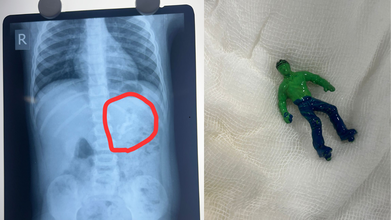
Ahmedabad toddler, one-and-a-half-year-old boy swallowed a 'Hulk' toy, which is based on a popular comic superhero. The toy was stuck in his stomach when his parents took him to the Civil Hospital. According to reports by News18, the child is identified as Vansh who showed the signs of discomfort and began vomiting. This is what alarmed the parents.
As per the News18 report, his mother Bhavika was suspicious when she noticed that one of his toys was missing. The child was rushed to the hospital and an X-ray revealed that he had swallowed the entire plastic toy. The toy was not broken.
Hindustan Times reported that Dr Rakesh Joshi, Head of the Department of Pediatric Surgery removed the toy through upper GI endoscopy. "Had it been a little late, the toy could have moved further from the stomach and got stuck in the intestines. In that case, there would have been a risk of intestinal blockage and even rupture," the senior doctor said.
"There is a natural valve between the esophagus and the stomach. The biggest challenge was to take out a whole toy through this valve. When we tried to grab it with the endoscope, the toy kept slipping because of the air in the stomach. Pulling the toy by its hand or foot raised the possibility of it getting stuck in the valve and causing it permanent damage," he said.
The doctor noted that if the toy had further slipped down, it would have increased the risk of intestine rupturing.
Ahmedabad Toddler Swallows Hulk Toy: What Parents Must Keep In Their Mind
Under the Toys (Quality Control) Order, 2020 issued by the Department for Promotion of Industry and Internal Trade under the Ministry of Commerce and Industry, toy safety in India was brought under mandatory BIS certification from September 1, 2020. The move aims to ensure safer toys for children while also supporting the government’s policy of curbing non-essential imports.
Industry sources estimate that more than 85 percent of toys sold in India are imported. Officials say the Toys Quality Control Order is a key step in preventing the entry of cheap and substandard toys into the domestic market, many of which fail to meet basic safety requirements.
Ahmedabad Toddler Swallows Hulk Toy: Standards for Electric and Non-Electric Toys
The quality control order clearly defines safety standards based on the type of toy. Non-electric toys such as dolls, rattles, puzzles, and board games must comply with IS 9873 (Part 1):2019. These toys do not rely on electricity for any of their functions.
Electric toys, which include at least one function powered by electricity, are required to meet the standards outlined under IS 15644:2006. Compliance with these standards is mandatory before such toys can be sold in the Indian market.
Ahmedabad Toddler Swallows Hulk Toy: Risks Linked to Untested Toys
Toys that are not tested by NABL-accredited toy testing laboratories can pose serious health risks to children. Sharp edges and poorly finished parts can cause cuts and injuries. PVC toys may contain phthalates, which are considered harmful chemicals.
Many low-quality toys have also been found to contain lead, a substance known to be particularly damaging to brain development in children. Soft toys with fur or hair can trigger allergies or become choking hazards. In some cases, small body parts can get stuck in gaps or holes, increasing the risk of injury.
Testing by NABL-accredited laboratories ensures that toys are safe, durable, and suitable for specific age groups. Parents are advised to check for IS marks on toys before purchasing, as this indicates compliance with Indian safety standards.
Ahmedabad Toddler Swallows Hulk Toy: What Parents Should Check Before Buying Toys
Experts recommend avoiding toys with small detachable parts for toddlers and young children, as they are more likely to put objects in their mouths. Toys should always match the child’s age, skill level, and interests.
Parents are also urged to look for IS marks, which confirm that the toy has been tested and certified. Loud toys should be avoided, as prolonged exposure to sounds above 85 decibels can harm a child’s hearing.
Electric toys with heating elements should be used with caution or avoided altogether due to burn risks. Finally, toys with sharp edges or shooting components should be carefully examined to prevent cuts and injuries.
Vinod Kambli Battles ‘Memory Loss’ at 54; Signs of Blood Clot in the Brain

Vinod Kambli has been recovering slowly, but still dealing with memory problems. (Photo credit: PTI)
Former Indian cricketer Vinod Kambli is at risk of suffering from a brain stroke and is battling serious health challenges, says Marcus Couto, a friend of Kambli. In an interview with the Times of India, he revealed that Kambli had been hospitalised 18 months ago and has a clot in his brain. Because of this, his memory is impaired, Couto told TOI. He further added that Kambli remembers details briefly and then forgets them again. While Kambli has given up drinking alcohol, his friend revealed that he sometimes smokes despite it being forbidden. For Kambli’s fans, this news comes as an unfortunate update—not to forget the lingering risk of a brain stroke, given the current scenario.
Also Read: US CDC Warns Rising Drug-Resistant Shigella Cases A Public Health Threat: Here’s How To Prevent
Vinod Kambli’s health has reportedly improved recently, but concerns linger regarding his neurological health and memory. The 54-year-old is reportedly able to walk, but his memory remains inconsistent. Reports suggest that he recalls only fragments from his life, despite the fact that his health has not deteriorated in recent months. While the clot in his brain cannot be removed, his friend Couto confirmed that doctors have recommended extra care due to the risk of a brain stroke. Reports suggest that Kambli’s friends in the cricketing community have come forward to offer financial support—Sunil Gavaskar, Sachin Tendulkar, and Kapil Dev, to name a few.
Vinod Kambli is recovering despite challenges
On the brighter side, reports suggest that Kambli’s mobility has improved. Earlier relying on furniture for movement, he now walks with the help of a support stick—efforts are underway to enroll him in physiotherapy. While daily challenges persist, Kambli spends most of his time at home undergoing health check-ups. While undergoing treatment at Breach Candy Hospital, he had recovered by 60 per cent.
Are blood clots always deadly?
Blood clots usually form as the body’s natural response to a physical injury. They help prevent excessive loss of blood due to uncontrolled bleeding. However, when these clots form inside blood vessels, they can obstruct blood flow and even rupture, thereby leading to severe complications such as a stroke, damage to brain cells, and even death. In some cases, blood clots in the brain can lead to mild episodes of seizures and paralysis. Therefore, it is important to ensure prompt medical treatment.
Symptoms of a blood clot in the brain
A blood clot in the brain is known as an embolism, and its symptoms often appear suddenly and require immediate medical attention. Some of the symptoms are:
- Weakness or numbness in one part of the body
- Dizziness
- Severe headaches
- Speech difficulties
- Disorientation
- Memory loss
- Behavioural changes
- Sudden, unexplained seizures
- Double or blurred vision
- Vertigo or loss of balance
Ozempic and Wegovy Can Help Reverse Severe Fatty Liver Disease, Suggests Mouse Study
Credit: iStock
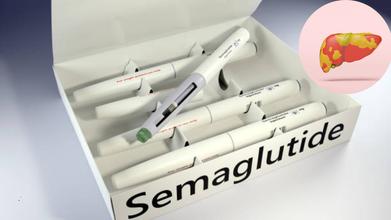
While Ozempic and Wegovy are best known for treating diabetes and obesity, a new mouse study has shown promise for treating liver disease, particularly metabolic dysfunction-associated steatohepatitis (MASH)—fatty liver disease.
MASH is a severe form of fatty liver disease in which fat buildup, inflammation, and tissue scarring can lead to cirrhosis and liver failure.
The benefits seen were independent of weight loss, revealed the study, which challenges long-held assumptions about how GLP-1 medicines work in the liver and could reshape how physicians treat metabolic liver disease.
Researchers at Mount Sinai Hospital found that patients taking semaglutide—the active ingredient in the popular weight loss drugs—showed improvements in the fatty liver condition that went beyond what could be explained by blood sugar control and weight loss alone.
The finding, published in the journal Cell Metabolism, explained that semaglutide, which mimics the gut hormone GLP-1, acts directly on a subset of liver cells to improve organ function and does so independently of weight loss.
"We've seen in clinical trials that patients who lose very little weight see the same reductions in liver inflammation, scarring, and enzyme levels as those who lose a great deal of weight. Now we know why," said Dr. Daniel Drucker, a senior investigator at the Lunenfeld-Tanenbaum Research Institute, who led the study.
"We're not saying weight loss isn't important, because many things improve when patients lose weight. But we now know that weight shouldn't be the only measure of success, because GLP1 medicines will improve liver health whether or not the patient loses weight," he added.
Semaglutide Could Reverse Fatty Liver Disease
There is a prevailing assumption that liver cells do not carry the receptor that semaglutide binds to, meaning the drug has no direct route to the organ.
To better understand, Postdoctoral fellow Dr. Maria Gonzalez-Rellan combined sophisticated mouse models of MASH with deep molecular analyses of liver cells.
The results identified two cell types carrying semaglutide receptors: liver sinusoidal endothelial cells (LSECs) and immune T cells.
Although LSECs account for only about 3 per cent of liver cell volume, they proved to be the key driver of semaglutide's liver benefits.
LSECs line the tiniest blood vessels in the liver and are studded with pores that allow them to act as a molecular sieve, filtering substances passing between the liver and the bloodstream.
“Semaglutide reversed MASH in mice that lacked the brain receptors controlling appetite, demonstrating that weight loss is not required for liver benefits,” Dr. Gonzalez-Rellan said.
In a further test, mice lacking LSEC receptors showed no liver improvement on semaglutide even after losing 20 per cent of their body weight.
How This Will Impact Patients
The findings carry practical implications. GLP-1 medicines have become widely prescribed, yet their mechanism of action in the body, beyond appetite suppression and blood sugar control, is not well understood
Knowing that semaglutide improves liver health independently of weight loss could influence prescribing decisions.
Physicians may choose lower doses that avoid the side effects associated with the higher doses needed for significant weight loss, potentially also lowering costs for patients, said Dr. Drucker.
US CDC Warns Rising Drug-Resistant Shigella Cases A Public Health Threat: Here’s How To Prevent

Credit: iStock
Cases of drug-resistant Shigella infections are increasing significantly in the US and pose a “public health threat,” warned the Centers for Disease Control and Prevention (CDC) in its latest report.
Shigella is a highly infectious bacterium that causes gastrointestinal illness, commonly known as shigellosis.
According to the CDC’s Morbidity and Mortality Weekly Report published on April 9, out of the 17,000 samples tested, the percentage found to have drug-resistant Shigella bacteria grew from 0 per cent in 2011 to 8.5 per cent in 2023.
The CDC noted that shigellosis is a nationally notifiable disease in the US.
Extensively drug-resistant (XDR) Shigella is a Shigella species that is resistant to common antibiotics such as ampicillin, azithromycin, ceftriaxone, ciprofloxacin, and trimethoprim-sulfamethoxazole.
“It is a public health concern because no Food and Drug Administration–approved oral antimicrobial agents are available; alternative oral treatment options are limited, and resistance genes can spread to other enteric bacteria,” the CDC said.
The antimicrobial resistance was characterized using whole-genome sequencing data and antimicrobial susceptibility testing. The report also found that among patients with XDR shigellosis, the median patient age was 41 years, and 86.2 per cent were men.
“Whereas earlier US outbreaks involved drug-susceptible strains and primarily affected children, national surveillance data indicate that most [drug-resistant] cases occurred among men,” the CDC noted.
“Approximately one-third of patients were hospitalized.”
Among 116 persons with available HIV status, 46.6 per cent reported HIV co-infection.
The CDC called for “strengthened surveillance, timely reporting, and targeted prevention strategies to limit transmission of XDR Shigella strains”.
What Is Shigella And Why Is It Concerning?
Shigellosis is a highly infectious diarrheal illness caused by gram-negative bacteria. Symptoms typically include diarrhea, fever, and stomach cramps, which can range from mild to severe.
The disease onset occurs typically within 1 to 3 days of ingestion of the bacteria, with fever, diarrhea, body aches, and headache.
Globally, the burden is significant. Estimates suggest around 188 million cases occur each year, leading to over 1.6 lakh deaths.
The infection spreads easily through contact with contaminated food, water, or surfaces, and even through person-to-person transmission. This makes it particularly concerning in travel settings such as hotels and resorts, where shared facilities are common.
Houseflies can also spread the bacteria. Flies transmit the bacteria from human feces to food, water, and surfaces, contributing to up to 37 percent of cases in some regions, according to a study published in the PLoS Neglected Tropical Diseases
Shigella: Are Young Children At High Risk?
Speaking to HealthandMe, Dr. Rajeev Jayadevan, Ex-President of IMA Cochin and Convener of the Research Cell, Kerala, explained that even a small number of bacteria—as few as 10 —is enough to cause infection.
It is because the Shigellosis bacteria “is able to withstand the hostile acidic environment of the human stomach. Outside the human body, it can stay alive in water for weeks together,” he said.
Shigella is most severe in children below the age of five, as their immune systems are less efficient at clearing the infection early.
“Adults also become ill, but acquired immunity from childhood keeps the infection mild in many instances,” the expert said.
“Shigella outbreaks can occur in crowded places such as anganwadis (creches), where children come into close physical contact with each other and share toys. Very young children also have the habit of putting their fingers in their mouths, which enables the bacteria to gain access to their gut,” Dr. Jayadevan added.
Shigella: How To Prevent
Dr. Jayadevan said. stressed the need for early recognition and treatment with appropriate antibiotics.
ORS can help prevent dehydration, while Zinc tablets can enhance recovery.
The CDC suggests several steps to avoid getting or spreading shigella, including:
- Wash your hands properly, especially after toilet use and before eating food.
- Avoid swallowing water while swimming.
- Follow safe food and water habits when traveling.
- If you or your partner is diagnosed with shigellosis, do not have sex for at least two weeks after symptoms end.
- Follow Us :


© 2024 Bennett, Coleman & Company Limited