
- Health Conditions A-Z
- Health & Wellness
- Nutrition
- Fitness
- Health News
- Ayurveda
- Videos
- Medicine A-Z
- Parenting
Alkem Laboratories Launches Cheapest Semaglutide Injection In India
Credit: Canva
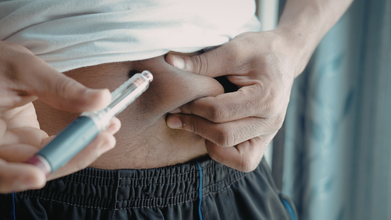
India's Alkem Laboratories is all set to launch a semaglutide injection, meant for weight-loss and diabetes patients, priced merely at weekly cost of Rs 450 - making it one of the cheapest options available in the market.
The patent for Novo Nordisk, the original maker of semaglutide, ended on March 20 and since then, numerous pharmaceutical companies have begun releasing their own versions of the blockbuster drug.
Alkem Laboratories's drug, marketed under the brand names Semasize, Obesema and Hepaglide in India, will is administered as a once-weekly subcutaneous injection and the organization has revealed a pre-filled disposable injection pen priced at Rs 1,800 for a month’s dosage.
Apart from the drug, Alkem is also offering a reusable injection pen for higher maintenance doses, allowing patients to replace only the medication cartridge instead of buying a new device each time in order to reduce long-term treatment costs and improving adherence.
The company has received approval from the Drug Controller General of India to manufacture and market semaglutide for Type 2 Diabetes Mellitus and chronic weight management, following a review of Phase 3 clinical trials conducted in India.
Other Semaglutide Injection Launches In India
Apart from this, NATCO Pharma became the first to introduce Semanat and Semafull for INR 1,290 per month and INR 1,750, about 90 per cent cheaper than Ozempic, costing INR 8,800 per month.
Eris Lifesciences also announced its plans to launch a multi-dose vial under the brand name Sundae at the same price. Dr. Reddy’s Laboratories, Sun Pharmaceutical Industries, and Glenmark Pharmaceuticals launched their generic versions of semaglutide. Dr. Reddy’s Obeda is priced at Rs 4,200 per month, available in 2 mg and 4 mg strengths.
Sun Pharmaceutical Industries will sell under the brand names Noveltreat (doses ranging from INR 900) and Sematrinity (doses ranging from INR 750). Meanwhile, Glenmark’s GLIPIQ vials range from Rs 325 to Rs 440 per week.
Zydus Lifesciences has also announced the launch of its generic version of semaglutide injection under the brand names SEMAGLYNTM, MASHEMATM, and ALTERMET. The average monthly cost of the treatment will be about Rs 2,200, the company said in a statement.
Semaglutide: Risks Vs Benefits
In people with type 2 diabetes, Harvard Health noted that the body's cells are resistant to the effects of insulin and the body does not produce enough insulin, or both. This is when GLP-1 agonists stimulate the pancreas to release insulin and suppress the release of another hormone called glucagon.
These drugs also act in the brain to reduce hunger and act on the stomach to delay emptying, so you feel full for a longer time. These effects can lead to weight loss, which can be an important part of managing diabetes.
Notably, semaglutide is not just a glucose-lowering drug, it improves weight and has proven cardiovascular, liver, and renal benefits.
Wider availability could therefore help reduce long-term complications such as heart disease and kidney failure. If used appropriately, this could indeed be a major step forward in total metabolic care, the experts said.
“The increasing affordability of GLP-1 receptor agonists is a double-edged development. On one hand, it significantly improves access for patients with obesity, type 2 diabetes, and high cardiovascular risk, conditions that are highly prevalent in India. These drugs have demonstrated meaningful benefits in weight reduction, glycemic control, and even cardiovascular risk reduction, which could translate into long-term public health gains,” Dr Vivek Bindal, Senior Director & Head, Bariatric and Robotic Surgery, at Max Healthcare, told HealthandMe.
A recent study published in The Lancet Psychiatry journal showed that Ozempic can also help tackle the burden of depression, anxiety, and self-harm in high-risk diabetic patients.
However, the benefits are conditional as it depends on appropriate prescribing, reliable product quality, and adequate patient monitoring, said Dr. Anoop Misra, who heads Delhi’s Fortis-C-DOC Centre for Diabetes and Endocrinology, told HealthandMe..
"These drugs should be strictly prescribed by qualified doctors and used only for therapeutic purposes, not for cosmetic weight loss,” Dr. Mohan said.
Urging for careful monitoring of side effects, the expert also called for more Indian data and strict pharmacovigilance.
“This also presents a great opportunity for India to make these drugs affordable and accessible to other developing countries across Asia and Africa,” the noted diabetologist said.
The experts also warned of “indiscriminate or unsupervised use” due to low cost.
This is particularly for cosmetic weight loss without proper medical evaluation, said Dr. Bindal.
“GLP-1 therapies are not ‘quick fixes’ -- they require careful patient selection, dose titration, and monitoring for side effects such as gastrointestinal intolerance or, rarely, pancreatitis,” he added.
However, the focus should remain on holistic obesity management, including lifestyle modification, rather than over-reliance on pharmacotherapy alone.
Harish Rana Taken Off Food And Water Support For Over 10 Days; Waiting For Passive Euthanasia
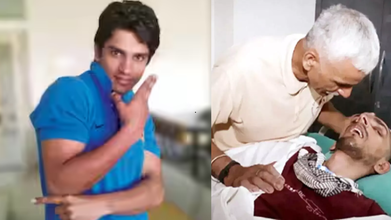
Harish Rana, the 32-year-old resident from Ghaziabad who had been in vegetative condition for the last 13 years is now waiting for his last few moments. A landmark judgment allowed for passive euthanasia in Rana's case. This means without any active intervention, he will be able to exercise his right to die with dignity. As a result he has been taken off ventilator and other life support systems and shifted to a normal bed. His water tube was removed along with a cap being placed on his feeding tube. Health and Me had previously reported on how AIIMS Delhi has prepared to conduct India's first passive euthanasia.
Also Read: Perez Hilton Spent 21 Days In Hospital After Taking Medication on an Empty Stomach
However, it has been over a week since Rana's food and water supply has been cut off. Reports note that he, along with his parents are facing anxiety after he has been denied food and water for over a week.
On March 23, it marks 10 days since Rana has been shifted to AIIMS. Doctors note that every minute Rana spends in AIIMS is crucial for him, and special care is being taken to ensure he does not suffer during this time. His condition is being monitored and doctors are still administering medications to soothe his brain.
A Landmark Judgment For India's Long Debate In Euthanasia
Manish Jain, who represented Rana in Supreme Court and played a key role in securing legal aid for him told NDTV that when the verdict was being announced the entire court was packed. "From the courtroom to the gallery, there was a crowd everywhere, everyone was eagerly waiting to see what the Supreme Court would decide. Both judges became emotional while delivering the verdict; the expression was clearly visible on their faces... I was very disappointed myself. But the family felt that if the verdict came in their favor, it would be a great relief for the patient."
He told the media outlet that when the verdict was being announced the entire court went silent for 10 to 15 minutes and everyone was emotional.
Before the verdict was delivered, both judges met with Harish's family and obtained information from the doctor about every aspect of the case.
Read: Harish Rana Taken Off Ventilator, Shifted To Normal Bed At AIIMS Delhi
Jain describes the verdict saying: "I lost even after winning". He said he had seen Harish himself a several times and knew that he was going through a lot of pain. "13 years is no small thing," he notes. "The way his parents and family cared for him is beyond words. But now the only solace is that the court also understood the situation and gave a verdict that will set an example in the history of the country's judiciary."
What Happened To Harish Rana?
It was in 2013 when he suffered severe head injuries after he fell from the fourth floor from his PG accommodation while he was studying at Panjab University. He had been bedridden ever since, and survived on feeding tube. His father filed a petition seeking passive euthanasia under the guidelines Supreme Court had laid down in 2018 under Common Cause judgment. This is the second time the parents have approached the apex court.
In 2024, the court also suggested that Rana could receive home-based care with support from the Uttar Pradesh government. The home-based care includes periodic visits by doctors and physiotherapists. The court suggested that in case home care was not feasible, he could be moved to Noida's district hospital. However, his parents have noted that his condition continued to worsen. Family advocate Rashmi Nandakumar also informed the bench that "nothing seems to be working out".
"He is falling ill quite often and is repeatedly admitted to hospital," she said. The advocate further added that the family only sought passive euthanasia, which is withdrawal of treatment, and not any active intervention.
Justice Pardiwala also read medical reports and observed, "Just look at the condition of the boy. It's pathetic."
Recent court ruling on this case involves a bench comprising Justice JB Pardiwala and Justice KV Viswanathan that allowed the withdrawal of life support for Harish Rana, a resident of Ghaziabad, who has been in a coma and kept alive on tubes for breathing and nutrition after sustaining severe head injuries following a fall from a building in 2013 in Chandigarh.
Perez Hilton Spent 21 Days In Hospital After Taking Medication on an Empty Stomach
Credits: Instagram
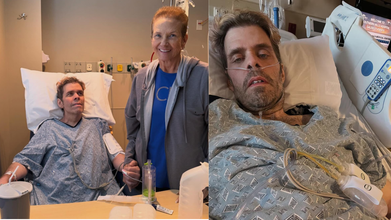
Perez Hilton thanked doctors and nurses after his care at the Southern Hills Hospital in Las Vegas. He was hospitalized for 21 days after he experienced complications with the medicines he was taking for flu. In a video, he said, "My stupidity landed me in the hospital;". The celebrity blogger explained that he was taking medications on an empty stomach that led to serious health complications.
Also Read: Harish Rana Taken Off Food And Water Support For Over 10 Days; Waiting For Passive Euthanasia
What Happened To Perez Hilton?
He posted a video on March 23 on his YouTube channel and said, "It was the worst and best thing that's ever happened to me". The 48-year-old, whose real name is Mario Armando Lavandeira Jr, and goes by Perez Hilton said that he had flu for "about a week" and started to take his medications to get better.
However, the biggest mistake he did was taking those medications on an empty stomach. Though, he shares that he has never had food before any of his medications.
Turns out, the medications were hard on his stomach and intestines. After a week of taking the medications on an empty stomach, he developed an ulcer, a perforation and sepsis that led him to be admitted in a hospital with intense stomach pains.
“The first few days were a lot of pain and constant tests,” Perez recalled. “Because they couldn't find where the perforation was.” He added: “Eventually, after five days, I ended up having laparoscopic surgery. Surgery where they don’t cut you up, but they miraculously make these incisions.”
He aid that surgeons used cameras to "literally flip around all of my organs, trying to find the perforation first. Then after flipping around all of my organs, washing me our 'cause I had so much infection in there. So much infection". He also said that his lungs had to be drained out and that his body "kept falling apart". He was also put on heart medication because his "heart got out of control".
Also Read: World Tuberculosis Day 2026: Theme, Origin, And Significance
Due to his long hospital stay, he developed another infection and for two weeks he could not eat normal food. “It was such a slow process,” Perez shared. “Two weeks of just sickness and then another week of getting better before I was released. The last week was hell, because I had already been in the hospital two weeks by then.”
How Is Perez Hilton Now?
Perez is now at home and would continue to receive his medication intravenously through a PICC line in his arm for 10 days. He said it is more effective than oral medications. “When I saw my kiddos—who had visited me—but when we got home we had the biggest, most cathartic group hug. And tears and tears and tears. They were so worried for their dad," he said.
He also said that he learned from his experience of being hospitalized and hopes that his video works as a "cautionary tale" to those who are watching. He said, "I hope this video can be a cautionary tale to some of you. Take medication with food. That's very important. Take medication with food. Don't have it on an empty stomach. Don't end up like me in the hospital for 21 days.”
World Tuberculosis Day 2026: Theme, Origin, And Significance
Credits: Canva
Every year on March 24, World Tuberculosis (TB) Day is observed. According to the World Health Organization (WHO) data, 10.7 to 10.8 million people fell ill with TB, globally in 2023-2024. This has made TB the world's top infectious killers. While many countries have been able to successfully reduce the cases of TB, there has been resurgence of the disease in Indonesia, Myanmar and the Philippines. While in the United States and in high-income European nations, the infection levels remain low, however, the disease has not been fully eradicated.
World Tuberculosis Day 2026: Theme
This is why, this year's theme is 'Yes! We can end TB!' As per the WHO, this is a bold call to action and a message of hope that affirms that it is possible to get back on track and turn the tide on the TB epidemic, even in a challenging global environment. With decisive country leadership, increased domestic and international investment, rapid uptake of new WHO recommendations and innovations, accelerated action, and strong multisectoral collaboration, ending TB is not just aspirational - it is achievable.
World Tuberculosis Day 2026: Origin
The Centers of Disease Control and Prevention (CDC) notes that it was on March 24, 1882, when Dr. Robert Koch announced the discovery of Mycobacterium tuberculosis, the germ that causes tuberculosis (TB). A century later, in 1982, the global health community recognized March 24 as World TB Day.
In 1882, the disease killed one in seven people in the US and Europe, however, Koch's discovery was significant in the elimination of TB disease.
The CDC also notes that TB germs may have been around as long as 3 million years. During ancient times, TB had several names, for instance, it was called:
- "Phthisis" in ancient Greek,
- "Tabes" in ancient Latin, and
- "Schachepheth" in ancient Hebrew.
- During the Middle Ages, health care providers referred to active TB disease of the neck and lymph nodes as "scrofula."
- In the 1700s, people referred to TB disease as "the white plague" due to the pale complexion of people with TB disease.
- In the 1800s, people called TB disease "consumption." In 1834, Johann Schonlein named the disease "tuberculosis."
- In 1909, Clemens von Pirquet invented the term "latent TB infection" to refer to inactive TB.
World Tuberculosis Day 2026: Significance
World TB Day is held annually on March 24 to raise awareness, mobilize funding, reduce stigma, and accelerate global efforts to end the tuberculosis epidemic. This disease kills thousands daily and is thus a critical call for action on prevention and treatment is important.
World Tuberculosis Day: What Is TB?
As per a Singapore Government Agency Website called Communicable Disease Agency or CDA, TB is an infectious airborne disease caused by Mycobacteirum tuberculosis.It primarily affects the lungs but can also affect other parts of your body, such as the brain, lymph nodes, kidneys, bones, and joints.
The disease is transmitted through the air when an infected person coughs or sneezes and usually requires close and prolonged contact with an infectious individuals. It cannot spread through touch or kissing.
Common Symptoms Of TB
- Persistent cough (two weeks or more)
- Persistent fever
- Coughing blood or sputum
- Night sweats
- Weight loss
- Fatigue
- Loss of appetite
- Chest pain
- Follow Us :


© 2024 Bennett, Coleman & Company Limited