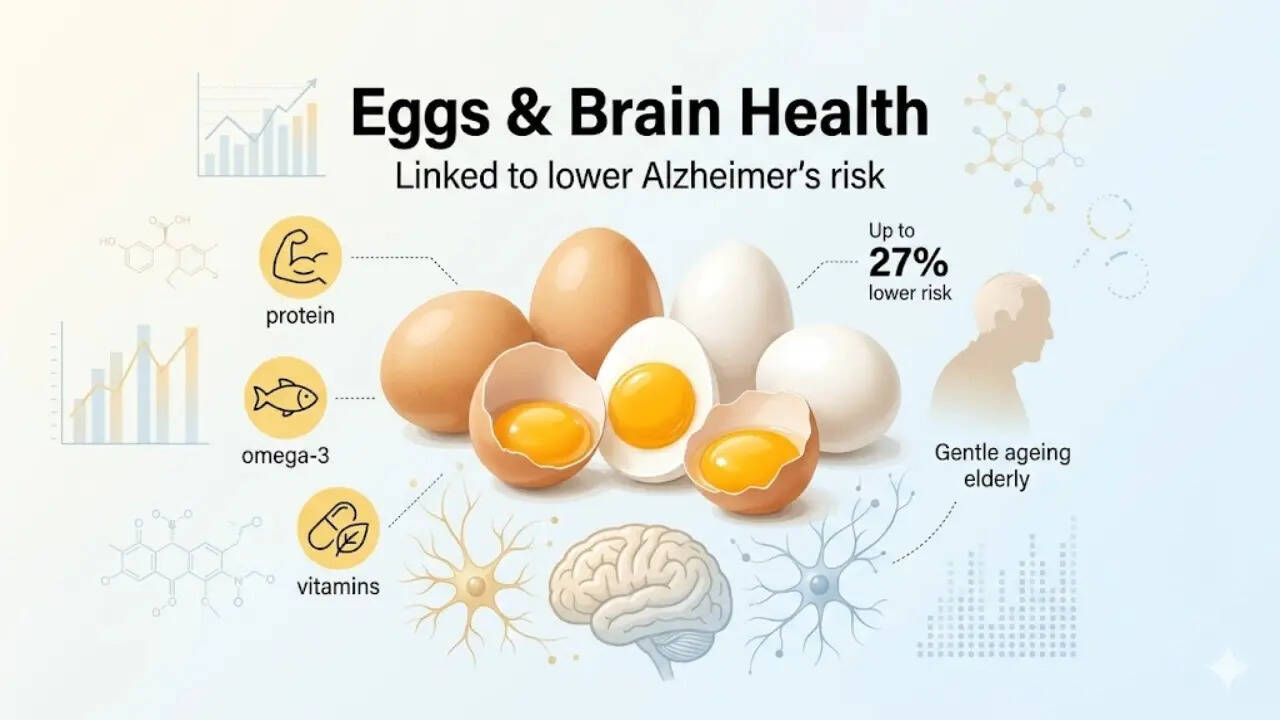
Eggs are literally one of the healthiest foods on the planet. They offer proteins, healthy fats, vitamin D, choline, and other essential vitamins and minerals. Therefore, it is a no-brainer that eating eggs is associated with several health benefits—from weight management to a healthier heart to even diabetes management. And now, according to researchers at the Loma Linda University School of Public Health, eating eggs is associated with a lower risk of Alzheimer's disease as well. Alzheimer's is often diagnosed in people aged 65 years and above. Researchers have found that eating one egg a day for at least five days can reduce Alzheimer's risk by 27 per cent.How does eating eggs reduce Alzheimer's risk?Experts at the Loma Linda University School of Public Health found that, as compared to people who never eat eggs, eating at least five servings of the high-protein food option can significantly reduce Alzheimer's risk. Furthermore, the study also noted that less frequent consumption of eggs can work wonders in helping to dodge memory loss and other cognitive health-related symptoms. Researchers in the study found that eating eggs one to three times a month can reduce the risk by 17 per cent, and eating two to four times a week reduced the risk by 20 per cent. The study was published in the Journal of Nutrition.What makes eggs one of the healthiest foods?Eggs are a whole food, and that is because of the nutrients they offer and their subsequent benefits for overall health. They are also sources of essential nutrients that improve brain health—they offer choline, phosphatidylcholine, and acetylcholine—all of which are critical for synaptic function and memory. They are also sources of zeaxanthin and lutein, carotenoids that accumulate in brain tissues and are linked to lower oxidative stress and better cognitive performance. Eggs are sources of omega-3 fatty acids and phospholipids that constitute 30 per cent of the total egg lipids essential for neurotransmitter receptor function.What are the modifiable factors linked to Alzheimer's disease risk?Researchers in the study said that their aim was to understand the relationship between modifiable dietary factors linked to Alzheimer's disease risk. Experts stated that they studied egg consumption in visible ways, for instance, eating them fried, scrambled, or boiled, or in hidden ways such as packaged or baked goods. Scientists emphasised that moderate intake of eggs is an important part of a balanced diet. Whether for breakfast, as a post-workout meal, or simply as a snack satisfying cravings, this versatile food option must find its way into your diet. And after years of research and studies (with more to come), it can be said that eggs are key to a healthy life now and even years later.