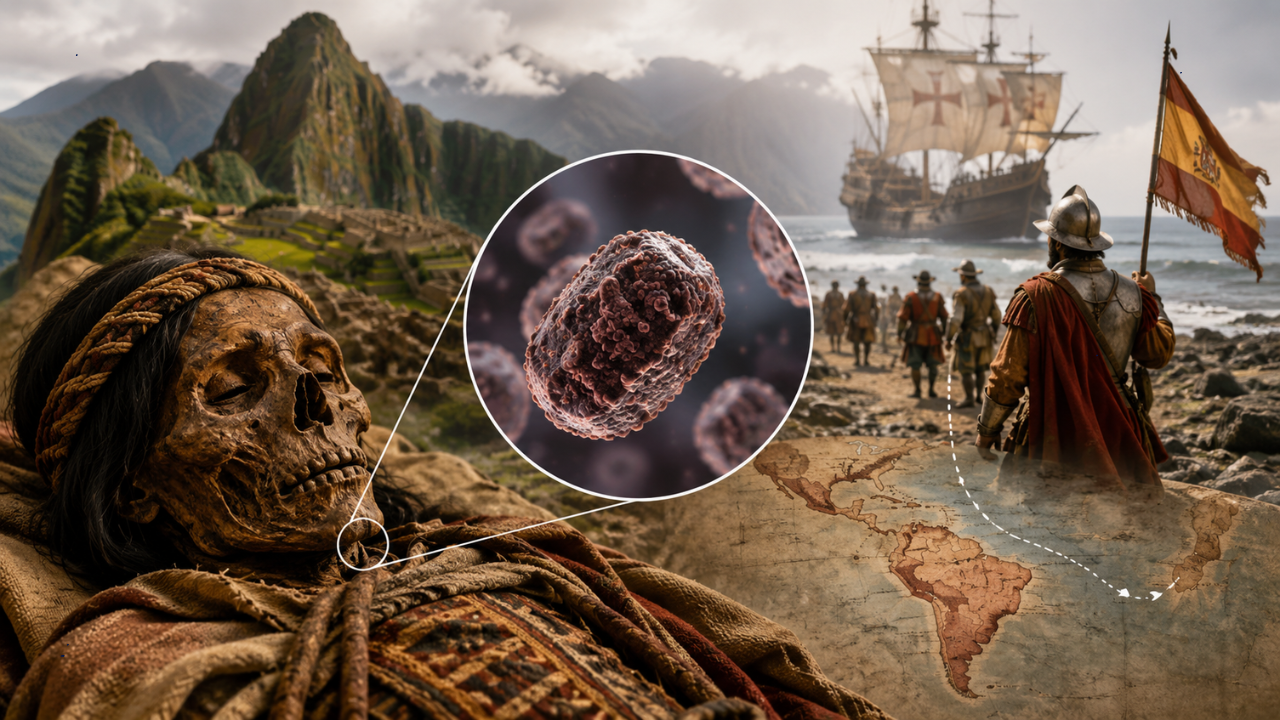
The deadly and highly contagious disease smallpox, eradicated worldwide in 1980 through vaccination, was introduced to the Americas by Europeans, according to a new study that analyzed DNA from 500-year-old Inca mummies. Smallpox, caused by the variola virus, played a major role in the devastating population decline among Indigenous people in the Americas following the arrival of Christopher Columbus in 1492. Historians have long believed that smallpox reshaped societies and killed millions worldwide. However, direct genetic evidence linking European strains to outbreaks in the Americas had been lacking. Dr. Shigeki Nakagome from Trinity College Dublin's School of Medicine said the findings provide "the first molecular confirmation that smallpox was carried to the Americas during the colonial period." The researchers added that the findings could also help improve understanding of how pathogens evolve, with potential relevance for diseases such as influenza, COVID-19 and mpox. What Did the Study Find? Published in the journal Science, the researchers sequenced ancient smallpox DNA from two individuals buried in northern Chile between 1492 and 1631 CE, during the transition from the Inca to the colonial period. The analysis showed that the viruses belonged to a now-extinct lineage of the variola virus, closely related to ancient European strains that disappeared before the 20th century. These are the earliest smallpox genomes recovered from the Americas, providing a clearer timeline of the virus's evolution. Researchers also noted that skin lesions previously thought to result from arsenic exposure are consistent with smallpox infection. The team identified the same viral strain in multiple individuals of Native American ancestry, suggesting local transmission within Indigenous communities during the colonial era. The study also provides new insights into how the virus evolved over time. "We found that the virus underwent a long period of genetic change up to the 16th century, but its evolution slowed markedly during the height of colonial expansion and major smallpox epidemics in the 17th and 18th centuries," said Dr. Lara Cassidy from Trinity College Dublin's School of Genetics and Microbiology. She said the virus may have reached an evolutionary optimum, allowing it to spread efficiently with little further adaptation, likely aided by the lack of immunity in newly exposed populations. The researchers also found evidence that this period of evolutionary stability may have ended in the 19th century as vaccination became widespread. As immunity increased, the pace of viral evolution appears to have accelerated again. Bruno Romero González, a PhD student at Trinity College Dublin's School of Medicine, said the findings show how colonization, population change and vaccination likely shaped the evolution of one of humanity's most devastating infectious diseases. The study also demonstrates the power of ancient pathogen genomics, showing how ancient DNA can uncover aspects of disease history that are not preserved in historical records. Timeline: How Smallpox Reached the Americas Historians believe smallpox spread through three major transmission routes: the Caribbean, southern and northern routes. The first documented outbreak in the Americas occurred in 1518 during the Spanish conquest of the Caribbean. The virus reached Mexico by 1520, spread through Panama and the northern Inca Empire by 1525, and likely reached Chile by the mid-16th century. Although epidemics were reported in Chile between 1554 and 1556, the first confirmed smallpox outbreak there occurred in 1561 in northern Chile. Smallpox returned in repeated waves, causing an estimated 3–4 million deaths, and possibly more, across the Americas. Indigenous populations with no prior immunity were among the hardest hit. What Is Smallpox? Smallpox spread mainly through respiratory droplets released during coughing, sneezing or close contact. The disease caused fever followed by a characteristic rash that developed into fluid-filled blisters and scabs. About 3 in 10 infected people died, while many survivors were left with permanent scars, particularly on the face. Some also lost their vision. Following a global vaccination campaign, smallpox was declared eradicated in 1980, with the last naturally occurring case reported in 1977.