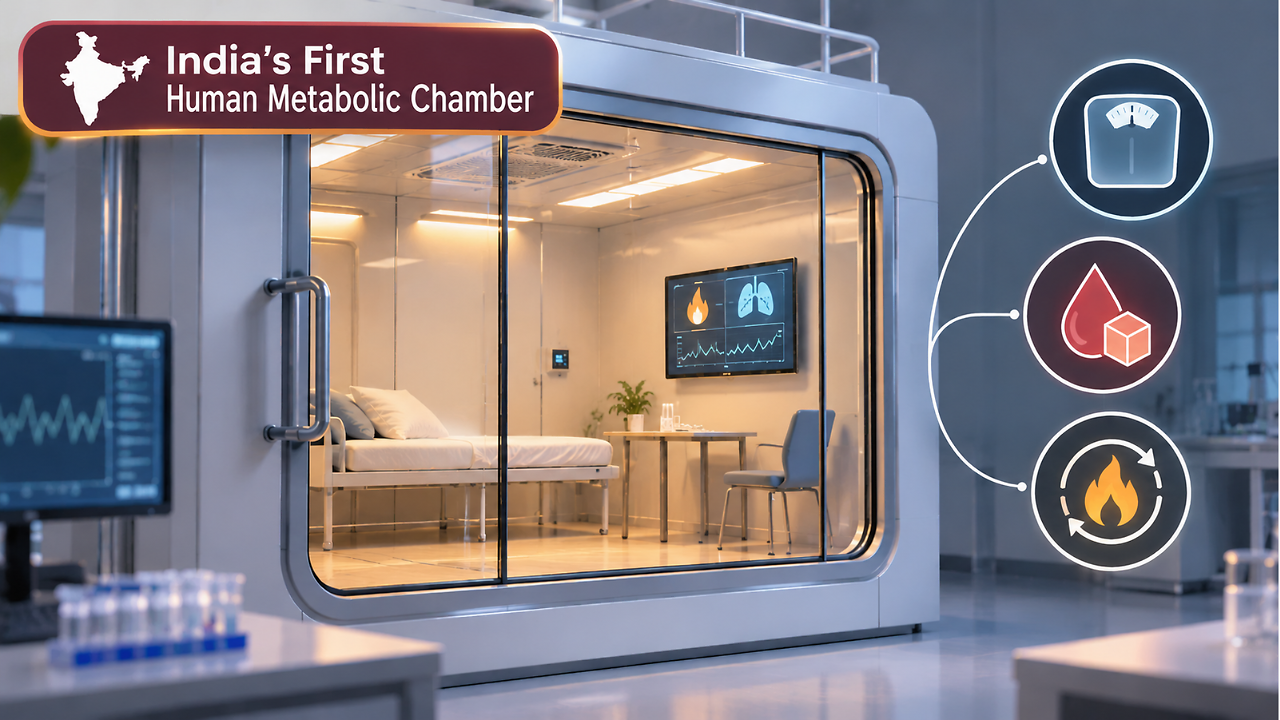
India has opened its first dedicated Human Metabolic Chamber Facility, a specialised research laboratory designed to measure how the human body uses energy while a person eats, sleeps, rests and performs physical activity. The facility could help scientists understand metabolism, obesity, diabetes, nutrition better as well as why people with similar body weights may burn calories differently.Inaugurated by Union Health Secretary Punya Salila Srivastava at Christian Medical College (CMC), Vellore, on November 23, the facility has been jointly established by CMC Vellore and the Tata Institute of Fundamental Research (TIFR). It aims to produce India-specific evidence on metabolic health, considering the country's diverse diets, lifestyles, body composition and health risks.The facility comes at a time when India faces a dual challenge of undernutrition and rising obesity, diabetes and other metabolic disorders.What Is A Human Metabolic Chamber?Also read: Childhood Obesity: Wegovy Cuts BMI By 10% In Children As Young As 6; What Are The Risks?A Human Metabolic Chamber is laboratory that measures how much energy a person's body uses over a specific period of time.A volunteer can stay inside the chamber for 24 hours or longer, eating meals, sleeping, resting and performing routine activities while specialised equipment continuously measures oxygen consumption and carbon dioxide production.These measurements help researchers estimate how much energy the body expends, including during sleep, after meals and while performing physical activity. Why Does India Need Its Own Metabolism Research?Also read: Sudden Diabetes After 50: Could An Unexpected Rise In Blood Sugar Be Linked To Pancreatic Cancer?A vast amount of scientific evidence needed to understand energy expenditure, metabolism and nutrition comes from populations outside India.But body composition, dietary patterns, physical activity, genetic diversity and metabolic risk profiles can vary between populations.For instance, two people with similar body weight may have different proportions of muscle and fat, different resting energy expenditure and different responses to meals and physical activity.India also faces a complex metabolic health issue. Undernutrition and a history of inadequate nutrition can coexist with obesity, insulin resistance and diabetes. Researchers hope the new facility will help investigate these differences and generate evidence that reflects Indian population’s metabolic health accurately.What Research Will Be Conducted At The Facility?Also read: Canada Approves Daily GLP-1 Pill As New Study Finds Drugs May Outperform Metformin In Diabetes ManagementThe initial research programme is expected to examine adults across different body mass index categories and age groups. Researchers may also document participants' dietary histories, exercise habits and occupations to better understand how these factors influence energy expenditure.The facility will complement TIFR's Advanced Research Unit on Metabolism, Development and Aging (ARUMDA), which has established a National Analytical Facility for Nutrition and Metabolism Research.These facilities could allow researchers to correlate measurements of energy expenditure with biochemical markers, providing a more comprehensive understanding of how metabolism works.The project has received support from the Department of Atomic Energy and corporate social responsibility funding from Hindustan Unilever Limited, with technical guidance from Maastricht University's NUTRIM research institute. Impact On Obesity And Diabetes Research In IndiaThe new facility could strengthen research into obesity, diabetes, malnutrition, aging and other metabolic conditions by allowing scientists to investigate how the body uses energy under real-life conditions.Over time, the evidence generated could inform nutritional recommendations, metabolic research, obesity interventions and the understanding of diabetes risk.But the impact will depend on the studies conducted, the diversity of participants and how the findings are translated into clinical uses.