
- Health Conditions A-Z
- Health & Wellness
- Nutrition
- Fitness
- Health News
- Ayurveda
- Videos
- Medicine A-Z
- Parenting
Antimicrobial Resistance Explained: Why Is WHO Calling It A Serious Health Threat?

Credits: Canva
The World Health Organisation (WHO) has called for a call to action to the world leaders to address the ongoing issues of antimicrobial resistance for the 79th session of the UN General Assembly that is being held in New York from 20 to 30 September.
What Is Antimicrobial Resistance?
Antimicrobial resistance (AMR) threatens the effective prevention and treatment of an ever-increasing range of infections caused by bacteria, parasites, viruses and fungi.
AMR occurs when bacteria, viruses, fungi and parasites change over time and no longer respond to medicines making infections harder to treat and increasing the risk of disease spread, severe illness and death. As a result, the medicines become ineffective and infections persist in the body, increasing the risk of spread to others.
Antimicrobials - including antibiotics, antivirals, antifungals and antiparasitics - are medicines used to prevent and treat infections in humans, animals and plants. Microorganisms that develop antimicrobial resistance are sometimes referred to as “superbugs”.
As antibiotic resistance increases, even common infections could become difficult to treat. For example, some doctors have already reported patients needing hospitalization for simple urinary tract infections. This rise in resistance could lead to more complications in hospitals, longer stays, and higher medical costs.
Why Is It On The Rise?
In India, many people take antibiotics for fevers without knowing if the cause is bacterial. Antibiotics are ineffective against viral infections, like the flu, but using them unnecessarily contributes to antibiotic resistance.
Often, people choose to take advice from a local chemist instead of visiting a doctor due to the inconvenience or cost of consultations. While their goal is to recover quickly, this habit of self-medicating with antibiotics fuels resistance.
Experts emphasise that prevention is key: improving hygiene, frequent handwashing, and vaccinations can help avoid infections in the first place. For example, pneumococcal and influenza vaccines can reduce cases of pneumonia, but they are not widely used.
Doctors And Over-Prescriptions
Doctors also play a role in antibiotic resistance. Broad-spectrum antibiotics, which target a wide range of bacteria, are more likely to contribute to resistance. Experts point out that educating doctors on when to use narrow-spectrum antibiotics can help.
A report from the National Centre for Disease Control (NCDC) found that 71.9% of patients in hospitals were prescribed antibiotics, with little difference in usage between intensive care units and other wards. Alarmingly, 55% of these prescriptions were for preventing infections, not treating them.
Some antibiotics, like Norfloxacin, which used to be effective for diarrhea, have become ineffective due to overuse. Additionally, resistance to carbapenem, a powerful class of antibiotics, is increasing in conditions like typhoid, where it’s often not even necessary.
Another challenge is the use of empirical prescriptions—doctors guessing the cause of an infection based on symptoms instead of running diagnostic tests.
Pharmaceutical Companies and Pollution
Antibiotic manufacturing can also contribute to resistance. A recent WHO guideline addresses the issue of antibiotic pollution from manufacturing, highlighting the need for better waste management practices. Pharmaceutical waste, if not properly controlled, can promote the spread of drug-resistant bacteria, which can travel across borders and worsen the global health crisis.
Common Resistant Pathogens in India
The Indian Council of Medical Research (ICMR) identifies three common antibiotic-resistant pathogens in hospitals:
E. coli – often responsible for gut infections. Its resistance to carbapenems has risen significantly, with susceptibility dropping from 81.4% in 2017 to 62.7% in 2023.
Klebsiella pneumoniae – known to cause pneumonia and urinary tract infections. Resistance to two carbapenem antibiotics increased, with susceptibility falling from 58.5% to 35.6% and 48% to 37.6% between 2017 and 2023.
Acinetobacter baumannii – mainly associated with hospital-acquired infections, this pathogen poses a serious risk to patients already weakened by other illnesses.
Drug Resistance Driving Severe Typhoid Disease, Death Among Children Under-5s in India: Lancet Study
Credit: Canva
Children under 5 in India remain at high risk of typhoid infections, hospitalization, and death due to growing antimicrobial resistance (AMR), according to an alarming study, which highlighted the urgent need to control drug resistance in the country.
Typhoid fever is a systemic illness caused by Salmonella enterica serovar Typhi (S. Typhi), and presents a significant health challenge in India.
The modelling study, published in The Lancet Regional Health – Southeast Asia, showed that typhoid fever caused an estimated 4.9 million cases and nearly 8,000 deaths in India in 2023.
However, more concerning was that a large proportion of infections were found resistant to fluoroquinolones — one of the main classes of antibiotics used to treat typhoid. They found that:
- Children aged 5–9 years had the highest number of typhoid fever cases and AMR cases
- Children aged 6 months to 4 years experienced the highest number of hospitalizations and deaths.
"Drug-resistant typhoid fever remains a serious public-health threat in India, with implications beyond national borders," said Dr Vijayalaxmi Mogasale, Joint PhD Candidate at the London School of Hygiene & Tropical Medicine and Nagasaki University.
"Tackling this problem does not lie solely in moving to newer antibiotics, but calls for timely preventive action, including responsible antibiotic use and the introduction of the typhoid vaccine into the national immunization program, prioritizing high-burden age groups and regions," she added.
Also read: Study Links Widespread Use of Antibiotics During COVID To Surge In AMR Cases
Typhoid: AMR A Major Concern In India
In Global Burden of Diseases (GBD) 2021, India contributed to 58 percent of global typhoid fever cases and 48 percent of global deaths.
The new study, including researchers from Christian Medical College in Vellore, estimated that more than two-thirds of typhoid cases in India are resistant to fluoroquinolones. This not only limits treatment options but also increases the risk of complications.
The major drivers of typhoid fever deaths were identified among those with no treatment and hospitalized cases with AMR-related complications. The highest burden of typhoid cases were reported from Delhi, Maharashtra, and Karnataka.
Further, the study found that drug-resistant typhoid infections accounted for at least 87 per cent of India's disease-related economic burden in 2023, the PTI reported.
The total economic burden due to typhoid fever was estimated at Rs 123 billion.
Children under the age of 10 incurred the highest economic burden, contributing to over half of the costs, researchers found.
In addition, they estimated that households bore 91 per cent of expenses, and 70,000 families faced "catastrophic" health expenditure.
A 2024 ICMR report also flagged that more Indians are developing antibiotic resistance against typhoid, pneumonia, and urinary infections. Over 95 percent of Salmonella typhi strains are now resistant to fluoroquinolones, making it difficult to treat infections caused by this bacterium.
Also read: Antimicrobial Resistance Explained: Why Is WHO Calling It A Serious Health Threat?
Typhoid: How Vaccines Can Help
Typhoid fever is a water- and food-borne infectious disease. Major symptoms include
- high fever,
- fatigue,
- headache,
- abdominal pain.
The World Health Organization (WHO) recommends TCV for children from six months of age and for adults up to 45–65 years, depending on the vaccine.
To achieve greater impact, the Lancet researchers suggested implementing:
- A broader catch-up or school-based vaccination campaigns
- controlling the broader strategy of antimicrobial stewardship
- Making improvements in water, sanitation, and hygiene.
US CDC Warns Of New Immune-Evasive COVID Variant In 23 Countries
Credit: iStock
The US Centers for Disease Control and Prevention (CDC) has raised concerns about a highly mutated variant of COVID-19 -- BA.3.2 -- which has been reported in at least 23 countries, including 25 states in America.
The BA.3.2 variant was first identified in a respiratory sample in South Africa in November 2024.
The World Health Organization (WHO) has designated BA.3.2 as a Variant Under Monitoring (VUM). It does not boost immunity from previous infection or vaccination.
What makes the BA.3.2 variant special is the “70 to 75 substitutions and deletions in the gene sequence of its spike protein”, according to the CDC’s latest Morbidity and Mortality Weekly Report.
“BA.3.2 represents a new lineage of SARS-CoV-2, genetically distinct from the JN.1 lineages (including LP.8.1 and XFG) that have circulated in the US since January 2024,” said the CDC researchers.
“BA.3.2 mutations in the spike protein have the potential to reduce protection from a previous infection or vaccination,” they added.
What Is The BA.3.2 Variant?
BA.3.2 is a descendant of the Omicron BA.3 lineage. It is genetically distinct from the previously circulating JN.1 lineages (including LP.8.1 and XFG).
BA.3.2 comprises two major branches, BA.3.2.1 and BA.3.2.2. BA.3.2.2 also has substitutions like: K356T, A575S, R681H, and R1162P, the CDC report said.
The first BA.3.2 lineage sequence was detected in a respiratory sample collected on November 22, 2024, in South Africa from a boy aged 5 years.
It was then identified in 2025, in Mozambique (March), the Netherlands (April), and Germany (April). It began to increase in September 2025, with the highest number of detections reported during the week beginning December 7, 2025.
As of February 11, 2026, BA.3.2 had been detected in at least 23 countries.
Between November 2025 and January 2026, the weekly BA.3.2 detections increased and reached approximately 30 percent of sequences reported in three European countries (Denmark, Germany, and the Netherlands).
BA.3.2 In The US
The strain was detected in the US on June 27, 2025, through the CDC’s Traveler-Based Genomic Surveillance program in a participant traveling to the US from the Netherlands.
The first US detection of BA.3.2 in a clinical specimen collected from a patient was reported on January 5, 2026. Since then, the CDC has detected the BA.3.2 variant from
- nasal swabs collected from 4 US travelers,
- clinical samples from 5 patients,
- 3 airplane wastewater samples,
- 132 wastewater surveillance samples from 25 states in the US.
- Till February 11, the strain has been prevalent among 2,579 total genetic sequences.
The CDC stressed the need for “continued genomic surveillance to track SARS-CoV-2 evolution and determine its potential effect on public health”.
BA.3.2 A Variant Under Monitoring
According to the WHO, BA.3.2 demonstrates antigenic drift and reduced neutralization in vitro from previously infected or vaccinated individuals.
However, the global health body noted that currently approved COVID-19 vaccines are expected to continue providing protection against severe disease.
Despite immune evasion, phenotypic data suggest BA.3.2 has reduced infectivity.
It shows resistance to some monoclonal antibodies (cilgavimab, bebtelovimab, sotrovimab) but increased sensitivity to tixagevimab-be, the WHO said.
India Launches Second Intensified 100-day TB Mukt Bharat Campaign
Credit: PIB
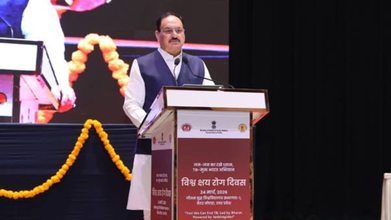
After the huge success of the first phase of its 100-day TB Mukt Bharat campaign in 2025, India has launched the next phase of a focused and intensified campaign to end tuberculosis — the most infectious disease in the world — in the country.
The campaign was launched by Union Minister for Health and Family Welfare Jagat Prakash Nadda at a national-level event held in Greater Noida to commemorate World TB Day 2026.
He reaffirmed India’s unwavering commitment to eliminating tuberculosis, ahead of the global Sustainable Development Goals target of 2030.
The second phase marks “a decisive, mission-mode push to accelerate progress towards TB elimination”, the Ministry of Health said.
The campaign is expected to “cover 1.58 lakh villages and urban wards, each guided by granular, locally tailored micro-plans, ensuring precision in implementation and measurable outcomes,” it added. The villages and wards were identified using AI-based assessment of 30+ indicators.
“World TB Day 2026 as both a moment of reflection and a renewed call to action in India’s journey towards a TB-Mukt Bharat,” said Nadda, while delivering the keynote address.
The 100-day campaign
The 100-day campaign was first launched on December 7, 2024, and it continued till March 24. It aims to accelerate TB detection, rapid decline in TB incidence, finding of missing cases, reducing mortality, and following a Jan Bhagidari or community approach.
In 2025, the campaign targeted a selected 347 high-priority districts across 33 States/UTs. It was later scaled nationwide and deployed advanced tools such as portable X-rays, AI-enabled diagnostics, and molecular testing.
Nadda noted that the 100-day campaign led to the detection of “nearly 10.9 lakh asymptomatic patients who exhibited no classical symptoms at the time of testing”.
The campaign led to the identification of the “invisible” pool of infection that would otherwise have remained undetected and contributed to continued transmission in the community, the Minister said.
Other key milestones achieved in the fight against TB since December 2024 include:
- screening of vulnerable population – more than 20 Crores
- new TB patients diagnosed - 32,65,215
- asymptomatic patients diagnosed - 10,90,742
- TB preventive treatment initiated - 16,45,493
- Ni-kshay Poshan Yojana paid - 8,36,754
- New Ni-kshay mitras registered - 5,40, 028
- Food Basket distributed - 31, 91, 091.
India Acing Forward In Fight Against TB
In 2024, India notified 26.18 lakh TB cases — the highest so far. TB notification has remained a key area of concern. A total of 67, 933 gram panchayats have achieved the TB-free status, the Ministry
“Over the past decade, India’s TB response has evolved into a transformational, people-centric movement, driven by innovation, equity, and strong political commitment,” Nadda said.
Also read: Tuberculosis in 2026: Why It Still Remains India’s Silent Epidemic
The Minister highlighted key achievements from 2015 to 2024. This includes:
- a 21 percent reduction in TB incidence — from 237 to 187 per lakh population
- a 25 percent decline in TB mortality — from 28 to 21 per lakh population
- treatment coverage increased — 92 percent from 53 percent in 2015
- sharp decline in undetected cases — from >10 lakhs annually to <1 lakh
- treatment success rate increased — 90 percent — higher than the global rate of 88 percent.
- Over 3,000 handheld AI-enabled X-ray units deployed
- NAAT laboratories scaled up to over 9,800
- TB services integrated across 1.8 lakh Ayushman Arogya Mandirs
- Nikshay Poshan Yojana transferred over Rs 4,590 crore to 1.39 crore TB patients since 2018
- Ni-kshay Mitra initiative participation increased to over 7.16 lakh citizen.
- Follow Us :


© 2024 Bennett, Coleman & Company Limited