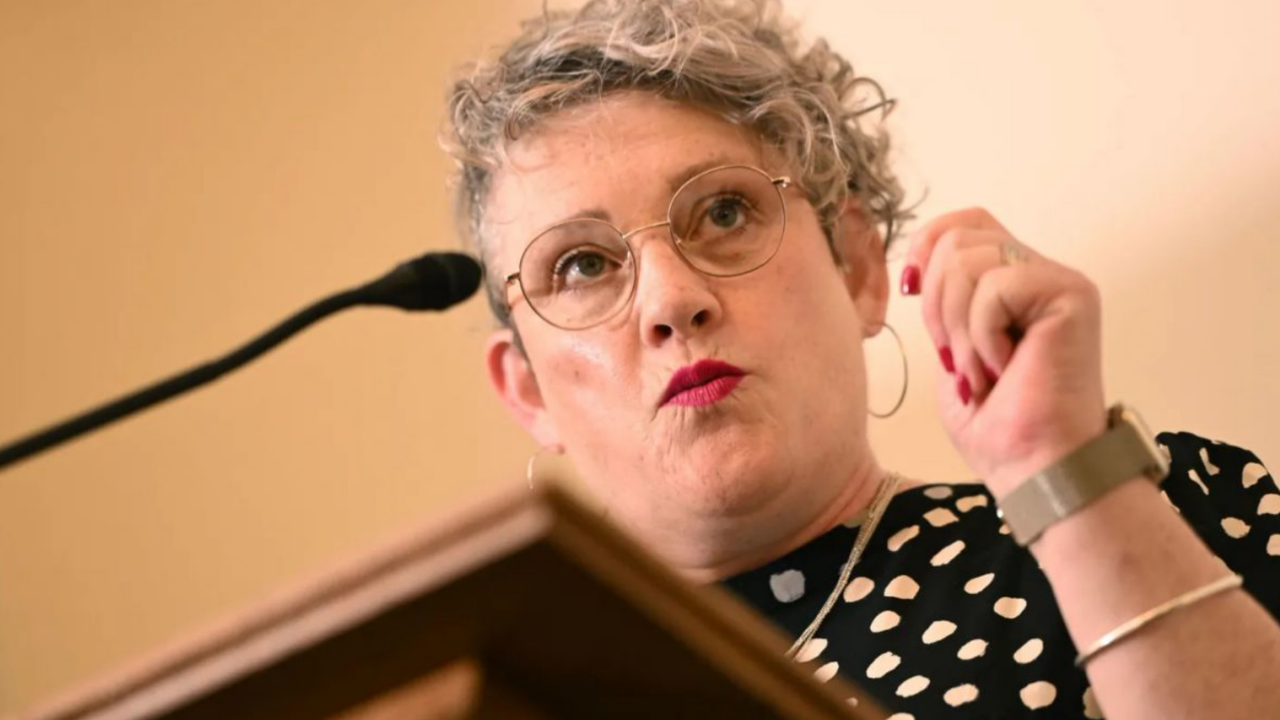
A health minister is standing down at the age of 53 from her role in government after she was diagnosed with incurable breast cancer. Ashley Dalton, has been diagnosed with incurable metastatic breast cancer and wants to continue her role as the MP for West Lancashire because her work is "central" to her identity. However, she would stand down from her role as a health minister because she is concerned that she will become too sick to fulfil "any of the roles I love" if she is to continue to serve the designation.Also Read: 3 US Hospitals Rank in the Top 10 List of World's Best Hospitals Writing in The Times, she said, "I have to consider what reasonable adjustments I might make. Before being made a government minister, I was elected by the people of West Lancashire to represent them as their MP. My priority has to be to do that job. But to continue to serve my constituents as they deserve, whilst adequately managing the side effects of chemo as well as caring for my elderly mum, I must make reasonable adjustments to my workload. The alternative would likely be more regular trips to Liverpool Aintree, making myself sick and unable to fulfil any of the roles I love.”Ashley Dalton Health UpdateShe writes that she is currently undergoing chemotherapy treatment. She also writes that cancer is different for every patient and that this is not a "homogenous disease". She also writes that while anyone who hears of chemotherapy thinks of the absolute worse, with IV drip hanging in their arm, in hospital and bald. However, she clarifies that this is not the case with her. "But, for now at least, my treatment is not like that. You likely wouldn’t be able to guess I am undergoing major medical intervention as I stand in front of you. I take five tablets twice a day for two weeks, with a week of rest as part of a three-week cycle," she writes.Also Read: Giant 99th Percentile Baby Of 5.9Kg Born In New York Has Taken The Internet By StormShe also says that her disease is stable and she is also well aware that she will never beat the cancer. When people ask her when will she know that she has beaten her cancer, she says, "when I have died of something else."When Dalton was diagnosed with metastatic — stage 4 — breast cancer, she was told, gently but firmly, that support was available. That she could step back. That she could give up work.“But the biggest mistake anyone could make about me and my cancer is to write me off,” she has said.For some, stepping away from work is the right and necessary choice. “But just as cancer is not homogeneous,” Dalton writes, “neither are we people living with cancer.” Her diagnosis did not mark the end of her public life. Instead, it sharpened her sense of purpose — particularly in shaping how government responds to serious illness.A Cancer Patient At The Head Of The Cancer PlanAs a health minister in the UK government, Dalton led the development of the National Cancer Plan — a sweeping strategy aimed not only at improving survival rates but transforming life after diagnosis.Beyond what she describes as “the fastest rate of improvement in health outcomes for cancer patients in a century,” the plan is designed to save 320,000 lives over its course. But the statistic she seems most proud of is less numerical and more human.“What I’m so proud of is the support the plan gives to people living with cancer not just to survive, but to live, and to live well. To work, to have a family, to thrive. To exist beyond the diagnosis.”It is policy shaped by lived experience. Dalton has insisted that cancer patients remain central to decision-making — “because there was a cancer patient at the head of the plan.”The National Cancer Plan places stronger emphasis on early diagnosis, faster treatment pathways, and equitable access to care. But it also pushes for something often overlooked: reasonable adjustments in workplaces, better psychosocial support, and a recognition that patients are not defined solely by their illness.Beyond Cancer: A Broader Health AgendaIn just 12 months, Dalton led work on three major national strategies:The HIV Action PlanThe Men’s Health StrategyThe National Cancer Plan“These aren’t just words on paper,” she wrote. “They will make real and positive differences to the lives of people in our communities.”The HIV Action Plan builds on efforts to reduce new transmissions and tackle stigma, while improving access to testing and treatment. The Men’s Health Strategy addresses disparities in life expectancy, mental health support, and late diagnosis of conditions like prostate cancer. Together, they reflect a broader push toward preventive, inclusive healthcare.Dalton’s approach has consistently centred lived realities — from men reluctant to seek help, to people navigating long-term treatment, to families balancing work and care.World Cancer Day; And A Personal ReckoningLaunching the Cancer Plan on World Cancer Day was a professional milestone. It was also deeply personal.“Advocating for reasonable adjustments to allow cancer patients to thrive meant that to continue thriving myself, I have to consider what reasonable adjustments I might make.”Before becoming a minister, Dalton was elected to represent West Lancashire as a Member of Parliament. That responsibility, she says, remains her priority. But chemotherapy side effects and caring for her elderly mother forced her to confront limits.“The alternative would likely be more regular trips to Liverpool Aintree, making myself sick and unable to fulfil any of the roles I love.”In a difficult decision, she chose to step down from her ministerial role and return to the back benches — not as a retreat, but as a recalibration.“For that reason, I have taken the difficult — but I think correct — decision to return to the back benches.”Service, RedefinedDalton is clear: she is not leaving politics. She is not relinquishing her voice.“I’m not stepping away from public life, the government, or my work as a politician,” she has said. “I’m taking the steps necessary to continue to represent the people of West Lancashire… and I will continue to use my voice to fight for the rights of cancer patients to live as well as they are able for as long as possible.”