
- Health Conditions A-Z
- Health & Wellness
- Nutrition
- Fitness
- Health News
- Ayurveda
- Videos
- Medicine A-Z
- Parenting
Australian Woman's Pimple On Forehead Turns Out To Be Skin Cancer: Know Everything About It

Cancer (Credit: Canva)
Pimples are a common skin nuisance that most people experience at some point in their lives, often triggered by hormonal fluctuations, pollution, or dirt. However, for one Australian woman, a seemingly innocent pimple on her forehead turned out to be a warning sign of something far more serious: skin cancer.
Rachel Olivia, a 32-year-old woman from Australia, initially dismissed a small, red mark that appeared on her forehead, assuming it was just a pimple. But when the spot started to flake and wouldn’t heal, Rachel decided to seek professional advice. After undergoing a biopsy, she received the shocking news: it was cancer.
"I ignored it for a year, but when it didn’t heal, I pushed for reassessment by specialists," Rachel told news.com.au. "The biopsy confirmed it was cancer."
The Role of Sun Exposure in Skin Cancer
Rachel had always considered herself "sun-smart" compared to her peers. While she avoided tanning, she had experienced several sunburns during her teenage years. Unfortunately, this history of sunburn was enough to trigger the development of basal cell carcinoma (BCC), the type of skin cancer Rachel was diagnosed with."I’ve never been one to tan or sit in the sun," she said. "But I did have a few bad burns when I was younger, and that’s all it takes."
BCC is the most common form of skin cancer, typically appearing as a white, waxy lump or a brown, scaly patch. Though BCC is generally less aggressive and rarely spreads, it can still be dangerous, particularly when it affects areas like the face. In Rachel’s case, her diagnosis was not melanoma, the deadliest form of skin cancer, which provided some relief.
Treatment and Raising Awareness
Though she felt relieved her condition wasn’t melanoma, Rachel was still taken aback by the diagnosis. "The doctor said I was too young for something like this," she recalled. "Australia has the highest rate of skin cancer in the world."To treat her condition, Rachel was prescribed Aldara, a topical chemotherapy treatment. While this treatment is non-invasive, it brought its own set of challenges. As a new mother, Rachel had to be extremely cautious during nightly feedings to prevent transferring the medication to her baby.
Beyond the physical and emotional toll of her condition, Rachel had to cope with the visible effects of her treatment. What started as a small pimple eventually turned into a large, painful scab, serving as a constant reminder of the seriousness of her diagnosis.
Sun Safety and Early Detection
As Australia’s summer season approaches, Rachel is determined to raise awareness about the importance of sun safety and early detection of skin changes. Her story highlights how a harmless-looking pimple could signal something far more serious and the crucial role of monitoring skin health.Rachel’s experience serves as a powerful reminder that skin cancer can affect anyone, regardless of age, and underscores the need for regular skin checks, sun protection, and vigilance when it comes to changes in your skin. By sharing her story, Rachel hopes to encourage others to take skin health seriously and seek medical advice if they notice any unusual changes.
Karnataka Government To Ban Social Media For Teens Under-16
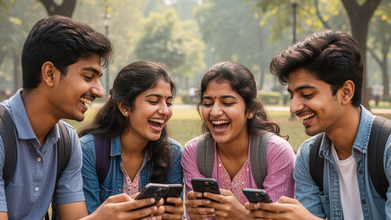
Karnataka, which is home to the tech hub of Bengaluru, has officially become the first Indian state to implement a wide ban on teenagers using social media.
CM Siddaramaiah announced the move while presenting the annual state Budget today and noted that the ban is aimed at preventing adverse effects of increasing mobile usage on children.
He told officials: "With the objective of preventing adverse effects of increasing mobile usage on children, usage of social media will be banned for children under the age of 16."
Last month, Siddaramaiah had discussed this issue in the meeting of Vice-Chancellors (VC) conclave held in Bengaluru and sought opinions of VCs. During the discussion, he raised concerns about the impact of social on academics.
The move is being supported by multiple state officials including State IT and Biotechnology Minister Priyank Kharge as well as Health Minister Dinesh Gundu Rao.
Is Any Other State Considering a Ban?
Andhra Pradesh may soon follow Karnataka's steps and ban social media for teenagers under the age of 16 in the state.
Nara Lokesh, Information Technology, Electronics and Communications, Real Time Governance and Human Resources Development Minister for Andhra Pradesh, told Bloomberg at the World Economic Forum 2026 Annual Meeting in Davos, Switzerland: "As a state, we are studying Australia’s under-16 law, and yes, I believe we need to create a strong legal enactment.
"Youngsters below a certain age should not be on such platforms, as they do not fully understand the content they are exposed to. Thus, a strong legal framework may be required."
TDP national spokesperson Deepak Reddy supported Lokesh's claim and stated: "Children below a certain age are not emotionally mature enough to comprehend the negative and harmful content that is freely available online. That is why the Andhra government is studying global best practices and examining Australia's under-16 social media law."
If implemented successfully, Andhra Pradesh would be the first Indian state to issue the ban and could pave the way for other states to consider such policies. State officials are yet to clarify when the rule will be implemented and if any fines will be attached to it.
How Does Social Media Affect Teenagers?
Scientists have found that kids' social media use might be slowing down their brain power. A new study says that spending time on these apps could be hurting how well a tween's mind develops. This research shows that the more time kids spend on platforms like Instagram or TikTok, the worse they might do on school-related tasks later on.The researchers found that children aged 9 to 13 who used social media more often did worse on tests that measured skills like reading, memory, and language. They were tested on these abilities two years after the study began. The results were published in a major medical journal called the Journal of the American Medical Association.
The children's brain power was measured using special tests created by the National Institutes of Health, which tested things like how well they remember information and understand language. The study found a clear, but small, drop in the test scores for kids who used social media.
- Kids who used social media for just one extra hour a day scored about 1 to 2 points lower on their memory and reading tests.
- Kids who used social media for up to three extra hours a day saw a bigger drop, scoring as much as 4 points lower.
US Issues Travel Advisory For International Travelers Against Global Polio
Credits: Canva and CDC
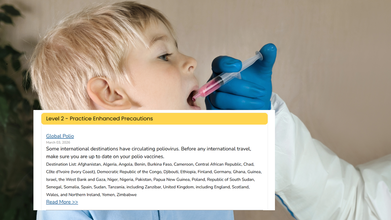
The United States has issued a travel advisory against global polio. International travel often comes with vaccine reminder and health checks to stay safe. The Centers for Disease Control and Prevention (CDC) issued a Level 2 travel advisory for certain international destinations with circulating poliovirus. The CDC has asked travellers to ensure they are up to date on their polio vaccines.
Also Read: 500 Girls In Rajasthan Receive HPV Vaccine In First Five Days Of Prevention Drive
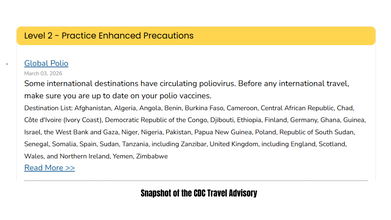
The Destination list for global polio travel Advisory notice includes:
- Afghanistan
- Algeria
- Angola
- Benin
- Burkina Faso
- Cameroon
- Central African Republic
- Chad
- Côte d'Ivoire (Ivory Coast)
- Democratic Republic of the Congo
- Djibouti
- Ethiopia
- Finland
- Germany
- Ghana
- Guinea
- Israel
- the West Bank and Gaza
- Niger
- Nigeria
- Pakistan
- Papua New Guinea
- Poland
- Republic of South Sudan
- Senegal
- Somalia
- Spain
- Sudan
- Tanzania, including Zanzibar
- United Kingdom, including England, Scotland, Wales, and Northern Ireland
- Yemen
- Zimbabwe
The CDC issued a 'Level 2' advisory, which means to 'practice enhanced precautions'.
Also Read: The Hidden Cost of Extreme Fitness On Women’s Bodies | Women's Day Special
The advisory suggests that children and adults should be up to date on their routine polio vaccines. Travelers are also asked to get an inactivated polio vaccine booster if they are going to the destination that has circulating poliovirus, or have completed their routine polio vaccine series; and have not already received one adult booster dose.
Types Of Notices Issued By CDC
The CDC issues four different types of notices based on the gravity of the disease spread.
Level 1 : Practice Usual Precautions
Practice usual precautions for this destination, as described in the Travel Health Notice and/or on the destination page.
Level 2: Practice Enhanced Precautions
Practice enhanced precautions for this destination. The Travel Health Notice describes additional precautions or defines a specific population at risk.
Level 3: Reconsider Nonessential Travel
Reconsider nonessential travel to this destination. The outbreak or event poses risk to travelers because limited precautions are available.
Level 4: Avoid All Travel
Avoid travel to this destination unless traveling for humanitarian aid or emergency response; there is an extreme health risk for travelers and no available precautions.
What Is Polio?
The World Health Organization (WHO) notes that it is a highly infectious disease caused by a virus that invades the nervous system and can cause total paralysis in matter of hours. The virus is transmitted by person to person spread mainly through the fecal-oral route, or less frequently, by a common vehicle, which could be either from contaminated food or water. The virus also multiplies in the intestine.
The National Institute of Health (NIH), US, notes that the virus responsible for causing Polio belongs to the Picornaviridae family.
As per the WHO, the common Polio symptoms are:
- Fever
- Fatigue
- Headache
- Vomiting
- Stiffness of the neck a
- Pain in the limbs
How Does Polio Spread?
Polio is mainly transmitted through the faecal-oral route, meaning it spreads when a person consumes food or water contaminated with the virus. It can also spread through close contact with an infected individual. The poliovirus lives in the throat and intestines of those infected, and poor sanitation, unsafe water, and inadequate hygiene greatly increase the risk of transmission, especially in communities with limited access to clean facilities.
In severe cases, polio can lead to acute flaccid paralysis, which may affect the diaphragm and throat muscles, making it difficult to breathe or swallow. Since there is no cure for polio, prevention remains the only line of defence. Raising awareness about polio vaccination is therefore essential to protect individuals, especially children, from this potentially life-threatening disease.
500 Girls In Rajasthan Receive HPV Vaccine In First Five Days Of Prevention Drive
Credits: Canva
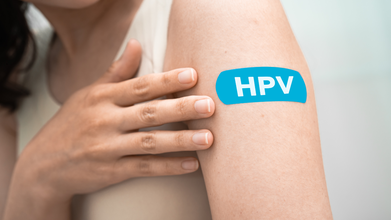
500 girls have received the Human papillomavirus (HPV) vaccines in the first five days of launching the cervical cancer prevention drive. A senior officer, as also reported by TOI noted that misinformation and lack of awareness could lead to a lower number of girls showing up. This is why, while the initial response is encouraging, logistics are still need to be figured out, including identification of session sites and to widen coverage and counter doubts that surround the vaccine. "The HPV vaccine helps prevent cervical caner, one of the most common cancers among women in the country. Addressing public concerns is crucial for the program's success," said the official.
Also Read: US Issues Travel Advisory For International Travelers Against Global Polio
Health officials along with public health experts will be conducting interactive sessions on social media across districts on Thursday. In Sikar, a dedicated platform will also allow experts to respond to the questions directly on HPV infections, vaccine safety, eligibility and benefits.
As of now, the program allows a single vaccine dose for girls who have completed 14 years and are yet to turn 15. As per the Health Department, around 8.32 lakh girls in Rajasthan are eligible for the vaccine annually.
Nationwide Free HPV Vaccine Drive
Prime Minister Narendra Modi on February 28 launched the nationwide Human Papillomavirus (HPV) vaccination campaign for girls aged 14 years from Rajasthan's Ajmer.
The initiative marks a decisive step towards eliminating cervical cancer through timely HPV vaccination. Cervical cancer remains the second most common cancer among women in India. Nearly 80,000 new cases and over 42,000 deaths are reported annually in the country.
Read: PM Modi Launches Nationwide Free HPV Vaccination Drive; A Landmark Step, Says WHO
"Today, I have had the opportunity to launch the HPV vaccine campaign from Ajmer. This campaign is an important step towards empowering women and daughters of this country,” PM Modi said.
“For us, this was a sensitive issue tied to the insult of our sisters and daughters, one that made them ill. That is why we resolved it at a crucial turning point in their mission,” he added.
The World Health Organization has also lauded India's mission to launch the HPV vaccine and prevent the risk of cervical cancer.
“We are leaving no stone unturned to ensure that the daughters of the country are healthy and prosperous. The objective of this initiative is the prevention of cervical cancer," the Prime Minister, earlier wrote in a post on social media platform X.
Who Can Avail The Nationwide Free HPV Vaccination Drive?
The vaccine is most effective when it is administered before exposure to HPV and before becoming sexually active. Young women aged 9 to 14 years show vaccine effectiveness of 74 to 93 per cent and this decreases with age.
Girls aged 9 to 14 should get two doses of the vaccine in 6 to 12 months apart
Women aged 15 to 26 years can get three doses in 0, 2, and 6 months apart
Adults aged 27 to 45 must get it after consultation with their healthcare provider
- Follow Us :


© 2024 Bennett, Coleman & Company Limited