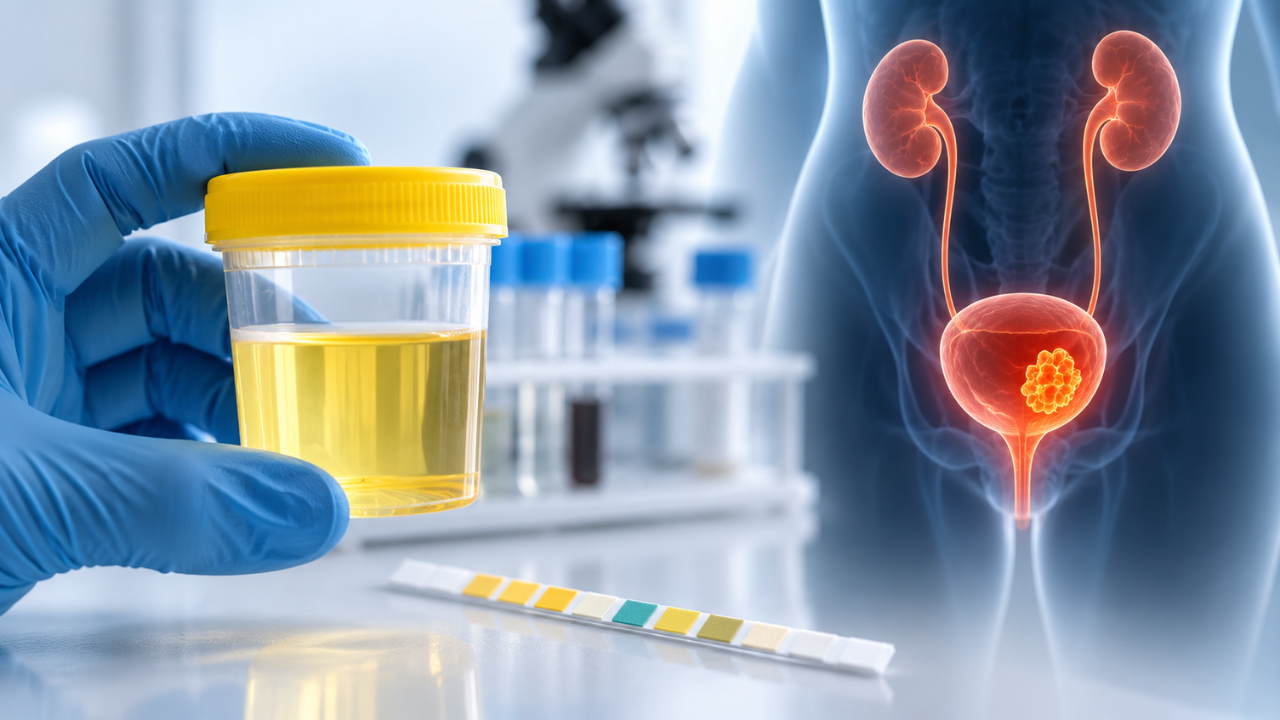
Bladder cancer detection could get easier, faster and much less invasive as a new urine test can help identify it. According to new UK research, patients may not have to wait for an invasive bladder examination just to get their cancer diagnosis. The test, called GALEAS Bladder, detected almost 92.2% of bladder cancers in a study involving 964 patients across seven NHS urology departments. The findings were published in European Urology Oncology recently . How Does The Urine Test Work? GALEAS Bladder is a molecular test that detects cancer-related genetic changes in DNA found in the urine. It analyses mutations across 23 genes associated with bladder cancer. In the study, patients had been referred for urgent investigation because of haematuria, or blood in the urine, one of the key warning signs of bladder cancer. Their urine samples were tested alongside the standard diagnostic method, which included cystoscopy. Among the 964 patients who had a final diagnosis, 77 were found to have bladder cancer. The urine test detected 71 of those 77 cancers, making the success rate almost 92%. It detected all 17 muscle-invasive bladder cancers identified in the study. It also picked up 35 of 36 high-grade cancers, equivalent to 97.2%.Also read: PM2.5 and Cancer Risk: Practical Ways to Protect Yourself in India’s Polluted Cities Could It Reduce The Requirement For Cystoscopy? Cystoscopy remains an important part of bladder cancer diagnosis. The procedure involves passing a camera through the urethra into the bladder, so doctors can directly examine the organ. While effective, cystoscopy is invasive and requires hospital resources. The researchers believe a urine-based test could help doctors decide which patients need an urgent cystoscopy and which patients may be able to safely defer the procedure. According to this study, a negative GALEAS result was linked with a 99.3% likelihood of not having bladder cancer. Researchers estimated that using the test to triage patients could reduce urgent cystoscopies by about 730 per 1,000 patients, without reducing overall clinical benefit. Professor Richard Bryan, Director of the University of Birmingham’s Bladder Cancer Research Centre and a study co-author, said the findings show that molecular urine testing can help clinicians determine which patients need urgent cystoscopy. The test performed particularly well in patients whose blood in the urine was not visible to the naked eye. In this group, which represented about 30% of participants, the test identified all bladder cancers diagnosed in the study.Also read: Have Dense Breasts? What Women Should Know About Their Breast Cancer Risk Is The Urine Test A Replacement For Cystoscopy? The researchers describe GALEAS as a tool to support decision-making before cystoscopy, rather than a complete replacement for diagnostic procedures. A positive result can help prioritise patients for cystoscopy, while a negative result may allow immediate cystoscopy to be deferred in appropriate cases. The study does not mean that a person with symptoms can simply take a urine test and rule out cancer on their own. A suspected bladder cancer diagnosis still requires appropriate clinical assessment. In the study, just 8% of participants were diagnosed with bladder cancer. The findings offer a useful way to make bladder cancer investigations more targeted, particularly where large numbers of people are referred for blood in the urine, but only a small proportion ultimately get diagnosed cancer.