
- Health Conditions A-Z
- Health & Wellness
- Nutrition
- Fitness
- Health News
- Ayurveda
- Videos
- Medicine A-Z
- Parenting
Brazil Legend Robert Carlos Is Recovering From His Preventative Surgery

Credits: Wikimedia Commons
Robert Carlos, who is known to be the Brazil and Real Madrid legend is finally "recovering well" after he underwent a "preventative medical procedure" as he wrote on his Instagram page. The 52-year-old was seen smiling on the hospital bed, as he cleared rumors around heart attack. "I would like to clarify recent information that has been circling. I recently underwent a preventative medical procedure, planned in advance with my medical team. The procedure was successful, and I am well. I did not suffer a heart attack."
He further wrote: "I am recovering well, and looking forward to returning to full fitness and resuming my professional and personal commitments soon. I sincerely thank everyone of the messages of support, care, and concern. I would like to reassure everyone that there is no cause for concern. My heartfelt thanks go to the entire medical team who took care of me."
ESPN reported that he underwent a preventative heart surgery. While no reports confirmed the exact surgery he underwent, there are different preventative heart surgeries that one can get to restore blood flow, or prevent heart attacks in people with severe blockages.
What Are the Preventative Heart Surgeries?
Coronary Artery Bypass Grafting (CABG)
Coronary Artery Bypass Grafting (CABG) is a surgical procedure used to treat severe coronary artery disease, where blood flow to the heart is reduced due to blocked arteries. In this surgery, a healthy blood vessel is taken from the chest, leg, or arm and grafted to bypass the blocked artery, allowing blood to flow freely to the heart muscle again. CABG is often recommended for patients with multiple blockages, diabetes, or reduced heart function. While it is a major surgery, advances in surgical techniques and post-operative care have significantly improved outcomes and recovery. The procedure not only helps relieve symptoms such as chest pain and breathlessness but also reduces the risk of heart attacks and improves overall quality of life.
Minimally Invasive/ Robotic Surgery
Minimally invasive and robotic surgeries involve performing procedures through small incisions using advanced instruments and robotic arms controlled by a surgeon. These techniques offer greater precision, flexibility, and control compared to traditional open surgery. Robotic systems provide a magnified, high-definition view of the surgical area, allowing surgeons to operate with enhanced accuracy. Patients benefit from smaller scars, reduced blood loss, less pain, and quicker recovery times. Minimally invasive and robotic approaches are commonly used in cardiac, orthopedic, urological, and gynecological surgeries. While not suitable for every patient or condition, these procedures have transformed modern surgical care by making complex operations safer and less physically taxing for patients.
Pacemakers Defibrillators
Pacemakers and defibrillators are implantable devices designed to regulate abnormal heart rhythms. A pacemaker helps maintain a steady heartbeat by sending electrical signals when the heart beats too slowly. Defibrillators, also known as ICDs, can detect life-threatening rhythm disturbances and deliver a shock to restore normal rhythm. These devices are recommended for patients with arrhythmias, heart failure, or those at high risk of sudden cardiac arrest. Implantation is usually a minimally invasive procedure, and most patients can return to normal activities within a few weeks. Pacemakers and defibrillators play a crucial role in preventing complications, improving symptoms, and significantly enhancing survival and quality of life for heart patients.
Are There Non-Surgical Alternatives Too?
There are certain non surgical alternatives, which include preventive cardiology, ECEP (Enhanced External Counter pulsation) , and certain medications like statins to lower cholesterol, or beta-blockers for angina, or aspirin to prevent clots, notes Cleveland Clinic.
Trump Takes High Dose Of Aspirin That Caused His Hand To Bruise; How Safe Is This Habit?
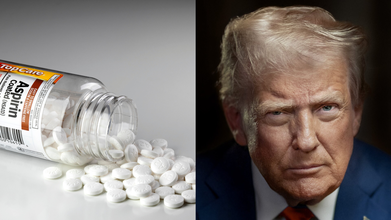
Credits: iStock and Wikimedia Commons
Trump takes more aspirin than his doctor recommend. In an interview with The Wall Street Journal, US President Trump said that he will continue doing it. He claimed that it was not old or deteriorating age, but aspirin that caused the bruising on his hand. He has repeatedly said that his health is in "excellent" condition.
In the interview, he said, "They say aspirin is good for thinning out the blood and I don't want thick blood pouring through my heart."
Trump, now, 70, was diagnosed with chronic venous insufficiency, a condition that occurs when veins have trouble moving blood back to the heart. He also showed signs of bruising on his hand, which many attributed was a result of frequent handshaking, and to the use of aspirin.
A decade ago, evidence suggested that taking aspirin routinely could lower the risk of heart attacks and strokes in people without heart disease by preventing blood clots. However, three major randomized trials published in 2018 challenged this view, showing limited benefit and a higher risk of serious bleeding and cancer-related deaths, especially gastrointestinal cancers.
“We’ve really changed how we think about and recommend aspirin,” said Dr Alex Krist, a family physician at Virginia Commonwealth University and Inova Health System, who helped update the U.S. Preventive Services Task Force’s aspirin guidelines in 2022, reported The New York Times.
How Safe Is This Habit Of Taking Aspirin Daily?
Aspirins work by inhibiting the action of platelets, which are the cell fragments that stick together to form clot and prevent bleeding. Clots are in fact the reason of heart attacks. However, at the same time, it is the same anti-clotting effect that causes aspirin to increase the risk of bleeding, a risk that increases with age.
Doctors are most concerned about rapid internal bleeding that can be fatal, such as gastrointestinal bleeding or sudden brain hemorrhages. While the overall risk remains low, recent preventive health recommendations note that it rises with age, especially in adults over 60.
Some studies suggest aspirin may help lower the risk of colorectal cancer, but current evidence is not strong enough to support its use for cancer prevention alone.
Read: Trump Denies Health Concerns, Says Hand Bruise Was Caused By Aspirin
Should You Be Taking Aspirin Daily?
Medical guidelines have shifted on aspirin use, especially for older adults. Groups like the preventive services task force and major heart associations now advise against starting or routinely taking aspirin to prevent heart disease in people over 60 or 70 who have never had a heart attack or stroke. For this group, the bleeding risks often outweigh the benefits.
Daily aspirin is still clearly recommended for people who already have cardiovascular disease, such as those who’ve had a heart attack, an ischemic stroke, or peripheral artery disease. In these cases, aspirin helps prevent another serious event, making the risk–benefit balance more favorable.
Recent health disclosures have shown no history of heart attack or stroke in some high-profile cases, though the presence of arterial plaque alone is fairly common with age and does not automatically justify aspirin use.
For those who do need aspirin to prevent a second heart attack or stroke, the usual dose is a low-dose or “baby” aspirin of 81 milligrams. Higher doses are generally not recommended unless specifically advised.
Aspirin may still be considered for some people under 60 or 70 who have a higher risk of heart disease, but this decision should be made carefully. Factors like high blood pressure, high cholesterol, diabetes, smoking history, or a strong family history can influence whether aspirin makes sense for an individual.
New York Reports A Record Breaking Rate Of Flu Cases And Hospitalizations

Credits: iStock
Flu cases are surging in the US, and New York has reported the highest number of cases, including hospitalizations recorded in a single week. The state's health department said on Friday. During the week ending December 27, 4,546 people were hospitalized with flu, a 24% increase from the 3,666 who were hospitalized the previous week, as per the data from the New York State Department of Health (NYSDOH). This report has come after the State reported a record-breaking number of flu cases in a single week with 72,133 infections during the week ending December 20.
"We are having a more severe flu season than prior years, almost 1,000 more people were admitted to a hospital during this most recent seven-day period compared to the prior week," Dr. James McDonald, the state's health commissioner, said in a statement on Friday.
NYSDOG also issued a declaration last month and stated the influenza is prevalent in New York. This requires health care facilities and agencies to ensure any staff who has not yet received this year's flu vaccine, must wear masks whenever they are in the area with patients.
Will The Old Vaccine Work Against This New Strain?
"The vaccine remains the most effective means to prevent disease. We still want to encourage people to get the vaccine," said Professor Antonia Ho, Professor and Honorary Consultant in Infectious Diseases at the University of Glasgow. Experts have stressed enough on the immunity that one can receive from the vaccine that that these flu jab remain the best defense against the flu, even though the current strain circulated may have drifted away from the strain included in this year's jab.
The flu vaccine is currently also available to New Yorkers who are aged 2 years and older at a health care provider's office or participating pharmacies while children aged 6 months and older can receive the flu vaccine at a health care provider's office, according to the state health department.
Can You Die From Flu?
As per the infectious physician at the Johns Hopkins University Center for Health Security, as reported in Scientific American, "Dying from the flu is not like dying from a bullet or a black widow spider bite. The presence of the virus itself isn't going to be what kills you. An infectious disease always has a complex interaction with its host.”
More Updates On Flu Cases
Meanwhile, flu cases are surging across the country. The US Centers for Disease Control and Prevention estimates at least 7.5 million illnesses, 81,000 hospitalizations and 3,100 flu-related deaths so far this season.
New York is among 20 states reporting “very high” respiratory illness activity, the latest CDC data shows.
Public health experts say a significant share of infections is being driven by a new flu strain known as subclade K, a variant of the H3N2 virus under influenza A. The strain has been circulating internationally since summer and previously fuelled spikes in Canada, Japan and the UK.
CDC testing found that around 92% of flu samples were H3N2, with nearly 90% classified as subclade K.
Trump Denies Health Concerns, Says Hand Bruise Was Caused By Aspirin

Credits: AP
President Donald Trump said he takes a higher dose of aspirin than his doctors recommend, blaming it for the bruises on his hands that have again drawn attention to his health. The remarks came during an interview with The Wall Street Journal published on Thursday.
“They tell you aspirin is good for thinning the blood, and I don’t want thick blood running through my heart,” Trump, 79, said. “I want thin blood flowing through my heart. Does that make sense?”
“I Want Thin Blood,” Trump Explains Why He Ignores Doctors’ Advice
Trump said his doctors prefer that he take a smaller dose, but he has chosen otherwise. “They’d rather I take the smaller one. I take the larger one. I’ve done it for years,” he said, adding that bruising is a known side effect, as per CNN
Bruising, Makeup, and Bandages Renew Questions About Trump’s Health
The interview marked one of Trump’s most detailed discussions with journalists about his health in recent years. Scrutiny has grown as questions persist about his age, stamina, and how transparent the White House has been about his medical condition.
Bruising on Trump’s right hand has been visible for months. CNN previously reported that it existed before his return to the White House. The issue drew more attention after Trump appeared to conceal the marks with makeup or bandages and often shielded his hand from cameras. Observers have also pointed to swelling in his legs and moments where he appeared to doze during public events.
Trump’s Doctor Confirms President Takes 325 mg of Aspirin Daily
Trump’s physician, Dr. Sean Barbabella, told the Journal that the president takes 325 milligrams of aspirin each day. According to the Mayo Clinic, low-dose aspirin therapy typically ranges from 75 to 100 milligrams, with 81 milligrams being the most commonly advised dose. The clinic notes that aspirin therapy can fall anywhere between 75 and 325 milligrams daily.
What Is Aspirin Used For?
Aspirin is widely used to thin the blood and reduce clot formation, lowering the risk of heart attack and stroke. However, it also increases the risk of bleeding. In recent years, medical guidelines have moved away from recommending daily aspirin for many adults, as the potential harms often outweigh the benefits. Some experts advise discontinuing aspirin entirely in people in their 70s.
Dr. Jonathan Reiner, a professor at George Washington University’s School of Medicine and Health Sciences and former cardiologist to Vice President Dick Cheney, said the explanation offered by Trump and his team raises further questions.
“It’s uncommon to see that kind of bruising with one aspirin a day,” Reiner said. “The question becomes whether the president is taking medications that have not been disclosed by the White House.”
White House Says Trump Is in “Exceptional Health”
Barbabella said on Thursday that Trump remains in excellent condition. In a statement to CNN, he said the president’s medical evaluations and lab results show strong metabolic health and that his cardiovascular condition is comparable to someone 14 years younger. “Overall, the President remains in exceptional health and fully capable of carrying out his duties as Commander in Chief,” Barbabella said.
Bruising Also Seen on Trump’s Left Hand During Recent Events
At several public appearances last week, Trump appeared with light discoloration or bruising on the back of his left hand as well, in addition to the more persistent bruising on his right hand. As per CNN, the White House has previously attributed the right-hand bruising to frequent handshaking combined with aspirin use, which can make bruises more likely to appear.
Why Daily High-Dose Aspirin Is Rarely Recommended
Reiner said that while 325 milligrams is not considered an extreme dose, there is no clear medical reason to take that amount every day. He explained that people with acute injuries, such as a sprained ankle, may be prescribed 325 milligrams every four hours, which would be considered a high dose.
“Aspirin has been studied at many doses,” Reiner said, as per NBC News. “Eighty-one milligrams offers the best balance between reducing clot risk and limiting bleeding. A higher dose increases bleeding risk without improving effectiveness. That’s why we don’t use it.”
He added that the broader concern is a lack of transparency. “All of this highlights how opaque the White House has been about the president’s health.”
Trump Clarifies October Medical Scan Was a CT, Not an MRI
During the interview, as per CNN, Trump also discussed a medical scan he underwent in October. At the time, he told reporters it was an MRI but declined to provide details, directing questions to his doctors.
Speaking to the Journal, Trump clarified that the scan was a CT. “It wasn’t an MRI,” he said. “It was less than that. It was a scan.” Barbabella said the CT scan was done “to definitively rule out any cardiovascular issues.” Last month, he released a memo stating that imaging of Trump’s cardiovascular and abdominal systems showed “perfectly normal” results.
In 2018, however, Trump underwent a coronary CT scan that revealed plaque buildup in his arteries, indicating moderate heart disease.
White House press secretary Karoline Leavitt defended the administration’s disclosures, saying the president’s doctors have always confirmed he received advanced imaging. She added that Trump himself has shared additional details and described him as “the most transparent and open president in history,” while criticizing former President Joe Biden.
Trump Addresses Leg Swelling Linked to Chronic Venous Insufficiency
Trump also spoke about swelling in his lower legs, which the White House announced in July was caused by chronic venous insufficiency, a common condition among older adults. Trump said he tried compression socks but stopped using them. “I didn’t like them,” he told the Journal.
He also suggested he has little interest in regular exercise. “I just don’t like it. It’s boring,” Trump said. “Walking or running on a treadmill for hours, that’s not for me.” The Journal questioned Trump about moments where he appeared to fall asleep during public appearances. During a Cabinet meeting last month, Trump closed his eyes for several seconds at a time. A similar moment occurred during a November 6 event in the Oval Office.
Trump denied falling asleep. “I just close my eyes. It’s very relaxing to me,” he said. “Sometimes they take a picture when I’m blinking, and that’s what people see.”
President Downplays Hearing Concerns
Asked about his hearing, Trump said he only struggles when many people are talking at once and dismissed broader concerns. Before and after the election, Trump repeatedly questioned Biden’s fitness to serve, even suggesting Biden was unaware of documents signed in his name using an autopen. Biden has denied the claim.
Biden later exited the 2024 presidential race following a widely criticized debate performance that intensified concerns about his health and ability to remain in office.
- Follow Us :


© 2024 Bennett, Coleman & Company Limited