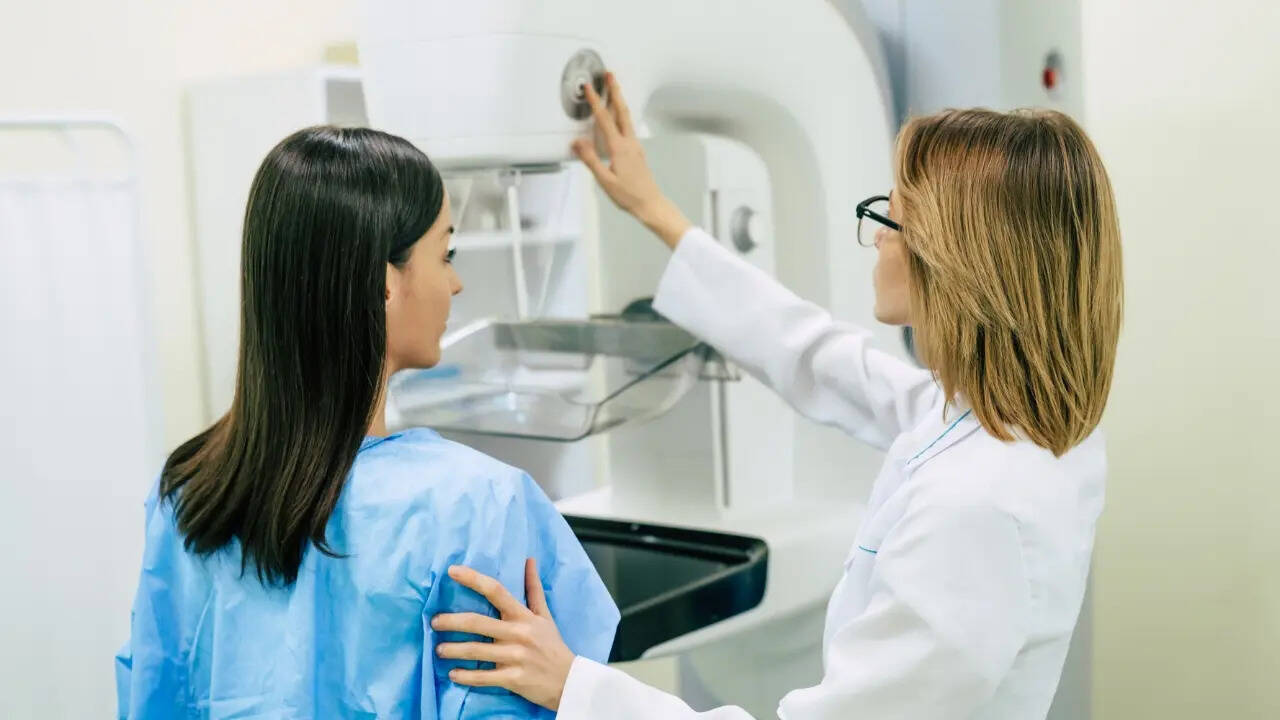
New global guidelines have just been released for breast cancer screening, and they involve the introduction of artificial intelligence in the process. Breast cancer is one of the most commonly diagnosed forms of tumour in women globally. In India, it is the most common form of cancer detected in women living in metro cities. According to the National Comprehensive Cancer Network (NCCN), a non-profit alliance of 33 cancer treatment centres in the US, women aged 35 years and above should be eligible for AI-powered mammogram risk assessment rather than at a later stage.Why is timely prediction of cancer risk important?The NCCN aims to boost the diagnosis rates of breast cancer by paving the way for accurate predictions of risks. This will, over time, help achieve timely screening. As per experts, this change in global breast cancer screening guidelines, especially the integration of AI in the process, marks a paradigm shift—from a detection-first to a prediction-first approach. Historically, mammograms were used after the age of 40 for the detection of existing cancers. The modern guidelines, however, recommend that women get screened from the age of 35 onwards, with AI algorithms used to predict future risks.What this means for IndiaExperts say that this shift is important for India. In India, breast cancer is the most prevalent form of tumour among women, and delayed diagnosis is one of the reasons responsible for the current mortality rate. Breast cancer is also often diagnosed late because of the unavailability and limited accessibility of screening facilities. Introducing AI in this process can help bridge the gap in several ways.Doctors say that the introduction of AI in the breast cancer screening process will help facilitate the identification of high-risk patients, regardless of their family history or the presence of genetic markers. This is important because most cases of breast cancer do not arise from these factors. This helps provide screening in a way that does not require universal testing.Traditional screening methods for breast cancerTraditionally, cancer screening largely depends on family history and age. AI, however, can now analyse large volumes of imaging data, clinical history, breast density, and genetic factors for a more personalised approach and targeted diagnostic methods. The adoption of AI-driven risk assessment can help improve patient outcomes, as per doctors.Use of AI in breast cancer detectionWomen at high risk of breast cancer can make detection easier for themselves by making use of advanced modalities such as MRI. An MIT-developed AI-based breast cancer risk model can detect tumours up to five years in advance using mammographic data alone. This AI-based risk assessment technique has also been recommended by global experts and is published in The Lancet. The study found consistent favourable outcomes.