
- Health Conditions A-Z
- Health & Wellness
- Nutrition
- Fitness
- Health News
- Ayurveda
- Videos
- Medicine A-Z
- Parenting
Budget 2026: Why Cheaper Fish Could Mean a Healthier Brain

Credit: Canva
Finance Minister Nirmala Sitharaman has announced a surprising tax reduction for India's fishers and marine industry, and experts say it is good news for you too.
Until now, fish caught by Indian vessels beyond territorial waters and brought back to the country for mass consumption has been treated as import, attracting customs duties and integrated goods and services tax (GST).
The combined tax burden raises costs and compliance issues, which discouraged people from deep-sea and exclusive economic zone (EEZ) fishing as well as
However, during her Union Budget 2026 presentation, Sitharaman proposed that fish caught in the EEZ and high seas by Indian fishing vessels are treated as duty-free when brought into Indian ports and treated as exports when landed at foreign ports.
This means that the market availability for Omega-3 packed fishes including salmon, mackerel, tuna, herring and sardines will significantly increase as their existing steep prices see a tremendous fall.
What Are Fish Oil Omega-3s?
Omega-3 fatty acids are polyunsaturated fats known for their crucial role in brain function and overall mental health. Fish oil is particularly rich in EPA and DHA, which are vital components of cell membranes and have strong anti-inflammatory effects in the body.
These omega-3s play a critical role in human development, and they are primarily found in fatty fish and fish oil. Since many people do not consume enough fish, supplementation is often recommended to ensure adequate intake of these essential fatty acids.
Although the body can convert another type of omega-3, alpha-linolenic acid (ALA), into EPA and DHA, this process is not highly efficient. As a result, fish oil supplements may provide a convenient way to ensure optimal levels of omega-3s.
READ MORE: NHS Doctor Says This Oil Instead of Cod Liver Is The Best Omega-3 Source
Some popular sources of Omega-3 include:
- Salmon
- Cod Liver Oil
- Algae Oil
- Oysters
- Nuts and seeds, such as flaxseeds, chia seeds, and walnuts
- Plant oils, such as flaxseed oil, soybean oil, and canola oil
- Fortified foods, such as eggs, yogurt, juices, milk, etc.
How Omega-3s Improves Brain Health
EPA and DHA are essential for maintaining brain function throughout life. These fatty acids are abundant in the brain's cell membranes, helping to preserve cell health and facilitate communication between brain cells.
Research has shown that a lack of omega-3 can lead to cognitive impairments. In animal studies, diets deficient in omega-3s resulted in reduced DHA levels in the brain, leading to deficits in learning and memory. In older adults, lower DHA levels have been linked to a smaller brain size, which may indicate accelerated brain ageing.
Maintaining sufficient levels of omega-3s can help support cognitive function and may reduce the risk of age-related brain decline.
The optimal dosage varies, but research suggests that 1,000–2,000 mg of omega-3 fatty acids from fish oil daily is a good starting point. People with depression should look for supplements with higher EPA content. It is pertinent to note that people should consult health experts before starting fish oil supplementation.
Import Duty Decreased On Cancer Drugs
Cancer drugs are medications, including chemotherapy, targeted therapies, and hormone therapies, used to kill cancer cells, slow growth, or relieve symptoms. Some popular medications include Cisplatin, Paclitaxel, Doxorubicin and Pembrolizumab (Keytruda), most of which are imported into India.These imported, specialized cancer treatments, particularly targeted therapies and monoclonal antibodies, often cost thousands, placing a massive financial burden on patients, leading to lifelong debts.
In this year's Union Budget, Sitharaman also proposed reducing import duty tax on 17 cancer drugs and seven medicines for rare diseases, which will in turn, help patients seek proper care on a timely basis.
Deshmukh commented: "India is witnessing a steady and alarming rise in cancer cases, where late detection, prolonged treatment and high medicine costs often lead to preventable complications and loss of life. Against this backdrop, the Union Budget’s decision to remove customs duty on 17 cancer drugs and 7 medicines for rare diseases stands out as a truly progressive and patient-first measure.
"Affordability remains one of the biggest hurdles in cancer care, forcing many families to delay or discontinue treatment. By reducing import duties, this move has the potential to significantly lower the cost of advanced and targeted therapies, making them accessible to a larger section of patients."
Experts Reveal Risks Of Nipah Virus Outbreak In The US, CDC On Alert
Credits: iStock
Experts are cautioning US of a potential Nipah virus outbreak, especially through international travels. Countries across Asia have already started airport health screenings. Thailand has geared up as it receives a high number of travelers from Kolkata, where the two cases of Nipah virus were detected.
Read: Is Thailand Carrying Out COVID 19 Like Screenings At Airports?
Experts Reveal Risks Of Nipah Virus Outbreak: What Are They Saying?
Dr Krutika Kupalli, a Texas-based expert who formerly also worked with the World Health Organization (WHO), told The Daily Mail that the possibility of Nipah virus outbreak is 'absolutely' something the Centers for Disease Control and Prevention (CDC) should be 'closely monitoring'.
“Nipah virus is a high-consequence pathogen, and even small, apparently contained outbreaks warrant careful surveillance, information sharing, and preparedness. Outbreaks like this also underscore the importance of strong relationships with global partners, particularly the WHO, [which] plays a central role in coordinating outbreak response and sharing timely, on-the-ground information," she said.
A CDC spokesperson told The Daily Mail that the agency is in 'close contact' with authorities in India. "CDC is monitoring the situation and stands ready to assist as needed."
Experts Reveal Risks Of Nipah Virus Outbreak: What Is Happening In India?
Nipah virus outbreak reported in West Bengal, India started with the cases of two nurses, one of whom has now been discharged.
As per the World Health Organization (WHO), Nipah virus infection is a zoonotic illness that is transmitted to people from animals, and can also be transmitted through contaminated food or directly from person to person.
In infected people, it causes a range of illnesses from asymptomatic (subclinical) infection to acute respiratory illness and fatal encephalitis. The virus can also cause severe disease in animals such as pigs, resulting in significant economic losses for farmers.
Although Nipah virus has caused only a few known outbreaks in Asia, it infects a wide range of animals and causes severe disease and death in people.
Nipah virus is infectious and can spread from animals like bats and pigs to humans through bodily fluids or contaminated food. It can also pass between people through close contact, especially in caregiving settings. While it can spread via respiratory droplets in enclosed spaces, it is not considered highly airborne and usually requires close, prolonged contact for transmission. Common routes include direct exposure to infected animals or their fluids, consuming contaminated fruits or date palm sap, and contact with bodily fluids such as saliva, urine, or blood from an infected person.
Read: Nipah Virus Outbreak In India: How Did It All Begin?
Experts Reveal Risks Of Nipah Virus Outbreak: What Are The Symptoms
- Fever
- Headache
- Breathing difficulties
- Cough and sore throat
- Diarrhea
- Vomiting
- Muscle pain and severe weakness
Red Cross Faces Blood Shortage, Asks For Immediate Donations
Credits: iStock
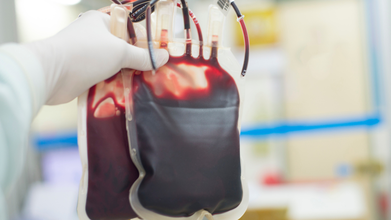
The American Red Cross reported a severe shortage of blood that has affected Tri-City area hospitals. In the last month, there has been a 35% drop in blood supply. The 'Code Red' blood shortage in Washington created a critical situation with hospitals requesting for blood. The drop is also noted due to the winter weather that has affected donation drive.
Red Cross Faces Blood Shortage: How Does Weather Influence Blood Bank?
Reports note that during the winter season, blood supply becomes challenging, though its demand may increase due to illness and severe weather conditions. However, the same factors lead to fewer donation drives that leads to critical shortage. According to Red Cross reports, more than 550 blood drives have been canceled since January 21. This has resulted in over 15,000 uncollected blood and platelet donation.
The shortage has severely impacted the availability of blood for trauma victims, cancer patients and those who require emergency surgeries. During such situation, volunteer donors play an essential role.
Diana Heilman, supervisor at the Kennewick Red Cross Fixed Site, said, "octors may face difficult decisions during a blood shortage, such as who can safely receive the products and treatments, and they will potentially have to wait because there simply isn't enough blood available."
Red Cross Faces Blood Shortage: What Is Affected?
- The Kennewick Red Cross identified a dire need of Type O blood, both positive and negative
- A negative
- B negative
- Platelets
Type O is a universal donor, while Type O positive is the most commonly transfused blood type. A negative blood type is found in only 6% of the population, and B negative is less than 2%.
Red Cross also announced a $20 e-gift card for those who donate between January 26 to February 28, as incentive.
Read: Japan Races To Develop World’s First Artificial Blood, Trials To Begin
Red Cross Faces Blood Shortage: Who Can Donate?
Must be in good general health, weigh at least 110 pounds, and be 17 years old (or 16 with parental consent where permitted)
- Valid identification is required, along with a brief health screening before donation
- Minimum hemoglobin levels: 12.5 g/dL for women and 13.0 g/dL for men
- Most medications are allowed, but blood thinners and some antiviral drugs may disqualify donors
- The full donation visit takes about one hour; the actual blood draw lasts 8–10 minutes
- Whole blood can be donated every 56 days; Power Red donations every 112 days
- Platelets are in high demand due to their five-day shelf life and essential role in cancer, trauma, and surgical care
- Donors with O negative, O positive, A negative, and B negative blood types are encouraged to consider Power Red donations
- Officials urge eligible donors to schedule appointments promptly to help address ongoing blood shortages impacting patient care
Red Cross Faces Blood Shortage: Frequently Asked Questions
Read: Thinking of Donating Blood? A Doctor Answers All Your Doubts
Can Women Donate Blood During Their Period?
This is one of the most common concerns, especially among first-time female donors. According to Dr. Sangeeta Pathak, Director and Head of Transfusion Medicine at Max Super Speciality Hospital, Saket, who spoke to Health and Me, as per the Drugs and Cosmetics Act, women are advised not to donate during their menstruation, particularly during the 4-5 days of active bleeding. However, they are completely eligible to donate at any other time of the month if they are in good health.
Can You Donate Blood While Recovering From An Illness?
Health is key when it comes to blood donation. “A person should be completely healthy and free from fever or illness at the time of donation,” says Dr. Pathak. Moreover, certain medications can lead to deferral, and there is a comprehensive list maintained under the Drugs and Cosmetics Act. So if you’re on a prescribed course, it’s best to consult a doctor or the blood bank before donating.
Can You Donate Blood If You Have A Tattoo Or Piercing?
Yes. If you’ve recently had a tattoo or body piercing, you’ll need to wait 12 months before you can donate blood. This is a precautionary step to ensure there’s no risk of transmitting infections.
Statin Muscle Pain: Scientists Finally Explain What That Is
Credits: iStock
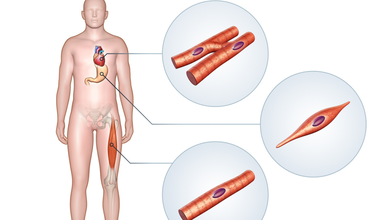
Statin pain and what is it, scientists finally explain. A study by University of British Columbia finally explained what statin muscle pain is and what triggers it. Statins have long been a cornerstone of cardiovascular care. By lowering “bad” LDL cholesterol, these drugs have significantly reduced the risk of heart attacks and strokes for millions worldwide. Yet, for a notable number of users, statins come with an uncomfortable trade-off: muscle pain, weakness, and, in rare cases, severe muscle breakdown that can even lead to kidney failure.
For years, doctors have known that these side effects occur, but not why. Now, a new study offers a detailed answer.
Researchers from the University of British Columbia (UBC), in collaboration with the University of Wisconsin–Madison, have identified the molecular trigger behind statin-related muscle problems. Their findings, published in Nature Communications, could pave the way for safer cholesterol-lowering drugs in the future.
Why Do Statins Affect Muscles?
Muscle-related side effects are among the most common reasons people stop taking statins. Symptoms range from mild soreness and fatigue to rhabdomyolysis, a rare but dangerous condition where muscle tissue breaks down and releases proteins that can damage the kidneys.
Until now, the biological mechanism behind this damage remained unclear. The new research zooms in on what happens inside muscle cells when statins are present.
Statin: The Role of Calcium in Muscle Cells
To understand the problem, researchers focused on a protein called the ryanodine receptor (RyR1), which plays a critical role in muscle contraction. RyR1 acts as a gatekeeper, controlling the release of calcium inside muscle cells. Calcium is essential for muscle movement, but only in carefully regulated amounts.
Using cryo-electron microscopy, an advanced imaging technique that allows scientists to view proteins in near-atomic detail—the team observed how statins interact with this receptor.
What they found was striking: when statins bind to RyR1, they force the channel to remain open. This leads to a constant leak of calcium into the muscle cell. Over time, this calcium overload becomes toxic, damaging muscle tissue and explaining the pain, weakness, and, in severe cases, muscle breakdown seen in some patients.
A Closer Look at How Statins Bind
The study examined atorvastatin, one of the most widely prescribed statins globally. However, researchers suggest the same mechanism may apply across the statin class.
They discovered that statins bind to RyR1 in an unusual three-part formation. One statin molecule attaches while the channel is closed, priming it to open. Two additional molecules then bind, forcing the channel fully open and keeping it that way. This sustained opening is what causes the harmful calcium leak.
This detailed binding pattern offers the clearest explanation yet for statin-induced muscle side effects.
What This Means for Future Treatments
While severe muscle injury affects only a small fraction of the more than 200 million statin users worldwide, milder symptoms are far more common and often lead patients to discontinue treatment. This is a serious concern, as stopping statins increases cardiovascular risk.
The new findings provide a potential solution. By modifying the parts of statin molecules that interact with RyR1—while preserving their cholesterol-lowering effects—scientists may be able to develop safer statins with fewer muscle-related side effects.
Why This Study Matters
Beyond statins, the research highlights how advanced imaging technologies are transforming medicine. By visualizing drug–protein interactions at near-atomic resolution, scientists can move from observing side effects to understanding their exact cause.
For patients, this could mean a future where statins remain just as effective—but far easier on the muscles, improving long-term adherence and overall quality of life.
- Follow Us :


© 2024 Bennett, Coleman & Company Limited