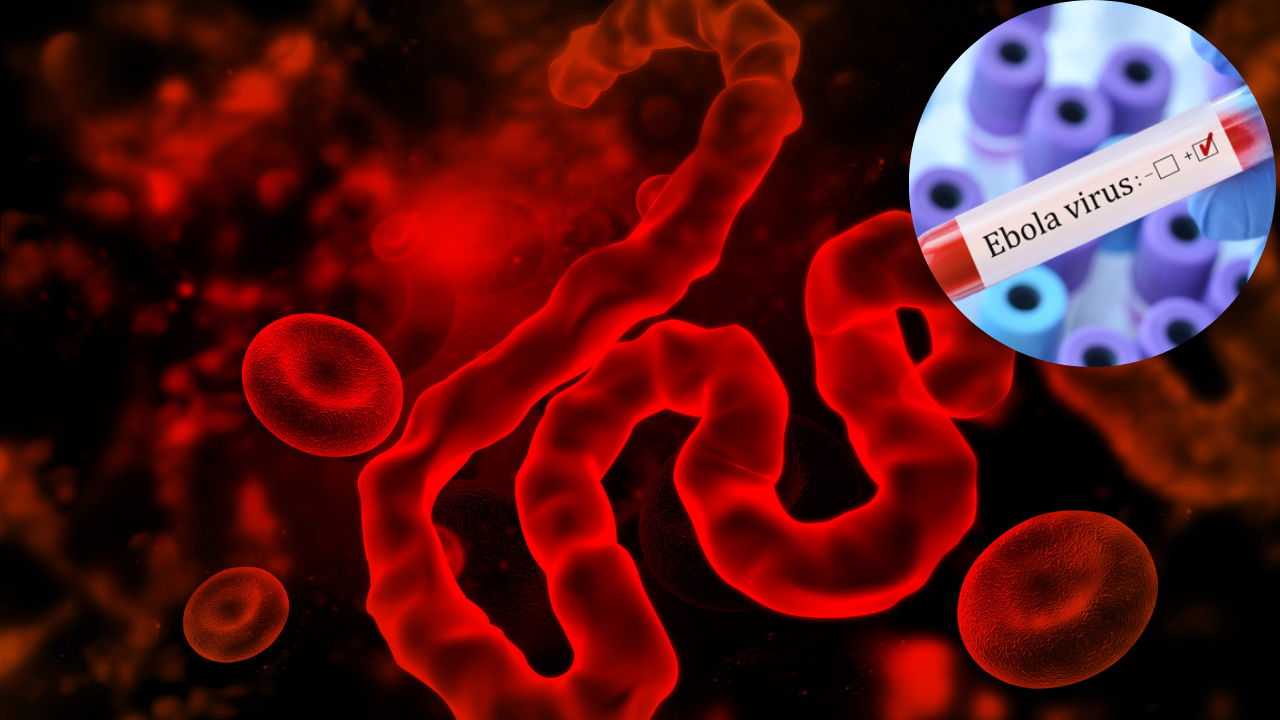
The latest outbreak, caused by the Bundibugyo Ebola virus, has so far affected 600 people and has caused 139 suspected deaths, as per the latest update by the World Health Organization (WHO).Amid increasing testing, sequencing, and clinical trial efforts to tackle the Bundibugyo Ebola virus, a new study indicates a possible new spillover event from wild animals.The study, led by scientists from the Democratic Republic of the Congo and Uganda, released the first complete genomes of Bundibugyo Ebola virus from the May 2026 outbreak. The initial genomes reveal a new spillover event.As of now, the index case is a nurse who fell ill on 24 April and died three days later in Bunia, the capital of Ituri province in DR Congo. But she was unlikely to have been infected by a patient, as per experts.Genomes Suggest Fresh Spillover EventScott Pegan, a professor of biomedical sciences at the University of California, Riverside School of Medicine, said that, similar to the Zaire and Sudan viruses, the Bundibugyo Ebola virus is not transmitted through the air.“The Bundibugyo virus primarily spreads through contact with infected bodily fluids,” he said, adding that “the origin of this outbreak is likely what is considered a spillover event”.He explained that the Ebola viruses are zoonotic in nature, with their primary hosts considered to be fruit bats.“Spillover events of human infectious diseases occur when humans encounter infected animal feces or process bushmeat from infected animals,” Pegan said.Researchers Trace Possible Wildlife Source“The genomes, posted on a virological website on May 17, display a distinct genetic lineage that does NOT match any previously sequenced Bundibugyo strains, suggesting a recent introduction from an animal reservoir into humans rather than sustained human-to-human transmission,” said Cheng-Yi Lee in a post on social media platform X.Cheng-Yi added that "phylogenetic analysis shows that the new sequences form a separate cluster, supporting the inference of a fresh zoonotic spillover". The expert stated that the most plausible source of this spillover is wildlife inhabiting the Ituri forest. He pointed out to "fruit bats or other mammals known to harbor filoviruses, which could have been implicated in earlier outbreaks through hunting or contact with infected animal tissues". The ecological surveillance ongoing in the region will be essential to identify the exact reservoir and to mitigate the risk of future spillover events, the scientists said.“Ebola outbreak likely from a new spillover event rather than from previously circulating virus,” added Rajeev Jayadevan, citing the study.The Co-Chairman of the National IMA COVID Task Force & Past President, Indian Medical Association, Cochin, explained that "the virus jumps to humans from infected animals such as bats, monkeys, and apes, usually through contact with blood, body fluids, excrement, or raw meat during hunting and butchering".The Risk Of Future Ebola Outbreaks?Further, Pegan shared that containing the current outbreak of the Bundibugyo virus is critical because "the more the virus interfaces with humans, the greater the chance for it to move from a spillover event to a crossover one".Symptoms To Watch ForSymptoms of Bundibugyo virus disease are similar to other forms of Ebola and include:FeverHeadacheMuscle painWeaknessDiarrheaVomitingStomach painUnexplained bleeding or bruising, usually in later stages of illness.