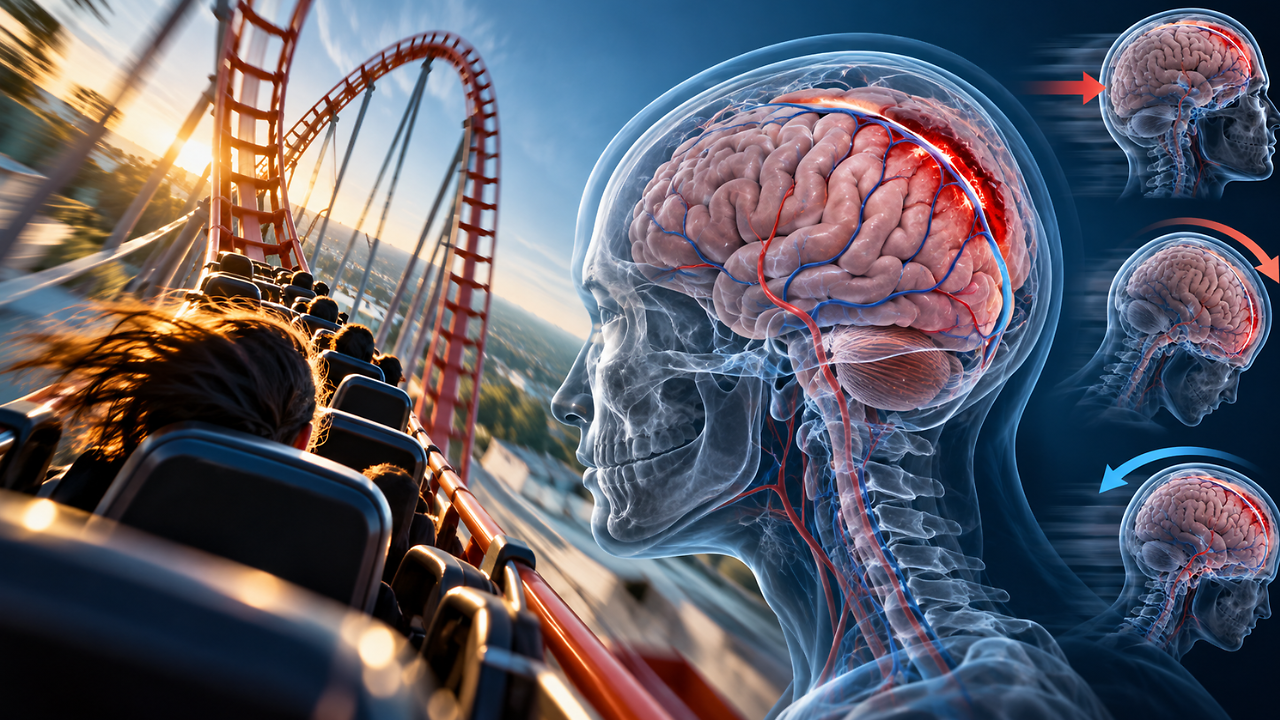
With speed, sudden drops and dizzying twists at hundreds of feet in the air, roller coasters are meant to give riders an adrenaline rush and thrill. But a recent incident related to brain bleeding has shed light on the harmful impact of these extreme movements inside the brain.A recent investigation found discovered that serious brain injuries have been allegedly linked to the X2 roller coaster at Six Flags Magic Mountain in California. According to CNN, more than 100 people have allegedly suffered brain injuries after riding the attraction over the past two years. Three lawsuits were filed this week against Six Flags.Two women who rode X2 just six days apart in July suffered severe brain haemorrhages and required emergency surgery. Doctors treating them attributed their injuries to rapid acceleration and deceleration experienced during the ride.The cases raise the medical question of what happens to the brain when the body is subjected to sudden, powerful changes in speed and direction?Can Roller Coasters Cause Brain Bleeds?The brain is surrounded by cerebrospinal fluid, which cushions it against everyday movements and minor impacts. However, this protection has its own limits.When a roller coaster suddenly accelerates, brakes or changes direction, the head and brain may not always necessarily move at exactly the same speed.The brain can shift, stretch or rotate within the skull, placing strain on delicate blood vessels and nerve fibres. In extreme circumstances, these forces can tear blood vessels and cause bleeding inside the skull.So it's not necessary that a person needs to hit their head against a hard surface to sustain a traumatic brain injury. Rapid rotational movements alone can sometimes cause significant damage to the brain.Also read: Popular Organic Applesauce Recalled Due To Mold Toxin: What Is Patulin & How Dangerous It IsWhat Is A Subdural Haematoma?A subdural haematoma is a life threatening brain injury, in which the blood collects between the brain's outer protective covering, called the dura mater, and the brain's surface.Sudden acceleration and deceleration can tear the veins that connect the brain to its surrounding structures.As blood accumulates, pressure inside the skull increases. This can compress brain tissue and, in severe cases, require emergency surgery to remove the blood and relieve pressure.Also read: Beer Is Getting A 'Health Makeover': Do Protein Or Electrolytes Really Make It Healthier?G-Forces Are Another FactorG-force means the acceleration experienced by the body relative to Earth's gravity. During sharp turns, steep drops and sudden brakes, roller coaster riders experience changing G-forces. However, G-force alone does not determine whether someone will sustain a brain injury.The speed and direction of head movements, specially rapid rotation, may also contribute to brain bleeds. A small 2017 study found that roller coasters could produce brain movement and strain comparable to mild football headers. However, the researchers did not find evidence of an immediate risk of acute brain injury on the rides studied. Warning Signs After Riding A Roller CoasterSerious neurological injuries associated with roller coasters are considered to be rare. The Six Flags cases do not establish that an ordinary roller coaster rides will have the same risks as X2.People with existing vascular abnormalities, previous head injuries or those taking blood-thinning medications may face additional risks.A headache after a roller coaster ride may seem harmless, but certain symptoms require immediate medical attention. According to the US Centers for Disease Control and Prevention, warning signs of a traumatic brain injury include worsening headaches, repeated vomiting, confusion, slurred speech, seizures, weakness and loss of consciousness. Symptoms can appear immediately or develop hours later.