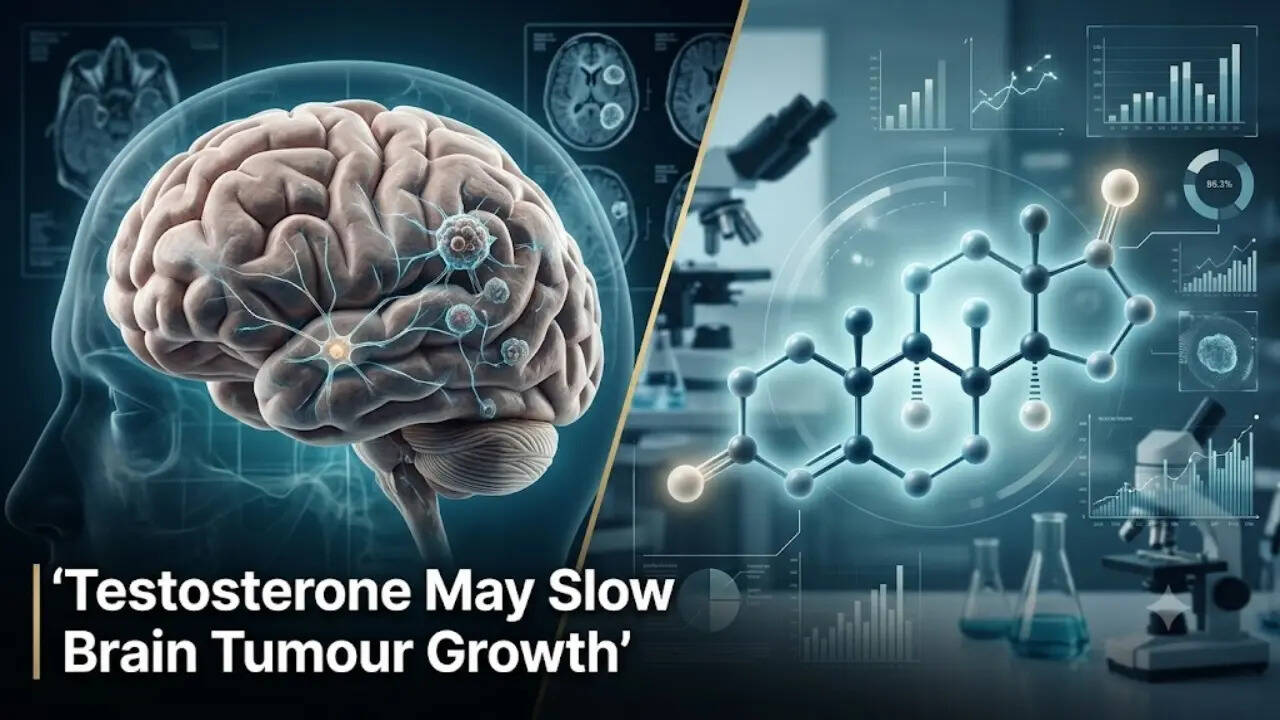
Recent research is changing our understanding of testosterone's role in brain cancer, particularly glioblastoma. A study published in Nature in May 2026 made this finding, altering previous understanding. Dr. Vishnu P. S., Consultant Neurosurgeon, Dr. KM Cherian Institute of Medical Sciences, Chengannur, in an interview with Health and Me, explained the impact of testosterone in fighting brain tumours. This study, conducted under the National Institutes of Health with a group of researchers from the Cleveland Clinic, turned decades of medical thinking on its head. They discovered that testosterone actually slows down brain tumour growth in men. This breakthrough could totally change how we treat glioblastoma.This study found that drops in testosterone ramp up inflammation and activate the HPA axis, producing stress hormones that speed up tumour growth. Analysing data from over 1,300 men with the deadly disease glioblastoma, researchers observed a significant benefit for those on testosterone supplements: they had a 38% lower risk of dying compared to those who were not receiving the extra hormone.How Testosterone Protects the BrainTestosterone usually regulates microglia, which are defense cells in the brain. When testosterone levels drop, especially in older males, these cells increase inflammation, making the brain less able to fight off issues such as tumours. Removing testosterone in preclinical tests on mice accelerated tumour growth, but restoring it slowed things down again.The Change Everyone Is Surprised ByThis finding shifts what everyone used to think. Previously, people believed testosterone helped tumours grow. But now, that idea has been turned on its head. What was once seen as harmful is now understood to be protective, suppressing brain tumours instead. Plus, the hormone works differently in the brain compared to other parts of the body and helps regulate protective systems there.In India, this matters a great deal because men develop glioblastomas more often than women do (with a 3:2 ratio). This new finding could totally change how doctors treat patients here, especially older males whose androgen levels are lower and who already have a higher risk of developing this type of cancer.What This Means for PatientsGlioblastoma continues to be one of the most difficult cancers to treat, with limited improvements in survival rates despite surgery, radiotherapy, and chemotherapy. However, this new research suggests that hormones can influence the brain’s immune and stress responses. This might lead to new treatment pathways, especially since androgen levels naturally decline in older men as they age.Still, caution is needed. The relationship between testosterone and cancer is complex and has produced mixed results. Because of this, doctors do not recommend self-medicating or using hormone therapies unless under close medical supervision or as part of clinical trials. At present, it is more about viewing this as a promising step forward that could offer hope to the millions of patients and families dealing with this devastating illness.