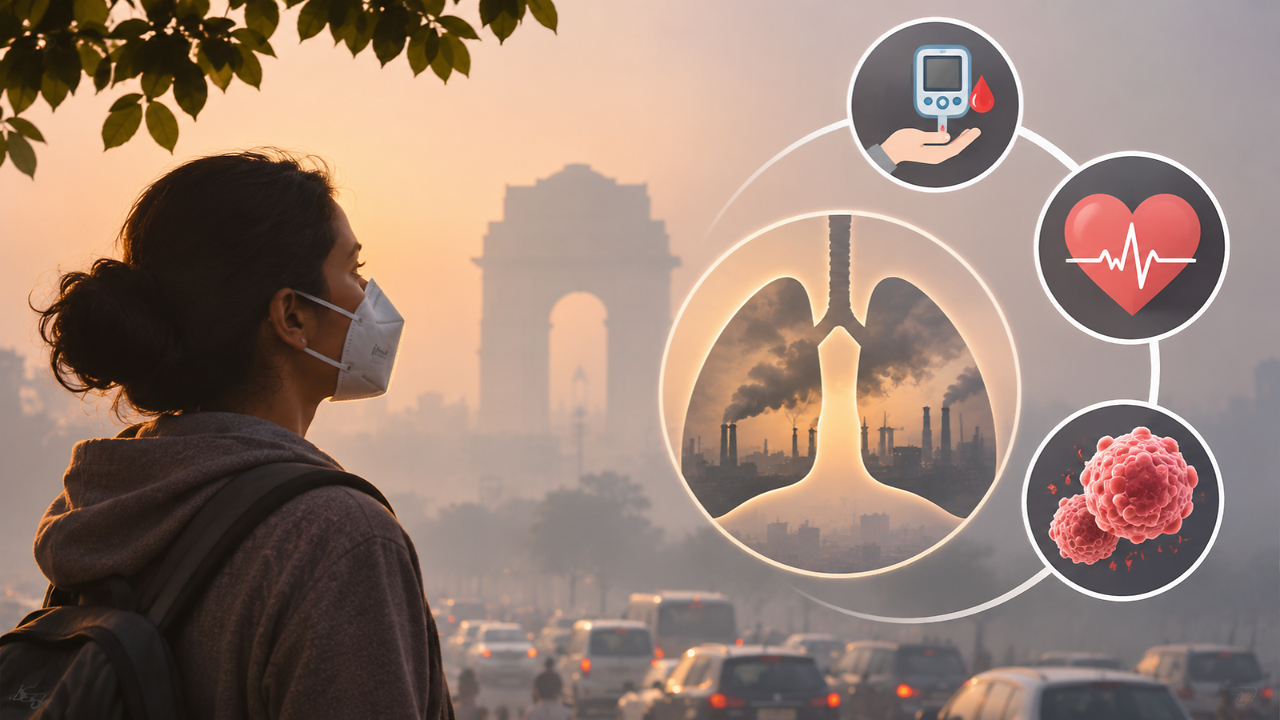
Air pollution in India, especially during winter after Diwali, is one of the alarming environmental and health concerns currently. While we are aware about its adverse effects on lungs and respiratory health, a recent review of five decades of Indian research has suggested its damages may extend to other bodily functions too. A review of five decades of Indian research has found that more than 91% of epidemiological studies examining the health effects of air pollution reported at least one adverse health effect. These health conditions ranged from cardiovascular and metabolic diseases to pregnancy complications and cancer.The analysis, conducted by the Centre for Research on Energy and Clean Air (CREA), examined 184 peer reviewed epidemiological studies published between 1975 and 2025. Out of these, 169 reported at least one positive link between air pollution and an adverse health effect. The findings cement evidence linking polluted air to a wider range of health problems. What Did The Analysis Report?Also read: World Diabetes Day 2026: Is India's Toxic Air Adding To Its Diabetes Crisis? What Experts SayRespiratory diseases were the most frequently investigated health outcomes, featuring in 86 of the 184 studies. Sixteen studies examined mortality, while 11 focused on cardiovascular diseases.Other research investigated connections between air pollution and diabetes, pregnancy complications, low birth weight, impaired child growth, cancers and other neoplasms, blood disorders, neurological and mental health conditions, metabolic disorders, sleep problems, eye diseases and chronic kidney and bone conditions.The review also found that the evidence was not limited to privately funded or independent research. Of the 46 government-funded studies included, 44 reported increased health risks. Similarly, 77 of the 81 studies affiliated with government institutions reported adverse health associations. These institutions included the Indian Council of Medical Research (ICMR), All India Institute of Medical Sciences (AIIMS), the Central Pollution Control Board (CPCB) and the Ministry of Health and Family Welfare. The 91.8% figure represents the proportion of studies that reported at least one positive association with a health outcome. Indian Air Pollution CrisisDelhi accounted for the highest number of studies i.e. 26, followed by Punjab with 13, and Maharashtra and Uttar Pradesh with 11 each. However, the review also highlighted a wide gap in research outside urban centres.Only 40 studies examined rural populations. Of these, 38 reported at least one adverse health effect linked with air pollution exposure.The studies accounted for several sources of exposure, including outdoor pollution, household cooking and heating fuels, indoor environments like homes and workplaces, and occupational exposure.Also read: Delhi Air Pollution: Are Online Classes And Indoor Time Adding To Children's Anxiety? Polluted Air Can Affect Heart And MetabolismFine particulate matter, like PM2.5, can travel deep into the lungs and enter the bloodstream. It can cause inflammation and oxidative stress, processes that may affect blood vessels, metabolic regulation and other organs.Indian research has also examined the relationship between PM2.5 exposure and type 2 diabetes. A study involving 12,064 adults in Delhi and Chennai, published in BMJ Open Diabetes Research & Care in 2023, found that higher long-term PM2.5 exposure was associated with increased fasting blood glucose, HbA1c and the risk of developing type 2 diabetes. The findings were observational and do not establish that pollution alone caused diabetes. Air pollution has also been associated with cardiovascular conditions, including hypertension, ischaemic heart disease and stroke. Meanwhile, the CREA review included studies examining neoplasms, a category that includes cancers. However, the review does not establish that 91% of studies independently linked pollution to diabetes, heart disease and cancer. These were among several health outcomes investigated. India Needs A Better Clean-Air StrategyThe review suggests that air pollution policies need to address the wider picture. Studies examined particulate matter, including PM2.5 and PM10, as well as nitrogen dioxide, sulphur dioxide, ozone, carbon monoxide, black carbon and heavy metals.CREA has called for stronger air-quality standards, better pollution monitoring, stricter emission limits for industries and power plants, and measures to reduce indoor pollution from solid fuels. It has also emphasised the need to include rural populations in the next phase of India's National Clean Air Programme.