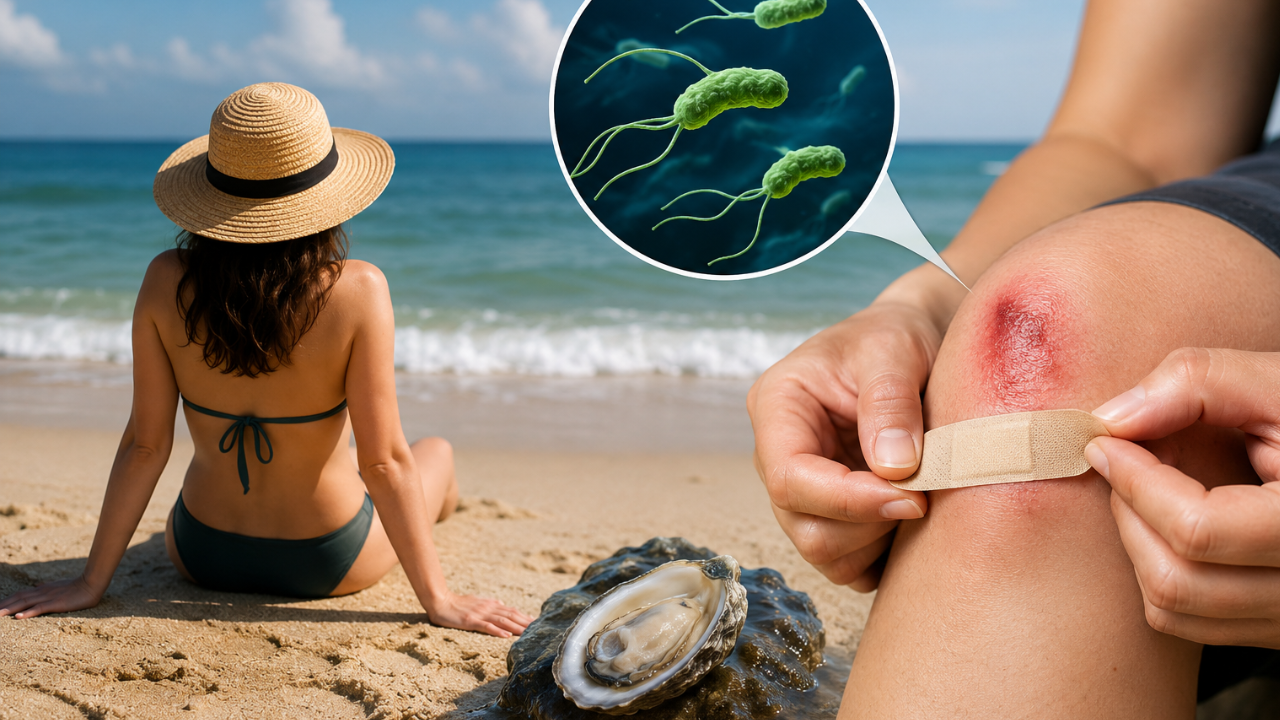
A harmless day at the beach may come with an unexpected health risk this summer as Louisiana health officials have warned residents and beachgoers about an increase in infections caused by Vibrio vulnificus, a deadly bacterium that is found in warm coastal and brackish waters. Louisiana has reported nine Vibrio vulnificus infections so far in 2026. According to the Louisiana Department of Health, five among nine patients who were hospitalized died.During the same period over the previous decade, the state saw about seven cases and one death. The warning comes as Gulf Coast waters can get warmer, creating conditions in which Vibrio can thrive. Can You Pick Up An Infection At The Beach? Also read: Vibrio Vulnificus: US Records First Flesh-eating Bacteria Death Of 2026If bacteria enter through a cut or other break in the skin, you may contract an infection. Vibrio vulnificus naturally occurs in warm saltwater and brackish water, where fresh and saltwater mix. A swimmer with an open wound, scrape, recent piercing, tattoo or surgical incision can become infected when the wound comes into contact with contaminated water. The bacteria can also cause infection after someone eats raw or undercooked shellfish, specially oysters. The term 'flesh-eating bacteria' sounds straight out of a zombie horror film, but there is a scientific reason behind the nickname. Vibrio vulnificus can cause severe wound infections and, in some cases, necrotizing fasciitis, a rapidly progressing infection that destroys tissue. Why Is Vibrio Dangerous? Also read: AI-Designed Viruses Have Been Successfully Tested In Lab But Scientists Are Worried; Here's WhyThe infection is uncommon, but it can become severe pretty quickly. The CDC estimates that roughly one in five people with Vibrio vulnificus infection die, although the risk varies depending on the illness, delay in treatment and the patient’s health. People with liver disease, diabetes, weakened immunity and certain chronic illnesses are particularly vulnerable to this infection. Older adults are also at higher risk. Louisiana state epidemiologist Theresa Sokol has previously warned that the bacteria can progress rapidly. “If you have a wound, that’s when you really need to try to stay out of the salt or brackish water,” Sokol said. How To Protect Yourself? An infected wound may initially turn red, swollen, painful or warm. Discoloration, blistering, fever and chills may indicate a more serious infection. Louisiana health officials advise seeking medical care immediately if a wound exposed to salt or brackish water develops these symptoms and telling the healthcare provider about the water exposure. The CDC recommends: Avoid swimming or wading in saltwater or brackish water if you have an open wound.Cover wounds with a waterproof bandage if exposure is unavoidable.Wash wounds thoroughly with soap and clean running water after contact with coastal water.Avoid raw or undercooked shellfish, particularly oysters.Seek medical attention quickly if infection symptoms appear after exposure or wounds change rapidly.A 2026 study published in Applied and Environmental Microbiology also found substantial seasonal Vibrio concentrations in southeast Louisiana recreational waters, with the highest average concentrations during June, July and August. For most healthy beachgoers, this is not a reason to cancel summer plans. But anyone with an open wound or underlying health condition, should keep the wound out of waters, and don’t ignore a rapidly changing wound after exposure.