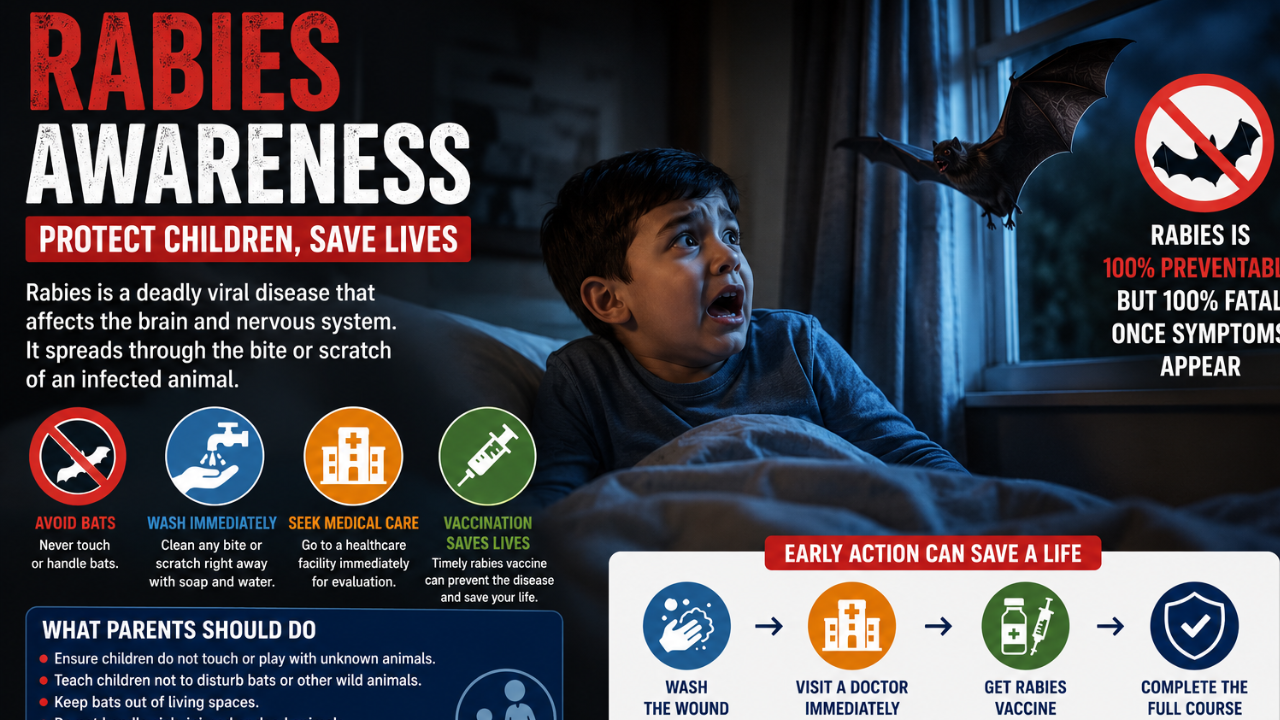
An 11-year-old boy in Canada succumbed to rabies after waking up to find a bat on his face. The incident highlighted how even seemingly harmless contact with the animal, with no bites, can lead to a fatal infection if preventive treatment is not started in time, which is crucial in rabies. Canada Boy Dies Of Rabies The case was published in the Canadian Medical Association Journal (CMAJ). The incident occurred during the summer of 2024 while the boy was staying at a cottage in northern Ontario. According to the report, he woke up with a bat on his face and instinctively swatted it away. His father caught the bat in a cooking pot and released it outdoors. Since there were no visible bite or scratch marks and the bat did not appear to behave aggressively, the family did not suspect rabies and seek medical attention. However, 19 days later, the child developed facial tingling and numbness, followed by swelling, vomiting, and loss of appetite. He was treated for a suspected viral infection initially, but his condition rapidly worsened. He went on to develop difficulty swallowing, fever, slurred speech, confusion, and visual hallucinations before being diagnosed with rabies. Despite being admitted in pediatric intensive care, he died after 17 days of admission. Also read: The Lancet: Young Adults With Obesity Face Higher Heart Risk; Statins Benefit Older Adults The authors of the case report said the family agreed to share the child's story to raise awareness about rabies and the importance of seeking immediate medical evaluation after any direct contact with a bat, even if there are no visible bite marks. Bat Exposure Is Risky Even If There Are No Bite Marks Bat bites may go unnoticed as they can be extremely small. In some cases, a person may not even realize they have been bitten or scratched. Because of this, public health authorities recommend seeking medical advice after direct contact with a bat. Also read: Illinois Governor Claims Trump Continues To Suffer From Dementia Immediate treatment with rabies vaccination is highly effective in preventing the disease if administered before symptoms develop. Once rabies symptoms appear, it is almost always fatal. Rabies Remains One Of The Deadliest Infections Human rabies cases are rare in Canada. Since 1924, only 28 human rabies cases have been reported in the country, and the Ontario child's death marked the province's first human rabies case since 1967. Rabies attacks the central nervous system and is transmitted through the saliva of infected mammals, most commonly through bites. While dogs remain the primary source of human rabies' deaths globally, bats are the leading source of human rabies infections acquired in North America. According to the World Health Organization, rabies causes an estimated 59,000 human deaths every year, with the vast majority occurring in Asia and Africa. The authors of the CMAJ case report stressed that healthcare providers should carefully assess any history of direct bat contact and consider post-exposure prophylaxis when appropriate. They noted that early treatment is nearly 100% effective in preventing rabies before symptoms begin, making timely medical evaluation critical after any potential exposure.