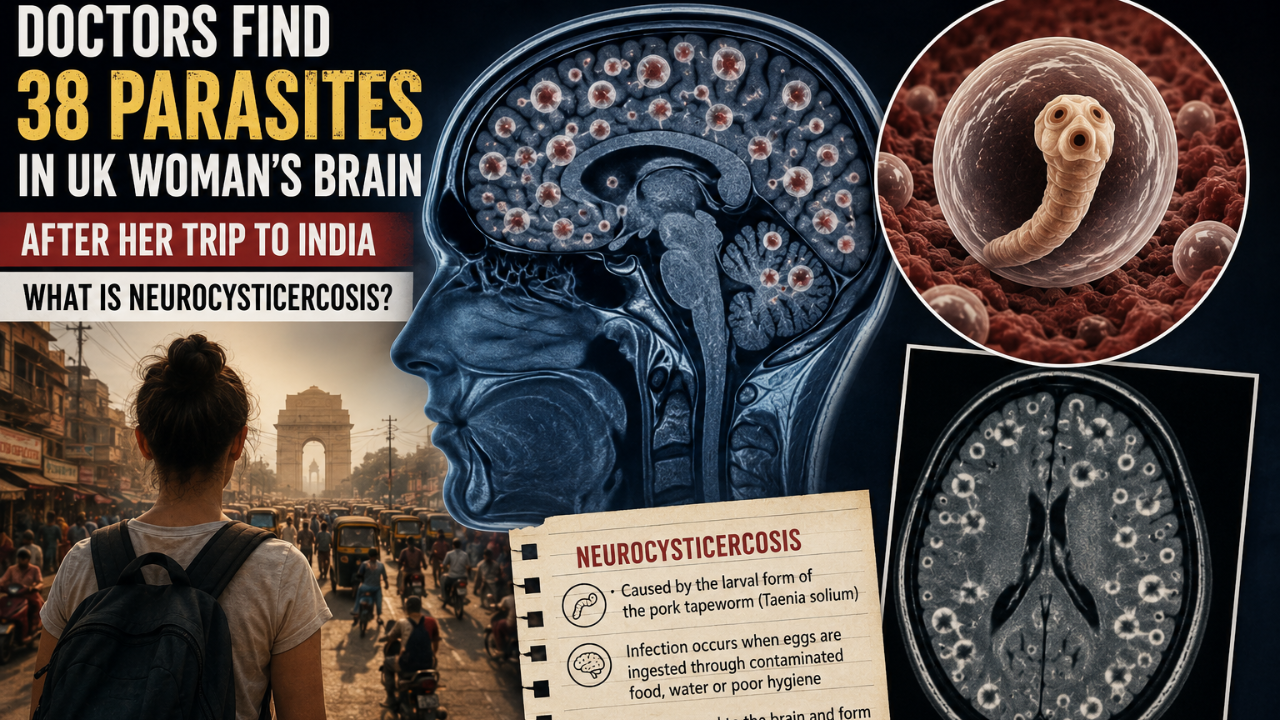
A 42-year-old woman in the UK recently shared the story of her decade-long battle with a parasitic brain infection called neurocysticercosis. Lowri Denman took a 3-month trip to India in 2007. Three years later, she passed a meter-long tapeworm that left her horrified. Years later, her health worsened in the worst way imaginable. UK Woman Left With 38 Parasites After India Trip Despite avoiding meat on her trip, Denman picked up the infection after she ate pork that contained microscopic tapeworm eggs. After the doctor gave her a clean bill of health, she began experiencing headaches and seizures. A doctor's consultation and several diagnostic tests revealed that she had 38 parasites in her brain. After confirming her neurocysticercosis diagnosis, her treatment ensued to which she responded well. She spent a few years in good health. But after some time, she developed swellings on her brain around the parasites that caused various new symptoms in her body. She ended up quitting her job and moved with her parents for medical care. Also read: Doctors Day: From Burnout To Work Anxiety, The Mental Health Struggle Doctors Rarely Talk About Treatment, medication, and psychological stress affected her physical appearance and mental well-being. She experienced paranoia, psychosis, severe anxiety, and panic attacks. She also spent six weeks in a neuropsychiatric hospital. After years of recovery, Lowri regained normalcy and returned to work in 2022. Her case turned out to be rare, went on to be discussed by many experts in the UK and the US. Lowri did not have any surgery to remove the parasites from her brain. The parasites have now calcified in her brain. She will remain on epilepsy medication for the rest of her life. Lowri is now determined to spread awareness about the disease using her experience. Also read: Uganda On Alert Over Suspected Marburg Virus Outbreak All About Neurocysticercosis Neurocysticercosis is a parasitic brain infection that also affects the spinal cord. It is caused by the larval stage of the pork tapeworm, Taenia Solium. It is the leading cause of acquired epilepsy in several underdeveloped and developing nations. Neurocysticercosis occurs when a person swallows tapeworm eggs, usually through food or water contaminated with feces from someone carrying the adult tapeworm. The eggs then hatch in the body, travel through the bloodstream, and form cysts in the brain. The symptoms of neurocysticercosis depend on the basis of the size and number of the cysts. They include: Seizures Headaches Nausea and vomiting Weakness or numbness Vision problems Difficulty with balance and coordination Difficulty in thinking and focusing Its prevention includes maintaining good hand hygiene, ensuring proper sanitation and sewage disposal, consuming thoroughly cooked pork, and identifying and treating people who carry the adult tapeworm. Preventing pigs from accessing human feces is also a preventative measure. Although neurocysticercosis is uncommon in many developed nations; it still occurs, especially in people who have lived or traveled to regions where the parasite is endemic.