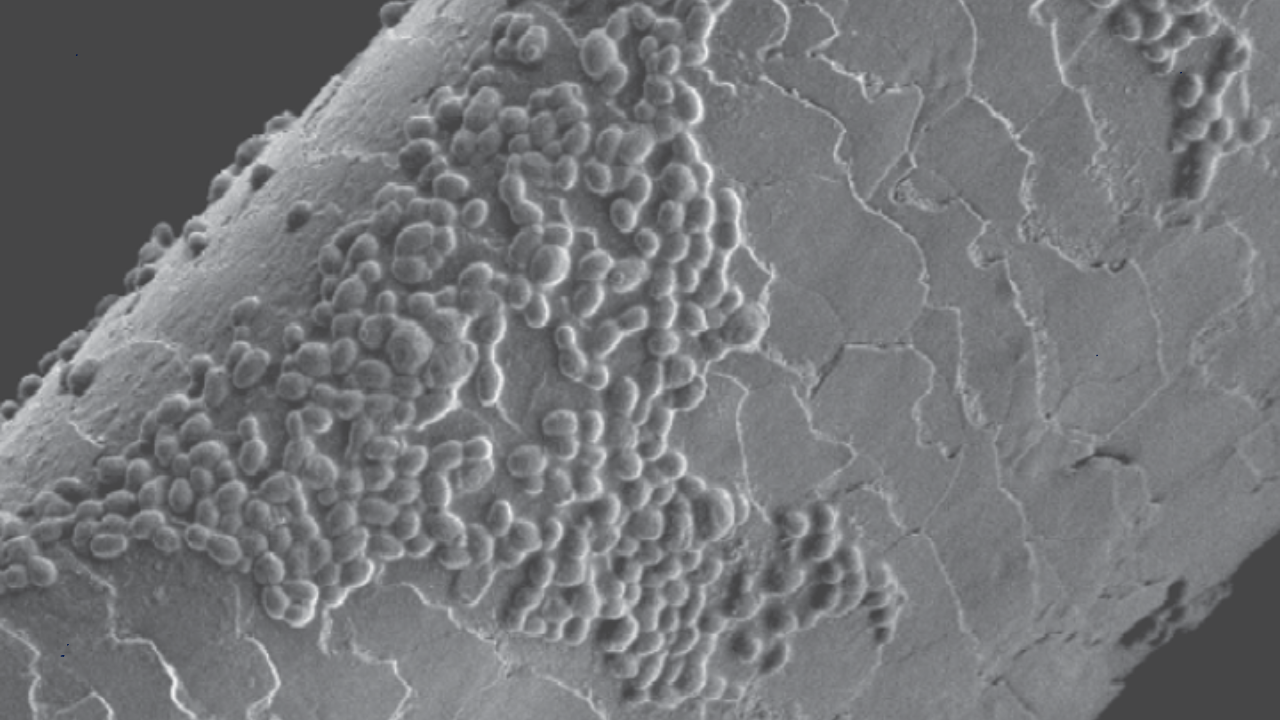
Drug-resistant superbug Candida auris (C. auris) has now been detected in 27 US states. According to the latest data from the US Centers for Disease Control and Prevention (CDC), 3,437 clinical cases have been reported through July 25.The figure is about 1,000 fewer than the 4,290 cases reported during the same period last year.Candida auris Remains A Critical Public Health ThreatC. auris is a deadly fungus that primarily poses a concern for people who are hospitalised or in long-term care facilities. The total number of clinical cases has increased since the pathogen was first detected in the US in 2016, the CDC said.While the rate of increase has slowed in recent years, C. auris remains a “critical public health threat.”First discovered in Japan in 2009, the pathogen can live silently on the skin but can become deadly when it reaches the bloodstream. It kills about 3,000 patients in US hospitals and long-term care facilities each year.Now, a new study published in the journal Science has revealed why the deadly superbug can be so difficult to remove from the skin once it takes hold.How Candida auris Permanently Colonizes SkinResearchers at the University of California, San Francisco (UCSF) found that C. auris actively rewires the skin’s immune system to protect itself, taking refuge in hair follicles where current therapies cannot reach it.“Candida auris colonizes skin way better than most other fungi, setting it up to invade once the immune system is weakened,” said Dean Merrill, a dermatologist, UCSF professor and first author of the study.“The big clinical problem is that we have no effective way to remove it from the skin,” he added.To understand why C. auris persists on the skin unlike other fungi, researchers compared it with Candida albicans, a common fungus that the skin and immune system normally clear quickly.In mice, C. auris was found to persist by taking refuge in hair follicles. While C. albicans activated an immune signal called IL-17, which helps renew the skin’s surface and strengthen antifungal defenses, allowing the infection to be cleared, C. auris, triggered interferon gamma, a signal more commonly associated with viral infections.The fungus achieved this by remodeling its outer cell wall to expose more of a molecule called chitin. This prompted immune cells to release interferon gamma around the hair follicle.The interferon gamma then blocked the skin’s antifungal defenses, including IL-17. It also slowed the natural replacement of cells in the hair follicle, causing older, damaged cells to accumulate and creating a niche where C. auris could flourish.How The Finding Will Help?The findings reveal potential targets for preventing C. auris from persisting on the skin.One possible approach could involve drugs that shift the immune response away from interferon gamma and toward IL-17, which drives the skin’s normal antifungal clearing process.Another possibility could be drugs that block chitin, potentially preventing the fungus from amplifying interferon gamma signals, Merrill said.More broadly, the researchers say the findings offer a new way of understanding how microbes can quietly coexist with humans before becoming dangerous.