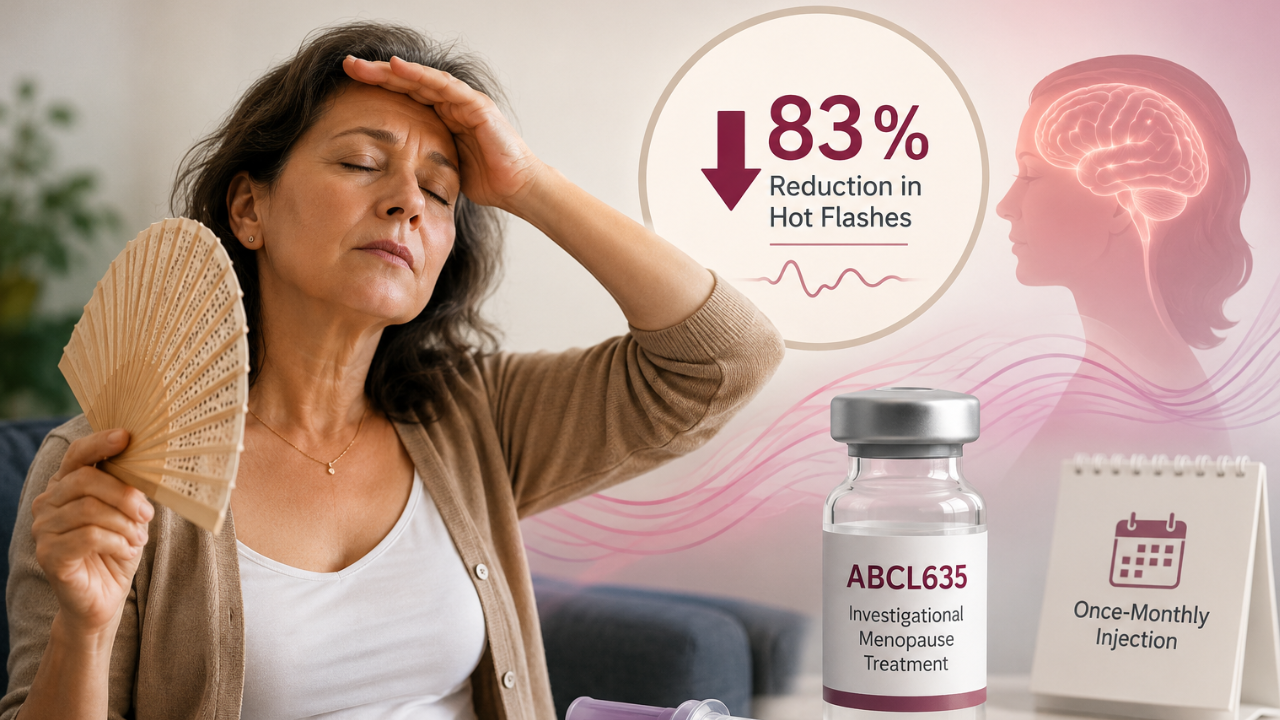
A new experimental menopause drug has shown promising results in reducing hot flashes, with the company reporting an 83% reduction in moderate-to-severe episodes in a mid-stage clinical trial.Shares of Canadian biotechnology company AbCellera surged nearly 40% on Monday after it announced positive results for ABCL635, an experimental non-hormonal treatment for moderate-to-severe vasomotor symptoms associated with menopause.The Phase 2 study involved 92 women. After four weeks, women who received a single 600-mg dose of ABCL635 experienced an 83% reduction in the frequency of moderate-to-severe hot flashes, equivalent to 8.8 fewer episodes per day from baseline. The placebo group reported a 33% reduction, or 3.5 fewer episodes per day.The treatment also improved the severity of symptoms, sleep and women's overall assessment of their improvement, according to the company. The most commonly reported side effects, however, included headache, fatigue and reactions at the injection site.What Makes This Drug Significant?Hot flashes are more than an uncomfortable feeling of sudden heat. They are a major menopause symptom that can trigger sweating, chills and disrupted sleep, affecting concentration, energy, mood and everyday activities.ABCL635 takes a different approach from hormone replacement therapy (HRT). It is a non-hormonal antibody treatment that targets the neurokinin 3 receptor, or NK3R, a protein involved in the brain's regulation of body temperature.During menopause, falling estrogen levels can disrupt the activity of a group of brain cells known as KNDy neurons. This can make the body's temperature-control system overly sensitive, triggering hot flashes. By blocking NK3R signaling, ABCL635 is designed to help restore that balance.Also read: Lifestyle Genetics And Hormones: Understanding The Interplay Of Risk Factors For Ovarian CancerMore About The Drug One of the drug's potential advantages is its dosing. ABCL635 is being developed as a long-acting, once-monthly injection, rather than a daily pill. AbCellera's chief medical officer Sarah Noonberg said the approach could appeal to women already accustomed to self-injecting medicines and could potentially improve adherence compared to daily dosing.When the Phase 2 programme began, Noonberg said: “Menopausal symptoms can have a profound impact on quality of life,” adding that the company wanted to assess whether ABCL635 could offer women a safe and effective non-hormonal alternative.However, the drug is still experimental and has not been approved for clinical use. AbCellera said additional 12-week trial data are expected later this year, which will provide a better picture of how long the benefits last and how the treatment performs over a longer period.The drug development comes as non-hormonal menopause treatments are gaining popularity. FDA-approved options already include drugs targeting neurokinin pathways, including Astellas' Veozah and Bayer's Lynkuet, giving women alternatives when hormone therapy is unsuitable or not preferred.Also read: Are Women More Likely To Experience More Severe Neurological Symptoms Of Long COVID Than Men? New Study FindsWhy Menopausal Hot Flashes Can Be Unnerving?Hot flashes, also known as vasomotor symptoms, are among the most common symptoms of menopause. The Menopause Society says up to 80% of women experience hot flashes or night sweats at some point during the menopause.A hot flash can begin suddenly, often as an intense wave of heat across the face, neck and chest. It may be followed by sweating, chills, dizziness, anxiety or racing heartbeat. When these episodes happen during sleep, they are known as night sweats. Frequent hot flashes can repeatedly interrupt sleep, leaving women irritable and fatigued the next day. Poor sleep can then affect concentration, mood and daily functioning, creating a cycle in which one menopause symptom amplifies another.