
- Health Conditions A-Z
- Health & Wellness
- Nutrition
- Fitness
- Health News
- Ayurveda
- Videos
- Medicine A-Z
- Parenting
Cardiologists Lift The Lid On Whether Ghee Is Unhealthy For Your Children

Credit: Canva
Days after actor Genelia D'Souza revealed she does not feed her children ghee over fears of blocking their arteries and causing heart damage, cardiologists have exclusively revealed to HealthAndMe whether the superfood is healthy for youngsters.
During an episode of Soha Ali Khan’s YouTube podcast 'All About Her', D'Souza said: "Ghee was never a very big part of my diet. I’ve always been more conscious because cholesterol issues run in my family. Whether it was non-vegetarian food or anything else, it was always on my mind, I didn’t want to go overboard.
"We start building habits early. You can't keep feeding children excessive amounts of certain foods and then expect them to suddenly not be overweight and head to the gym later in life. It has to make sense."
And Dr Lakshmi Sukumaran, senior consultant, cardiac, transplant anesthesia and critical care at Metromed International Cardiac Centre agrees!
The specialist told the publication: "Children need appropriate fat for growth, brain development, and hormone synthesis. However, children also do not need excess saturated fat.
"Small amounts of ghee, a teaspoon added to food is not harmful for healthy children with normal weight, active lifestyle and no genetic lipid disorders.
What should be avoided is high daily intake, especially when combined with sedentary lifestyle and calorie excess."
Is Ghee Indeed Bad For Young Children?
Made from cow milk butter, ghee contains about 130 calories and 15 grams of fat on average. It is also known to be rich in Vitamin A, D, K and E as well antioxidants.
However due to its high saturated fat content, some experts claim ghee can raise bad cholesterol levels in some people. Dr Neville Solomon, pediatric consultant and adult congenital cardiac surgeon, Apollo Children’s Hospitals, Chennai further advised that it is important for parents to practice caution over the amount their children are consuming of the superfood.
He exclusively told HealthAndMe: "Excessive intake can be harmful and manifest as weight gain, and indirectly in adulthood, as metabolic syndrome, which can manifest as hypertension, diabetes and raised bad cholesterol and low good cholesterol, which can translate into 'hardening of arteries' and coronary artery disease in adulthood."
Additionally, he suggested that children should be kept away from fried foods, be allowed to to consume ghee in moderation and encouraged to be physically active to maintain cardiac health as they grow.
"A sensible policy, if your child is overweight, it is best to avoid or restrict ghee and related potentially harmful foods like fried items, sweets, salty foods like chips and pickles. Ensure your child is physically active, and screen time is restricted. Adequate sleep and avoiding excessive stress are equally important for the long-term 'heart health' of a child," he said.
What About Adults?
Dr Sukumaran explained that while low amounts of ghee in itself is not unhealthy for children and cannot block arteries, it is necessary for adults to also practice moderation as it can pave the way for development of atherosclerosis, a condition in which plaque builds up inside your arteries over years and cause artery blockage.
She noted: "Ghee is simply a concentrated source of saturated fat. Saturated fats are known to raise LDL cholesterol in many individuals. Elevated LDL is a well-established risk factor for cardiovascular disease. But this effect is dose-dependent, meaning quantity and frequency matter. So, intake of ghee in moderation does not worsen heart health. What matters is long term dietary patterns.
"Studies on ghee consumption show mixed results , some show mild increases in LDL or triglycerides at high intake, while others show neutral effects when intake is modest and part of a traditional diet.
"Science supports moderation, not fear mongering a particular type of food, and certainly not oversimplified statements of celebrities about arterial blockage."
Who Should Avoid Ghee?
Experts recommend those suffering from conditions such as heart, digestive and kidney issues as well as obesity to steer clear from the superfood. Cholesterol patients should also avoid ghee as it is rich in fatty acids that may increase blood pressure and increase the risk of heart disease.
Lastly, those suffering from jaundice should also avoid it as it can cause major problems for the liver. Doctors suggest consuming not more than two teaspoons of ghee every day as it may pose certain health risks.
What Did Genelia Say About Her Children's Diets?
The 38-year-old mother-of-two clarified during the podcase episode that she considers ghee to be a problem when consumed in excess. D'Souza, who follows a strict plant-based lifestyle, explained that ghee, a known superfood, stays far away from her diet and instead she prefers to consume sesame seeds (til) for similar benefits.
She also addressed questions about giving up ghee and butter, stating, "I enjoyed a little bit of ghee and butter, but only in tiny portions. So when I eventually gave it up, it wasn’t a big deal," while acknowledging the sensory appeal of ghee, "I know it’s very tasty and it smells amazing."
AIIMS And ISRO Sign MoU To Advance Research In Space Medicine
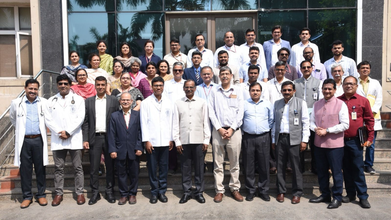
Credits: Dr P Sarat Chandra (LinkedIn)
All India Institute of Medical Sciences (AIIMS) and the Indian Space Research Organisation (ISRO) signed a Memorandum of Understanding (MoU) on Monday to collaborate on advancing research in space medicine.
The MoU was signed between M Srinivas, Director (AIIMS), New Delhi and Dinesh Kumar Singh, Director, Human Space Flight Centre (HSFC), ISRO. The event brought together senior leadership from AIIMS and ISRO, including ISRO Chairman V Narayanan and Secretary, Department of Space, as well as Deans, Heads of Departments, faculty members, and studies from AIIMS New Delhi.
Also Read: Is There A Link Between Your Kidney Health And Other Chronic Diseases? Study Says Yes
As per the news agency Asian News International (ANI), a press release of the collaboration noted for a cooperative framework for ground-based and space-based research in Space Medicine. The press release also noted that the research will cover areas like human physiology, cardiovascular and autonomic regulation, musculoskeletal health in microgravity, microbiome and immunology, genomics and biomarkers and behavioral health.
“This MoU will give us the escape velocity to venture together into the field of space medicine. Collaborative research between AIIMS and ISRO will benefit patients, the nation, and ultimately humankind. As India moves toward Viksit Bharat by 2047, we hope to emerge as a Vishwaguru in space medicine as well,” said Prof M Srinivas, Director, AIIMS, New Delhi.
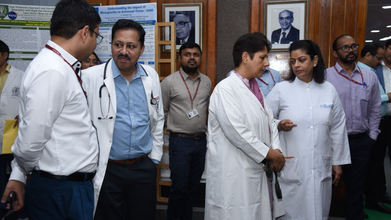
Chairman of ISRO Dr V Narayanan and Secretary, Department of Space also highlighted India’s remarkable journey in space programme. He noted how India evolved from the time when rockets and equipment were transported on bicycles and bullock carts to today, where it is going to be leading medical and research institutions like AIIMS to strengthen India’s human spaceflight capabilities.
The programme also featured a presentation on AIIMS New Delhi’s ongoing work in space medicine research, delivered by Prof. KK Deepak, former Head of the Department of Physiology. The event was attended by Heads of Departments and faculty members from across AIIMS New Delhi, along with representatives from the Resident Doctors Association (RDA), the AIIMS Student Association (ASA), and the Society of Young Scientists (SYS).
The collaboration represents an important step toward enhancing India’s capabilities in human spaceflight and biomedical research. It also aligns with the country’s broader scientific ambitions as India moves toward its centenary in 2047 and the vision of Viksit Bharat.
What Do We Already Know About Space Medicine?
As per a 2017 study in the British Journal of Anaesthesia, space medicine is fundamental to the human exploration of space. It supports survival, function and performance in this challenging as potentially lethal environment. It is international, intercultural and interdisciplinary, operating at the boundaries of exploration, science, technology and medicine.
Space medicine specialists play a crucial role in safeguarding astronauts and other spaceflight participants. Known as “flight surgeons,” they help develop strategies to protect the health, safety, and performance of space travellers in the extreme conditions of space. Their responsibilities span every stage of a mission — from selection and training to in-flight care, post-mission rehabilitation, and monitoring long-term health effects.
With inputs from ANI
Virus Without Vaccine Hits California; No Need To Worry, Say Public Health Officials
Credits: Canva
Sick days are again piling up with a respiratory disease, not COVID-19 or the flu. This disease is most likely the one Americans have not heard of. This is HMPV or human metapneumovirus. Doctors have asked people to stay vigilant as seasonal flu virus could lead to pneumonia and bronchitis, and it is spreading in California wastewater and around the country. However, as per public health officials, there is nothing to get worried at this point.
Also Read: Is There A Link Between Your Kidney Health And Other Chronic Diseases? Study Says Yes
As per the public database WasterwaterScan Dashboard, high levels of HMPV were detected across Northern California cities. The highest levels were reported in Redwood City, whereas elevated levels were found in San Francisco Bay Area and Napa's Wine Country. What's more dangerous is that this virus is without a vaccine.
The good news is that in other parts of country HMPV remains lower. However, the Centers for Disease Control and Prevention (CDC) noted that data from October 2025 shows the cases are trending up, especially during winter and spring.
Dr. Matthew Binnicker, director of the Clinical Virology Laboratory at Mayo Clinic, as reported by The Independent said, "In the late winter, early spring, it can account for five percent to 10 percent of all the respiratory infections that we diagnose in the United States. So it's definitely out there." Experts explain that other viruses like HMPV or influenza get a chance when COVID is quieter.
Read: HMPV Virus Cases Surging In California, New Jersey: Is It Dangerous?
Virus Without A Vaccine: What Is HMPV?
HMPV was first discovered in 2001 and is part of the Pneumoviridae family along with the Respiratory syncytial virus (RSV).
HMPV most likely spreads from an infected person to others through:
- the air by coughing and sneezing
- close personal contact, such as touching or shaking hands
- touching objects or surfaces that have the viruses on them, then touching the mouth, nose, or eyes
In the US, HMPV circulates in predictable patterns each year, typically beginning in winter and lasting through spring.
The usually self-limiting and mild symptoms typically last 4 to 5 days. These include:
- cough
- fever
- nasal congestion
- shortness of breath
People at risk include:
- elderly people
- children
- people with comorbidities
"The HMPV is not deadly, and there is no evidence of mortality or a severe transmission rate," former Indian Council of Medical Research (ICMR) scientist, Dr. Raman Gangakhedkar, told IANS, during the virus's outbreak in India in 2025.
“The virus may cause pneumonitis-like illness, but the mortality rates are almost unknown so far. HMPV has a global prevalence of about 4 per cent,” he added.
While no vaccine or treatment can prevent HMPV infection, to avoid the infection, individuals must:
Practice good hygiene and cover your mouth and nose with a tissue when coughing or sneezing, or use your elbow, not your hands, for it. And wash your hands properly, especially in healthcare settings.
Why Are People Hearing About The Virus Without Vaccine Now?
The reason people have not heard about it before is because its symptoms are nearly indistinguishable from other respiratory infections, so often it could go undiagnosed. Furthermore, earlier the COVID cases and influenza cases sparked up, which deviated the attention from HMPV. Now, with the season gone, and increased awareness around respiratory illnesses, greater attention to viruses like HMPV is also paid.
1 In 7 Indians Affected By Mental Health Disorders; Govt To Launch NIMHANS-2 To Boost Care
Credit: Canva
One in seven Indians, or over 14 percent of the population, suffers from some form of mental health disorder. Amid an increasing treatment gap -- up to 90 percent -- seen in several states, especially in North India, the government today reiterated the plan of launching a second National Institute of Mental Health and Neurosciences (NIMHANS) in the northern states.
NIMHANS-2 was first announced by Finance Minister Nirmala Sitharaman during the Union Budget 2026-27, to deliver specialized care for mental health and neurological disorders in north India.
Health experts and policymakers, as part of the government-led Post-Budget Webinar series, highlighted the growing burden of mental and neurological disorders in India and also stressed the urgent need to strengthen institutional capacity to meet emerging healthcare demands.
"One in seven Indians is affected by mental health disorders, while several states continue to face a treatment gap ranging from 70 to 90 percent," the experts said.
Noting that Non-Communicable Diseases (NCDs) account for over 60 percent of deaths in the country, they added that "neurological and mental health conditions are among the leading contributors to disability-adjusted life years (DALYs)," among the citizens.
Need For Tertiary Neuro-psychiatric Care
To address these, the experts called for ramping up tertiary mental health institutions and expanding specialized services.
The session, moderated by Vijay Nehra, Joint Secretary, Ministry of Health and Family Welfare, highlighted that North India currently lacks adequate tertiary neuro-psychiatric care facilities. These include areas such as:
- advanced neuroimaging,
- neurocritical care,
- specialized neurological services
Further, making a virtual address at the Post-Budget Webinar, Union Health Minister JP Nadda also highlighted the government’s focus on strengthening mental healthcare services in the country.
"NIMHANS-2 will be established in North India to expand advanced clinical care, training, and research," Nadda said.
"In addition, the Central Institute of Psychiatry, Ranchi, and the Lokopriya Gopinath Bordoloi Regional Institute of Mental Health, Tezpur, will be upgraded as regional apex institutions to strengthen mental healthcare services in the eastern and north-eastern regions," he added.
Meanwhile, the experts also stressed the need to improve services in underserved and geographically remote regions, including the northeastern states, through better infrastructure, capacity building, and targeted deployment of trained mental health professionals.
They also discussed strategies for expanding advanced neuro-psychiatric care and reinforcing India’s overall mental healthcare ecosystem. They proposed:
- Adopting a hub-and-spoke model supported by digital health platforms
This would allow tertiary institutions and centers of excellence to provide technical guidance, specialist consultations, and clinical support to district hospitals and community-level health facilities.
"Such a model would strengthen referral pathways and ensure that specialized mental health services are accessible to people even in remote and rural areas," the experts said.
- Integrating services under Tele-MANAS
Both existing and upcoming campuses of NIMHANS must be integrated , as this will enable a robust nationwide tele-mental health network that ensures
- timely counselling,
- psychological support,
- specialist consultations
- Digital follow-up systems
The experts called for the seamless integration of healthcare facilities, aligned with the vision of the Ayushman Bharat Digital Mission and the ABHA ID ecosystem. This, they said, will
- enable continuity of care,
- Improve monitoring of patients,
- Lead to better clinical outcomes
- A national Brain-Mind Cloud Network
The Network proposed under the National Health Mission would connect premier institutions such as All India Institute of Medical Sciences (AIIMS), state medical colleges, and primary healthcare centers through a digitally integrated platform.
It could also facilitate
- unified mental health records,
- AI-based screening tools,
- data-driven clinical decision support systems,
- tele-neuro-psychiatric hubs at regional centers.
- Follow Us :


© 2024 Bennett, Coleman & Company Limited