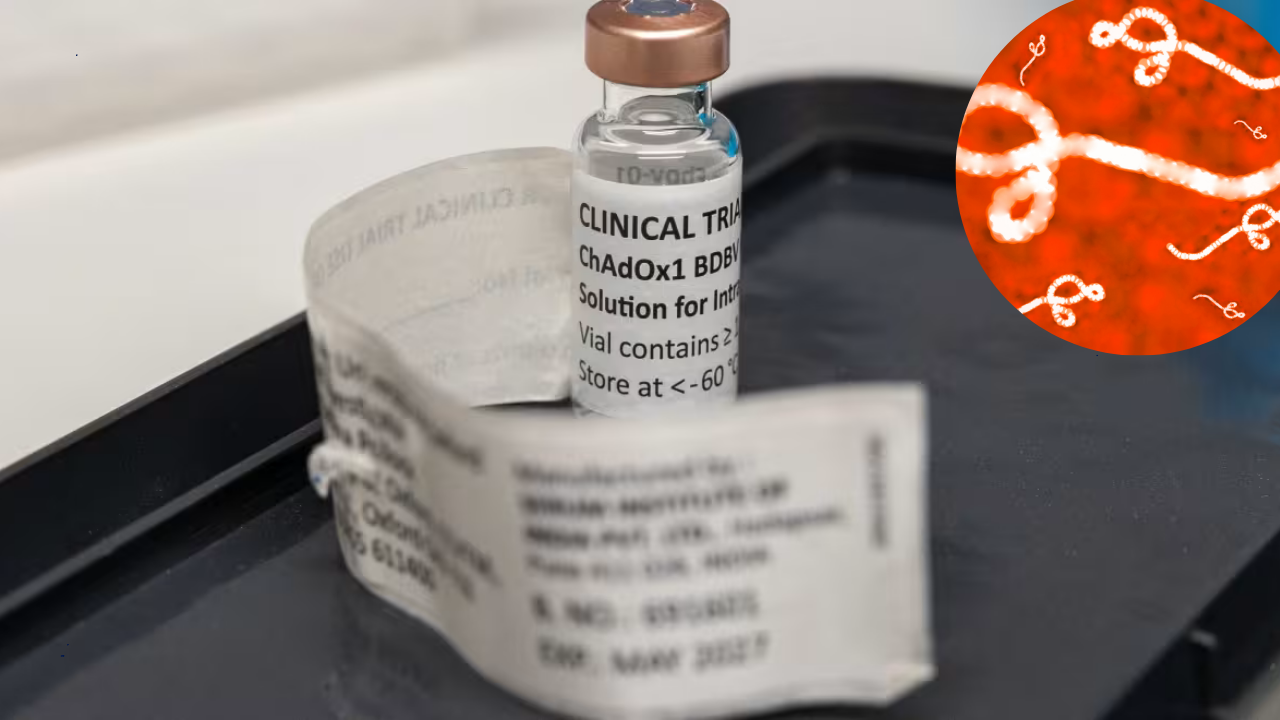
The number of confirmed Ebola cases in the Democratic Republic of Congo (DRC) has reached 3,200, including a death toll of 1,405, according to the latest official data. Caused by the rare Bundibugyo strain, the outbreak is the third-largest on record.Amid the worsening outbreak, researchers have reached an important scientific milestone in vaccination. The first human volunteer has received an experimental vaccine targeting the Bundibugyo strain of Ebola, marking the world's first Phase I clinical trial, the University of Oxford said. The vaccine, known as ChAdOx1 BDBV, uses the same viral vector platform that was employed for the Oxford-AstraZeneca COVID-19 vaccine. Professor Katrina Pollock, chief investigator at the Oxford Vaccine Group, described the launch as "an important milestone" in the effort to develop protection against a virus for which no licensed vaccine currently exists."We welcome the start of the phase 1 clinical trial of an investigational vaccine against Ebola Bundibugyo virus disease — an important step to assess the safety and immune responses generated by the vaccine," said Tedros Adhanom Ghebreyesus, Director-General of the World Health Organization (WHO) said in a post on social media platform X. What Is The Chadox1 BDBV Vaccine? How Does It Work? Also read: Ebola Bundibugyo Strain: All You Should Know About The Rare Virus ChAdOx1 BDBV, developed in collaboration with Serum Institute of India (SII), is designed specifically to protect against the Bundibugyo strain of Ebola. It is reportedly the first of four Bundibugyo Ebola vaccine candidates currently under development to enter human clinical trials. The vaccine uses a genetically modified chimpanzee adenovirus (ChAdOx1)—a harmless virus that normally causes the common cold in chimpanzees—as a delivery vehicle. Scientists have inserted genetic material from the Ebola Bundibugyo virus into this harmless virus. Once injected in humans, the modified virus trains the immune system to recognize the Ebola virus and produce protective antibodies and fight the infection. The vaccine has already shown promising results in mice and macaque monkeys and is being manufactured to clinical standards by the SII, which has already produced and stockpiled around 620,000 doses. Based on preclinical data, the UK's MHRA approved the vaccine to proceed to human trials. Read More: Ebola Outbreak: The Unique Symptoms Seen In Patients Infected With Bundibugyo ChAdOx1 BDBV Vaccine: Phase 1 human trial The Oxford researchers will recruit 50 healthy adults aged 18 to 55 years in the UK for the Phase 1 trial. Scientists are also working with partners in Uganda to prepare future clinical trials in Africa. Participants will be monitored for one year, although researchers expect to know much sooner whether the vaccine generates the desired immune response and whether any unexpected side effects occur. Can A Single-dose Vaccine Work? Researchers are also exploring preventive vaccination strategies for healthcare workers and people who have been in close contact with infected patients. One such approach is ring vaccination, in which individuals surrounding a confirmed Ebola case are vaccinated or given preventive treatment to stop further spread. The goal is to develop a single-dose vaccine, similar to the licensed vaccine against the Ebola Zaire strain. Scientists believe that both antibodies and T cells—immune cells that recognize and destroy infected cells—will play an important role in protection, although long-term immunity against the Bundibugyo strain is not yet fully understood. "Pre-clinical models for these pathogens have already shown that a single-dose vaccine can protect animals. So, we are optimistic that a one-shot vaccine is achievable," Prof Teresa Lambe, Head of Vaccine Immunology, Oxford Vaccine Group, Pandemic Sciences Institute, University of Oxford, told The Indian Express.