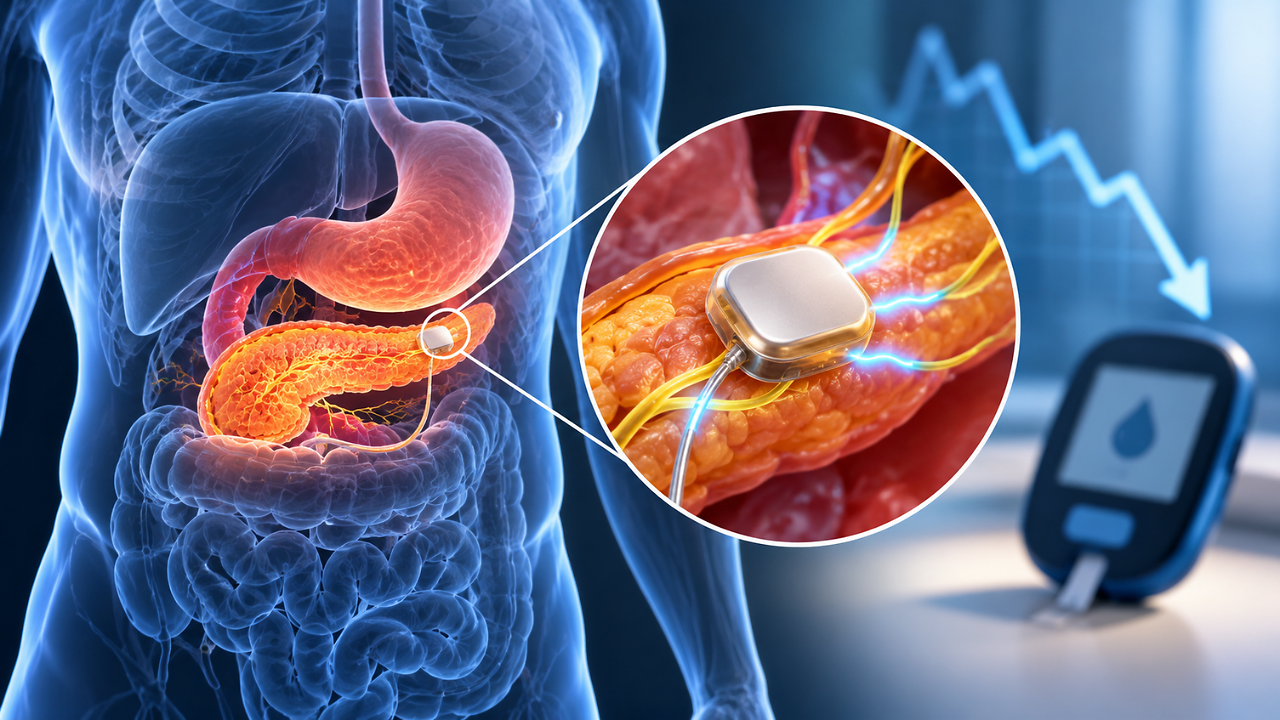
A research team in Switzerland, including Indian scientists, has developed an USB-sized electric implantable device that lowers blood sugar by converting excess glucose into a substance the body can eliminate. The technology, tested in mice with diabetes and obesity, may offer a new way to managing blood glucose without relying on insulin or other glucose-lowering drugs, sparking hope for people with diabetes to live drug-free, healthier lives. The findings were published in the journal Science on October 22, 2026, in a study titled Wireless Electrocatalytic Closed-Loop System for Drug-Free Management of Diabetes. The research was spearheaded by Martin Fussenegger, professor of biotechnology and bioengineering, ETH Zurich's Department of Biosystems Science and Engineering. Fussenegger described the approach as a departure from conventional diabetes treatment.“For decades, we have treated diabetes by telling the body how to manage glucose. We are now showing that we can take control of glucose directly, using electronics rather than drugs,” he told Science. “And the catalyst only activates when glucose levels are too high.”Also read: Is ‘Ozempic Face’ Influencing The Beauty Industry? Global Cosmetic Brand Highlights A New Trend Amid GLP-1 BoomHow Does The Electric Implant Work?The device, called ECHO (Electrocatalytic Closed-loop Health Optimization), uses a catalyst made from graphite felt, gold nanoclusters and tiny platinum particles which is powered electrically. Unlike treatment methods that use living cells or enzymes, this device uses an electrochemical reaction to get rid of excess glucose.“The drug-free mode of action is relevant because current pharmacological therapies can be limited by adverse effects, tolerability, adherence, cost, and unresolved long-term safety questions,” the researchers wrote in Science.When activated, the catalyst converts glucose into gluconate, a substance that the body can process and eliminate through urine. This removes some glucose from the body's normal metabolic process.The implant works with a glucose monitor that tracks glucose levels continuously. When readings increase beyond a certain limit, the sensor communicates with a smartphone or control unit, which wirelessly activates the implant. The system switches off when glucose levels return to normal.“At the current stage of the technology, we’ve demonstrated through lab experiments glucose clearance in approximately five litres of liquid, comparable to the typical blood volume in an adult human,” Maity, a postdoctoral researcher at ETH, the Swiss Federal Institute of Technology, told The Telegraph.Also read: High-Fibre Diet Outperforms Metformin In Blood Sugar Control And Weight Loss, Study Finds Tested On Diabetic And Obese Mice In mice with type 2 diabetes and obesity, the implant brought elevated blood glucose into the normal range within an hour of activation. Repeated treatment maintained glucose control for six weeks. The treated mice also showed reductions in body weight and triglyceride levels, without dropping the blood sugar excessively.Fussenegger said the device operated at a low voltage, adding, “Our experiments showed no evidence of tissue damage from either electrical or thermal effects.Maity said, "These are proof-of-concept experiments in lab mice. We would need to refine the technology and make the device even smaller before human trials."José M. Ordovás, a senior scientist at Tufts University who was not involved in the research, described the work as an “ingenious and well-developed piece of work as a proof of concept.” He also said that the small animal study cannot capture the complexity of diabetes and obesity in humans. Long-term safety and the effects of gluconate processing, especially in people with poor kidney function, need more research. What Happens Next? The researchers have not tested the implant in humans yet. So its safety, effectiveness and durability in people still remain unknown. The kidneys' ability to eliminate gluconate will also be an important factor in future research.Maity said that future research will focus on making the implant smaller and integrating it with an electrical power source like a wireless charging system and a glucose device that monitors blood sugar levels continuously.