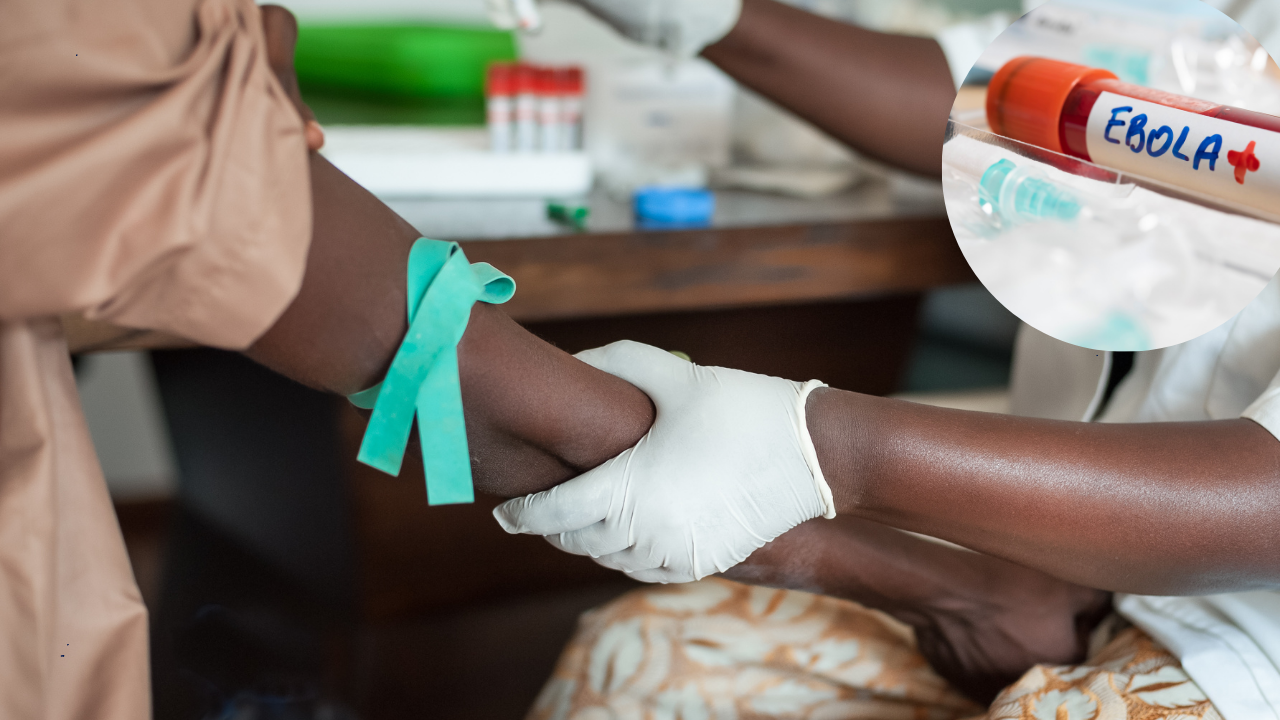
The Ebola outbreak in DR Congo has risen to 1,427 cases, while the death toll has climbed to 440, according to the latest government data.More than 609 patients are hospitalized in Congo, while many have also recovered. Uganda has so far reported 20 confirmed cases and two deaths. There has also been one case in France and another in a US citizen medically evacuated to Germany, both believed to have been imported from areas affected by the ongoing outbreak.The Ebola virus disease, caused by the Bundibugyo strain, has no approved vaccine or treatment."Even without approved therapeutics, people are recovering from this disease, but, of course, we could save many more lives with safe and effective therapeutics in our toolkit," said Dr Tedros Adhanom Ghebreyesus, WHO Director-General.He said this while announcing the launch of the clinical trial of two therapeutics, with the enrolment of the first patient."The PARTNERS trial will evaluate the monoclonal antibody MBP134 and the antiviral drug remdesivir, alone and in combination," he added.Also read: Donald Trump Posts AI Video of Himself Treating Critics for 'Derangement Syndrome'All About the TrialThe study is being coordinated by the DRC's National Institute for Biomedical Research, supported by a coalition of partners including WHO, and conducted in close cooperation with the affected communities.According to Tedros, patients who enroll in the trial will receive comprehensive supportive care and close follow-up."We are also working to ensure they have access to the two drugs should they prove safe and efficacious in the trial."In addition, the WHO has granted emergency use listing to the first molecular diagnostic test for Bundibugyo virus.Further, the antiviral drug remdesivir, marketed as Veklury is also expected to start. Remdesivir became widely known during the COVID-19 pandemic and is being evaluated to determine whether it can improve outcomes when combined with the antibody treatment.As per experts, it could take months, and possibly as many as 1,000 study participants, to determine whether either drug works.Currently, the study is being offered only at one Ebola treatment center in Congo's Ituri province. The region has been heavily affected by violence, including attacks on healthcare workers responding to a virus spread through contact with infected patients' bodily fluids. Officials plan to expand the trial to other locations once it is safe to do so.Read More: Australia Reports More H5 Bird Flu Cases: Does It Have Pandemic Potential?Challenges RemainTedros said that despite the progress, significant challenges remain, including mistrust and violence.This week, an Ebola treatment center in Ituri province was attacked, resulting in the deaths of two people. The center was set on fire, and patients fled.Such acts not only endanger patients and health workers but also impede efforts to stop transmission and save lives.He added that the complexity of the outbreak requires close coordination across the United Nations system.What Is Ebola? Ebola is a severe and often fatal viral hemorrhagic fever first identified in 1976. Since then, more than 30 outbreaks have been recorded, primarily in Central and West Africa.Common Symptoms of EbolaFeverHeadacheWeakness and fatigueVomitingDiarrheaMuscle painSore throatUnexplained bleeding or bruising.